

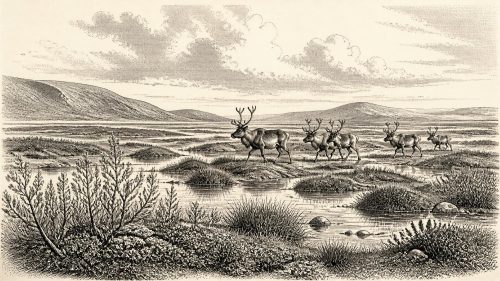
Sedges at Maguirebridge
Archived: 5 October 2026
About 30,237 BCE, Ireland was a Late Pleistocene landscape undergoing climatic and glacial change, not a place identifiable through precise annual dating. Lower sea levels connected it more closely to Britain and Europe, although ice, wetlands and distance constrained movement. Inter-till sediments near Maguiresbridge preserve sedges, mosses and other tundra vegetation, indicating temporary cold wetlands later overridden by ice. Cave deposits in Cork and Waterford demonstrate recurring animal presence, including reindeer, mammoth, hyaena and bear, across millennia. No human occupation is known. A possibly cut-marked Castlepook reindeer bone suggests human activity, but remains disputed and cannot establish settlement or culture.