

BIRM-166’s Roadworks Exposure
Archived: 4 October 2026
Abstract
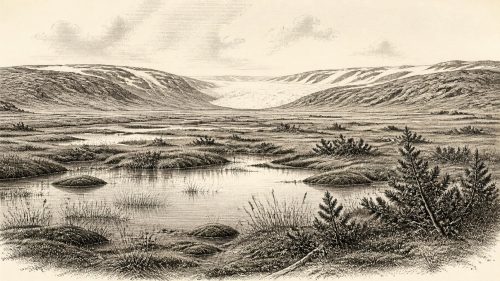
30,298 BCE is a modern label rather than a datable Irish event. During Marine Isotope Stage 3, Derryvree, County Fermanagh, preserved freshwater sediments between glacial tills, dated broadly to 36,900–31,700 calibrated years BP. Fossils indicate a cold, open, treeless wetland with grasses, sedges, mosses, juniper and aquatic life, during fluctuating ice-sheet conditions. Cave remains in southern Ireland show that mammoth, reindeer and other cold-adapted animals occupied or reached parts of Ireland before the Last Glacial Maximum, though deposits mix periods. No secure evidence establishes settled human occupation, society or economy; a possibly butchered reindeer bone remains inconclusive. Ice reshaped Ireland.