

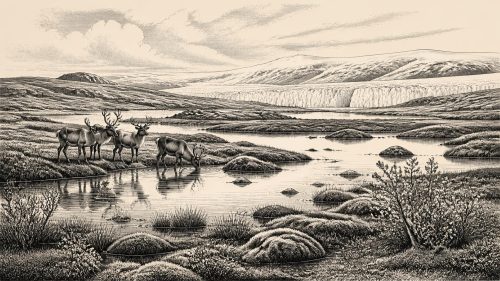
BIRM-166’s Aquatic Macrofossils
Archived: 3 October 2026
At 30,336 BCE, Ireland is understood only through broad Late Pleistocene evidence, not annual records. Derryvree, County Fermanagh, preserves freshwater sediments between glacial tills; BIRM-166 dates their formation broadly to a period encompassing this notional year. Fossils indicate treeless, cold tundra wetlands with aquatic plants, sedges, mosses and hardy shrubs, during fluctuating ice conditions. Southern cave deposits document varied cold-stage fauna, including reindeer, mammoth, bears and predators, although species were not necessarily contemporaneous. A possibly cut-marked reindeer bone suggests, but does not establish, early human visitation. No settlement, polity or continuous occupation is evidenced; advancing ice reshaped and buried landscapes.