

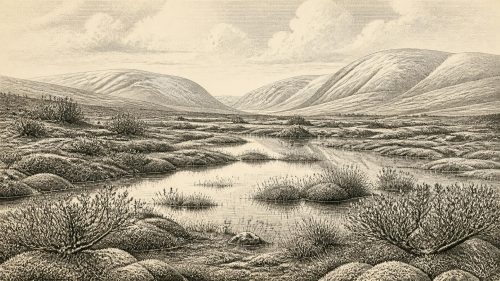
Derryvree’s Glacial Overrun
Archived: 3 October 2026
Abstract
At 30,340 BCE, Ireland’s past can be reconstructed only broadly from environmental evidence. Derryvree in Fermanagh preserves organic freshwater sediments between glacial tills, dated broadly to later Marine Isotope Stage 3. They show an ice-free periglacial wetland with tundra vegetation, mosses, sedges and shallow water, later buried by renewed ice. Climate fluctuated sharply, with mobile ice margins. Southern cave remains indicate intermittent access for mammoth, reindeer and other cold-stage fauna, though they do not represent a single time or community. A possibly cut-marked reindeer bone suggests tentative human contact, but no evidence supports permanent settlement or social organisation in Ireland.