

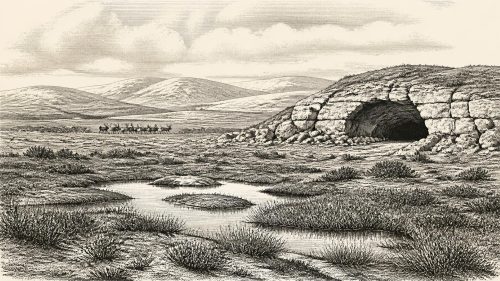
Castlepook Before Maximum
Archived: 30 September 2026
Around 30,442 BCE, Ireland lay in the later Middle Pleniglacial, approaching the Last Glacial Maximum. This calendar label cannot identify events within a single year, as evidence carries broad dating uncertainties. A growing British–Irish Ice Sheet created fluctuating, regionally varied conditions. Derryvree sediments indicate cold freshwater tundra, with wetlands, mosses, sedges and arctic-alpine plants, later buried by advancing ice. Castlepook Cave preserves a complex, time-averaged assemblage including mammoth, reindeer, giant deer, bears, wolves, foxes, lemmings and hyaenas. No secure evidence confirms human occupation; a possibly cut-marked reindeer bone remains inconclusive. Ireland was an environmentally fragmented, intermittently habitable ecological northern margin.