

BIRM-166 and the Lost Wetland
Archived: 29 September 2026
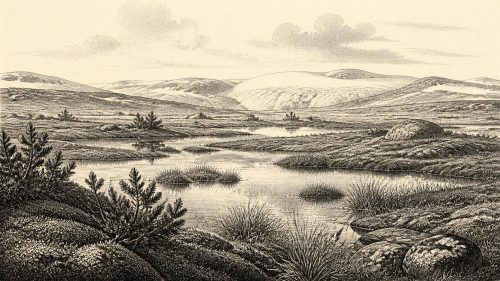
Around 30,504 BCE, Ireland's history is reconstructed from uncertain environmental and archaeological evidence. At Derryvree, County Fermanagh, organic sediments between glacial tills, including radiocarbon sample BIRM-166, record a cold, treeless freshwater wetland formed during an ice-free interval before later ice burial. Mosses, sedges, herbs and aquatic plants indicate periglacial conditions. Castlepook Cave, County Cork, preserves remains of cold-adapted mammals, though its disturbed deposits cannot define a single community. A marked reindeer bone may indicate Upper Palaeolithic human activity around 33,000 years ago, but proves neither permanent settlement nor continuous population. Ireland was a dynamic Pleistocene landscape, not a documented society.