

Crag Cave’s Interrupted Dripstone
Archived: 28 September 2026
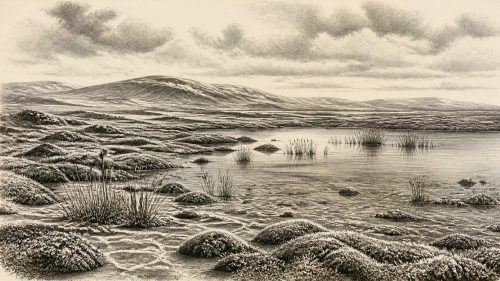
Around 30,541 BCE, Ireland lay within an unstable later-Pleistocene cold stage, before the Last Glacial Maximum, rather than a landscape describable through annual history. Derryvree, County Fermanagh, preserves freshwater sediments between glacial tills, indicating locally ice-free, treeless tundra with wetland plants during an environmental interval. Cave fauna demonstrate changing access for cold-adapted and large mammals, although deposits span different dates. Crag Cave stalagmites record episodic milder conditions permitting water circulation. Possible butchery marks on a Castlepook reindeer bone raise, but do not prove, Upper Palaeolithic human activity. Evidence reveals climatic variation, not societies, events or precise calendar chronology at all.