

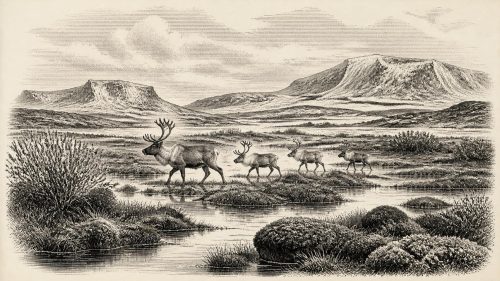
Derryvree’s Periglacial Interval
Archived: 22 September 2026
Around 30,898 BCE, Ireland lay within a variable Late Pleistocene periglacial phase, rather than a precisely datable year. At Derryvree, County Fermanagh, freshwater sediments between tills show that ice-free conditions temporarily supported cold, open wetlands with Arctic-alpine plants, insects and organic accumulation before glaciers returned. Castlepook Cave, County Cork, preserves diverse cold-stage fauna, including mammoth, reindeer, giant deer, predators and lemmings, though its mixed deposits limit precise interpretation. A possibly tool-marked reindeer bone suggests brief human contact, but proves neither settlement nor society. Lower sea levels altered routes, while advancing ice eventually covered Ireland, destroying or concealing most earlier evidence.