

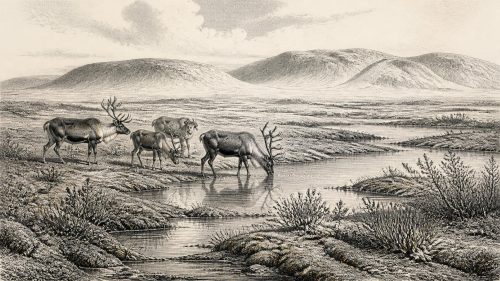
Derryvree’s Menyanthes Bed
Archived: 21 September 2026
Around 30,938 BCE, Ireland lay within the climatically unstable Late Pleistocene MIS 3, with no evidence of political societies or permanent human settlement. Derryvree, County Fermanagh, preserves sediments between glacial tills, recording an ice-free wetland of grasses, sedges, juniper, bogbean and other cold-adapted plants. Insects confirm waterlogged, treeless conditions. Crag Cave indicates intermittent warmer phases, while later ice expansion reshaped and obscured landscapes. Castlepook Cave yielded cold-stage animal remains, including reindeer, mammoth and hyaena, though deposits are mixed and dates uncertain. A possibly cut-marked reindeer bone suggests unconfirmed human visitation. Surviving evidence depicts changing tundra ecosystems, not recorded events alone.