

Aghnadarragh’s Mammoth Gravel
Archived: 19 September 2026
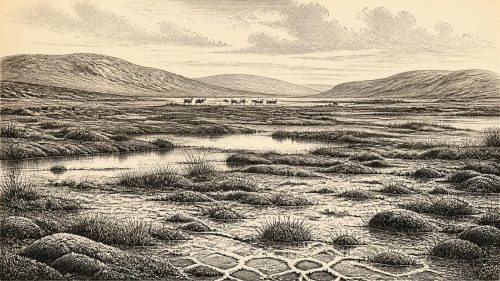
Circa 31,182 BCE, Ireland lay within the unstable Late Pleistocene climate of Marine Isotope Stage 3, rather than a recoverable calendar year. At Derryvree, Fermanagh, organic freshwater sediments between glacial tills indicate an ice-free, treeless, marshy periglacial landscape during an interval broadly encompassing this date. Crag Cave demonstrates recurring climatic shifts, while Aghnadarragh records alternating glacial and non-glacial conditions, including mammoth-associated deposits. Fossils show connections with north-west European cold-adapted fauna. A marked Castlepook reindeer bone may suggest Upper Palaeolithic butchery, but remains unconfirmed. No evidence establishes settlements, polities or sustained human occupation; the record documents intermittent environments and fragile life.