

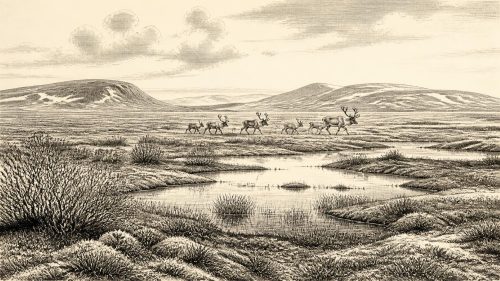
BIRM-166’s Fermanagh Wetland
Archived: 18 September 2026
Around 31,258 BCE, Ireland lay within the unstable MIS 3 phase of the Late Pleistocene. Derryvree, County Fermanagh, preserves freshwater sediments between glacial tills, dated broadly to 36,900–31,700 calibrated years ago, indicating an ice-free tundra wetland with sedges, mosses, insects and seasonal liquid water. Cave and speleothem evidence from Cork and Kerry confirms recurring animal activity and intermittent unfrozen conditions elsewhere. Castlepook Cave yielded mammoth, reindeer, giant deer, bear and hyena remains, though these represent accumulated deposits rather than one community. A possibly cut-marked reindeer bone suggests human visitation, but permanent settlement remains unproven. Later ice expansion destroyed much evidence.