

A Femur From Castlepook
Archived: 16 September 2026
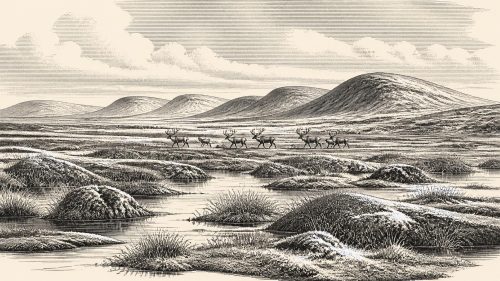
31,591 BCE is best understood as a broad Late Pleistocene, Marine Isotope Stage 3 interval rather than a recoverable Irish calendar year. Ireland experienced volatile cold conditions, with developing ice, permafrost, exposed terrain, tundra wetlands and changing sea routes. Derryvree sediments in Fermanagh preserve evidence of treeless freshwater habitats between glacial advances. Castlepook Cave in Cork yielded cold-adapted fauna, including mammoth, reindeer, hyaena and horse, although cave deposits complicate interpretation. A reindeer femur bearing a possible butchery incision may indicate exceptionally early human contact, but lacks secure archaeological context. Evidence shows environmental change; human presence remains possible, contested and unproven.