

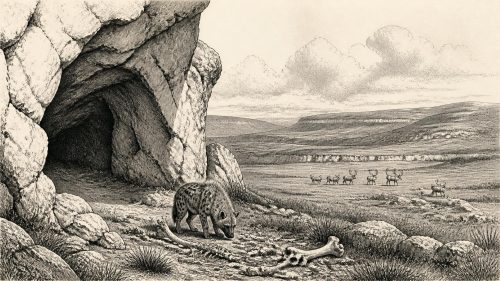
Awbeg’s Hyena Bonehouse
Archived: 15 September 2026
Around 31,629 BCE, Ireland lay in an early, uneven phase of last-glacial ice-sheet growth, with some regions retaining freshwater basins and open periglacial landscapes. Deposits at Derryvree and Greenagho show that parts of Fermanagh remained habitable for cold-adapted ecosystems before later glaciation. Castlepook Cave in County Cork yielded rich Late Pleistocene remains, including mammoth, giant deer, reindeer, bears and spotted hyenas. A roughly 33,000-year-old reindeer bone possibly bears stone-tool damage, suggesting a human visit, but no settlement evidence exists. Lower sea levels may have aided movement, though routes remain unknown. This period represents ecological richness, fragmentary evidence and advancing ice.