

Crag Cave’s Interrupted Calcite
Archived: 15 September 2026
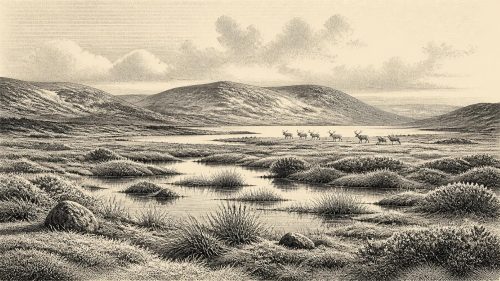
Around 31,708 BCE, Ireland was part of a climatically unstable Late Pleistocene landscape, not a place with a recoverable annual history. Derryvree sediments in Fermanagh indicate cold, open, waterlogged tundra-like habitats with mosses, sedges and northern insects during a broad period encompassing this date. Ice margins, sea levels and vegetation shifted repeatedly before the Last Glacial Maximum. Crag Cave stalagmites record intermittent milder phases, while southern caves preserve varied cold-stage mammals. Castlepook’s marked reindeer bone may indicate human processing, but lacks secure archaeological context. Evidence supports transient animal habitats and possible brief human visits, not settlement, society or political events.