

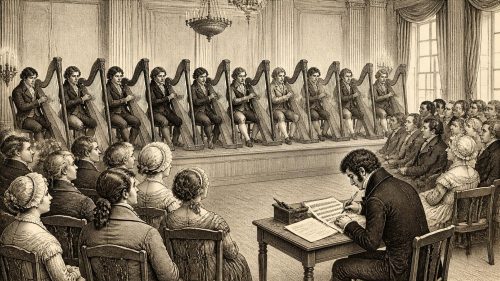
Back Lane and Belfast Harps
Archived: 12 October 2026
In 1792, Irish politics was shaped by Catholic relief, reform agitation and anxiety after the French Revolution. The Catholic Relief Act eased restrictions on education, law and mixed marriage but withheld voting and parliamentary rights. December’s Back Lane Convention demonstrated Catholic national organisation and petitioned for constitutional participation. In Belfast, United Irishmen and Volunteers promoted reform, religious unity and sympathy with France, prompting repression. The Belfast Harp Festival preserved a musical tradition through Edward Bunting’s transcription. Economic measures supported linen, fisheries, navigation, roads and enterprise while export embargoes revealed insecurity. Together these developments enlarged Ireland’s public sphere without producing revolution.