
Poor Law
Archived: 11 October 2026
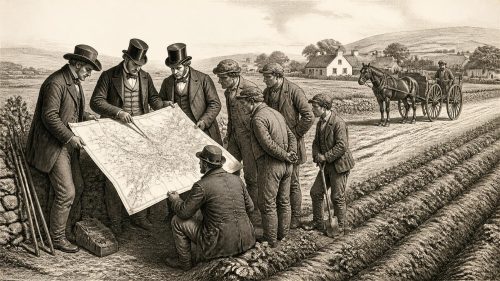
In 1838, Ireland was surveyed, classified and governed amid widespread rural insecurity. The Irish Railway Commissioners’ final report mapped population, trade and transport, advocated publicly directed railways, and warned of labourers’ heavy reliance on the nutritionally poor lumper potato, without predicting famine. The Poor Relief (Ireland) Act created poor-law unions, rates, guardians and a workhouse-centred system, reshaping local administration despite opposition. The Tithe Rentcharge Act replaced direct occupiers’ payments with a reduced landowners’ charge, easing but not ending religious grievance. Father Theobald Mathew’s Cork temperance campaign mobilised mass voluntary action. The Sirius voyage and surveys highlighted Atlantic and administrative links.