Membership is completely free, giving members unlimited access to all available resources, services, features, and benefits without any restrictions or fees.
Welcome back. Sign in to continue enjoying unlimited access to all available resources, services, features, and member benefits at no cost.
The session’s final day, 12 May, brought an extraordinary cluster of enactments. There were measures to regulate grand-jury presentments, parish watches and highways; to clarify the supply of corn and flour to Dublin; to control customs and excise fraud; and to restrain harsh or unjust exactions by gaolers from prisoners. One act freed people acquitted of indictable offences from the fees that might otherwise have kept them in prison. Such a provision should not be mistaken for a modern doctrine of equal justice, but it did acknowledge a real abuse of the fee-based penal system.
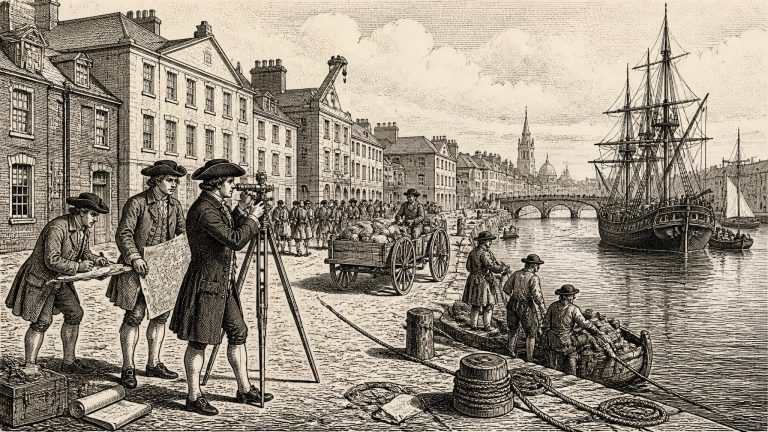
Rocque, a surveyor and engraver from a Huguenot family, had arrived in Dublin in August 1754 to survey the city and had premises on Lower Ormond Quay. His great plan was completed by September 1756, when he presented it to the Lords Justices. Its title was ambitious but literal: it sought to show the ground-plots not merely of grand institutions but of dwellings, warehouses, stables, courts and yards. The resulting four-sheet survey remains one of the most revealing primary sources for mid-Georgian Dublin.
Ireland remained a separate kingdom under George II, with its own parliament, courts, revenue and established Church of Ireland, but its legislature operated within constraints imposed by Poynings’ Law and by the authority of the British crown and privy council. Political participation was also exceptionally narrow. The Irish House of Commons did not represent the island’s population in any modern sense: Catholics, who formed the great majority, were excluded from parliament, while Presbyterians and other dissenters faced important disabilities. Power rested chiefly with Protestant landowners, officeholders and borough interests.