

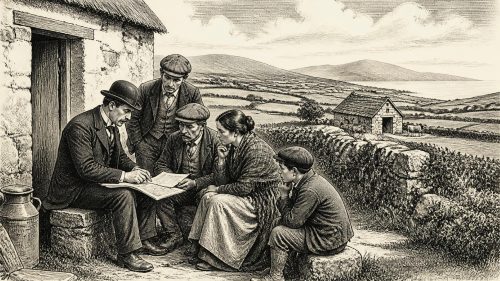
Related Archive: Land purchase

Wyndham’s Land Bargain

Wyndham’s Land Bargain

Archived: 9 October 2026

Abstract

1903 in Ireland combined disruption, political ceremony and lasting reform. February storms damaged woodland, buildings and livelihoods. George Wyndham’s Land Purchase Act, following the Land Conference, used state-backed advances and landlord incentives to accelerate tenant ownership, though it neither ended poverty, congestion and labourers’ insecurity nor resolved Home Rule. It also divided nationalists over conciliation. Edward VII’s Irish tour attracted loyalist receptions but nationalist protest, revealing competing identities. Northern railway reorganisation and the Independent Orange Order reflected economic links and unionist tensions. Cultural revival, Trinity’s decision to admit women, and Dublin’s expanded electricity supply signalled uneven modernisation alongside rural inequality.
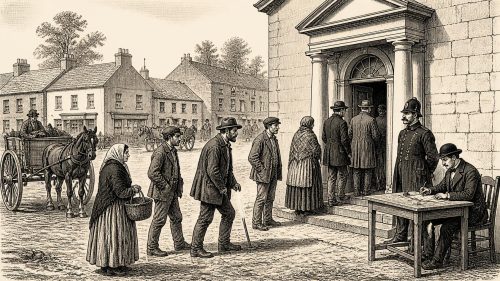
Read Article

Ashbourne, Carnarvon and the Poll

Ashbourne, Carnarvon and the Poll

Archived: 10 October 2026

Abstract

In 1885, Ireland’s land and constitutional politics were reshaped. The first Ashbourne Act authorised £5 million for state-backed tenant purchases, advancing the shift from landlordism, while educational endowments legislation addressed school resources. Lord Salisbury’s minority Conservative government appointed Lord Carnarvon, whose private discussion with Charles Stewart Parnell indicated tentative interest, not commitment, in Irish legislative autonomy. Franchise extension and redistribution enlarged and reorganised constituencies. The Irish National League’s organisation helped Parnellites win 85 of Ireland’s 103 seats, giving their Westminster bloc decisive leverage. Unionist strength persisted in Ulster. Economic contrasts, emigration, and Gaelic Athletic Association rule-making also marked the year.

Read Article