
Archived: 5 October 2026
Abstract
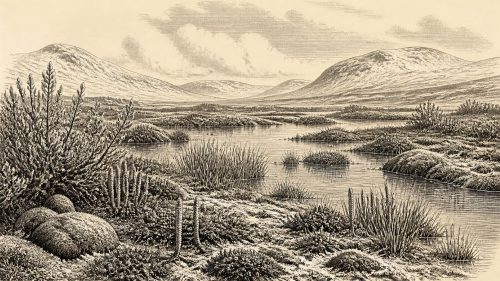
Around 30,247 BCE, Ireland cannot be described through annual history or documented society. The Derryvree deposit in County Fermanagh, organic freshwater silts sealed between glacial tills, dates broadly to 36,900–31,700 calibrated years before present. It records locally ice-free, periglacial tundra with pools, wetlands and cold-adapted plants, including bogbean, dwarf willow, mountain avens and lesser clubmoss. Cave finds indicate varied Ice Age fauna, though deposits are not strictly contemporary. No secure evidence establishes human settlement, culture or activity then; disputed clues remain inconclusive. Derryvree instead reveals environmental change before later ice-sheet expansion buried and eroded much of Ireland's older physical landscape.
Read Article
Archived: 3 October 2026
Abstract
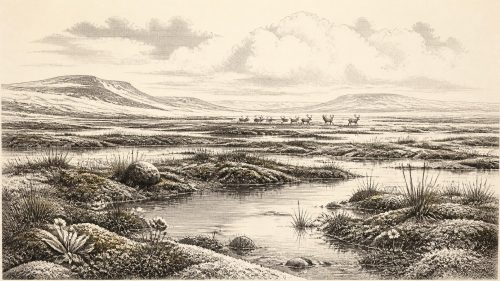
Thirty thousand years BCE is not a date for a recorded Irish event, but falls within an uncertain Late Pleistocene interval. At Derryvree, County Fermanagh, organic sediments between glacial tills indicate an ice-free, periglacial freshwater landscape during a broad period encompassing this year. Fossil lesser clubmoss, sedges, mosses, insects and pollen suggest treeless tundra wetlands. Castlepook Cave, County Cork, preserves remains of Ice Age animals, though not as a single contemporary community. A cut-marked reindeer bone may indicate early human activity, but cannot prove settlement. Recurrent ice advances, drainage and erosion obscure the landscape, preventing reconstruction or claims about society.
Read Article
Archived: 21 September 2026
Abstract
30,975 BCE is a modern label within Marine Isotope Stage 3, not a precisely datable Irish event. At Derryvree, County Fermanagh, freshwater organic sediments between tills record a cold, treeless wetland during an interglacial interval, dated broadly to 36,900–31,700 calibrated years BP. Fossils indicate sedges, grasses, mosses and arctic-alpine vegetation. Castlepook Cave, County Cork, preserves a mixed Late Pleistocene fauna including mammoth, reindeer and predators, showing intermittent connections with north-west Europe. A marked reindeer femur may indicate human butchery, but remains unconfirmed and cannot prove settlement. Growing ice sheets later overwhelmed many Irish landscapes, leaving fragmentary environmental evidence in Ireland.
Read Article

