Membership is completely free, giving members unlimited access to all available resources, services, features, and benefits without any restrictions or fees.
Welcome back. Sign in to continue enjoying unlimited access to all available resources, services, features, and member benefits at no cost.
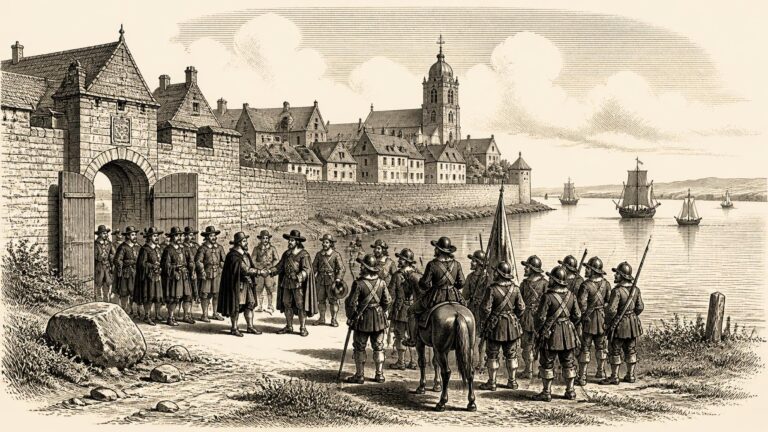
Galway had been under severe pressure since 1651. Sir Charles Coote’s parliamentarian force enclosed it from the landward side, while Commonwealth warships helped deny relief by sea. The town was more than a local stronghold. Its merchants connected western Ireland with Iberia, France and the wider Atlantic; its walls, civic institutions and Catholic elite made it one of the last substantial centres of the Confederate cause. Thomas Preston, an experienced Catholic commander, served as its military governor. The prolonged siege compounded the shortages already experienced by inhabitants and displaced people who had reached the city during the war.
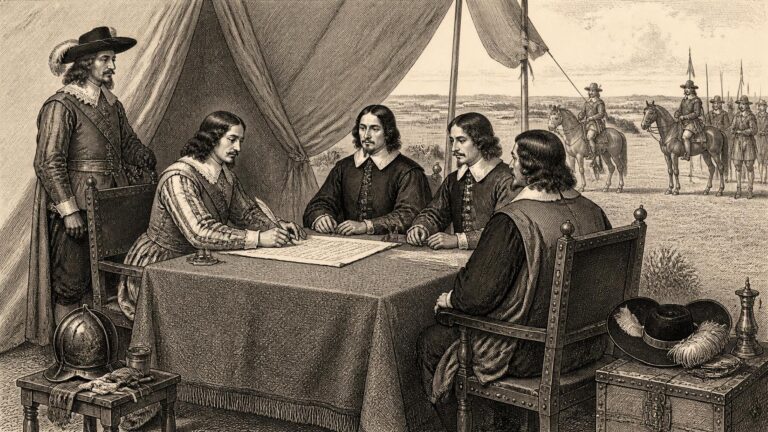
On 28 March, the Confederate Supreme Council concluded an agreement with James Butler, marquess of Ormond, Charles I’s lord lieutenant in Ireland. Ormond held Dublin for the king and was attempting to preserve royal authority in a kingdom divided among royalists, parliamentarians, Scottish Covenanters and Confederate Catholics. The proposed settlement was intended to bind the Confederates to the royal cause and permit Irish troops to assist Charles in Britain. For many members of the Supreme Council, especially those associated with Viscount Muskerry and the Old English Catholic landed interest, an agreement seemed the least dangerous option in a widening war.
The most securely dated Irish military event of the year was the Confederate capture of Duncannon Fort, at the entrance to Waterford Harbour. Thomas Preston’s Leinster army began its siege on 20 January. The fort was a formidable strategic position: whoever held it could threaten or protect shipping moving between Waterford, the Irish Sea and continental routes. It was also an English-held outpost embedded in a region otherwise strongly influenced by the Confederation. Its governor, Lord Esmonde, had to depend upon a comparatively small garrison, sea supply and the strength of the fortifications.
The year opened with a notable Confederate success. On 20 January, Thomas Preston captured Birr Castle in King’s County, now County Offaly. Preston was a professional soldier with long experience in continental warfare, especially siegecraft, and his arrival had strengthened the Confederate cause in Leinster. Birr’s fall showed that the Catholic Confederation could take and hold significant positions, not merely raise local forces. Yet it also exposed a persistent problem: armies could seize places, but feeding, paying and coordinating them over long distances was much harder.