
Year by Year
Explore Year by Year articles from the most modern historical year back to the oldest.
3,305 Articles Archived
Castlepook Foodwebs
Archived: 5 October 2026
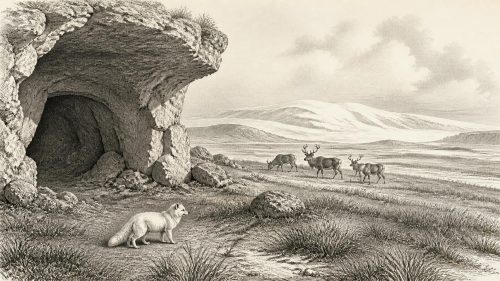
At the notional date of 30,244 BCE, Ireland lay in the Late Pleistocene, as the British–Irish Ice Sheet expanded unevenly towards its maximum. Evidence cannot describe a single year, and glaciation subsequently destroyed or concealed much earlier material. Castlepook Cave in County Cork preserves fauna including mammoth, reindeer, giant deer, brown bear, wolf, Arctic fox and hyaena, indicating varied cold, open habitats and food webs. A possibly tool-marked reindeer bone suggests, but does not prove, human presence around 33,000 years ago. No securely dated settlements or social evidence exist. The period represents an ecological threshold before extensive glaciation reshaped Ireland.
Giant Deer
Archived: 5 October 2026
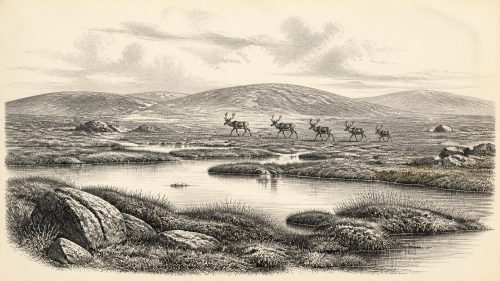
Although 30,245 BCE cannot denote a recoverable Irish calendar-year event, evidence places it within a volatile Late Pleistocene interval. Derryvree, County Fermanagh, preserves freshwater sediments between glacial tills, dated broadly to 34,950–29,750 BCE, indicating cold, treeless tundra-like conditions during an ice-free phase. Castlepook Cave, County Cork, yielded disturbed remains of reindeer, mammoth, giant deer, bears, foxes, wolves, lemmings and hyaenas, documenting changing fauna before the Last Glacial Maximum. A cut-marked reindeer femur may indicate human carcass processing around 31,000 BCE, but remains unconfirmed. No evidence supports settled communities, political events, farming, or a continuous land bridge at this particular time.
Waterford Herbivores
Archived: 5 October 2026
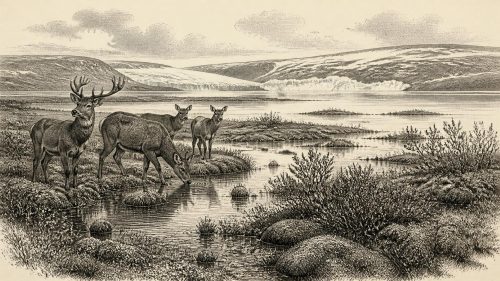
Approximately 30,246 BCE, Ireland experienced unstable Late Pleistocene conditions, with fluctuating ice margins, low sea levels and altered connections to Britain. Derryvree, County Fermanagh, preserves a wetland sequence between glacial advances, indicating cold, treeless freshwater vegetation, but not conditions across all Ireland. Waterford cave finds date red deer to a relevant pre-Last Glacial Maximum interval, demonstrating occasional large herbivore presence in the south-east. Castlepook Cave records diverse cold-stage fauna, although deposits are time-averaged. Possible tool marks on a reindeer bone suggest human visits, not settlement. No evidence supports communities, farming, politics or culture. Fragmentary records reveal a dynamic Ice-Age landscape.

Clubmoss Flora
Archived: 5 October 2026
Around 30,247 BCE, Ireland cannot be described through annual history or documented society. The Derryvree deposit in County Fermanagh, organic freshwater silts sealed between glacial tills, dates broadly to 36,900–31,700 calibrated years before present. It records locally ice-free, periglacial tundra with pools, wetlands and cold-adapted plants, including bogbean, dwarf willow, mountain avens and lesser clubmoss. Cave finds indicate varied Ice Age fauna, though deposits are not strictly contemporary. No secure evidence establishes human settlement, culture or activity then; disputed clues remain inconclusive. Derryvree instead reveals environmental change before later ice-sheet expansion buried and eroded much of Ireland's older physical landscape.
Ecological Threshold
Archived: 5 October 2026
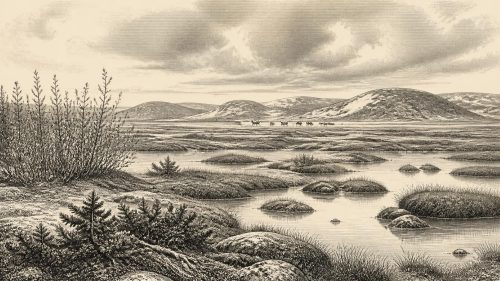
Thirty thousand two hundred and forty-eight BCE is a date not a recoverable Irish year. Derryvree, County Fermanagh, preserves freshwater organic deposits between glacial tills, dated to an ice-free interval around this period, demonstrating environmental change rather than island-wide deglaciation. Its plants and insects indicate cold, open tundra-like terrain. Castlepook Cave, County Cork, records a pre-Last Glacial Maximum fauna including mammoth, reindeer, giant deer, hyaena and bear, linking Ireland ecologically with Britain and continental Europe. A cut-marked reindeer bone suggests human presence, but no settlement evidence exists. The period is therefore an environmental history of climate, ice margins and fauna.
Interstadial Waterlogging
Archived: 5 October 2026
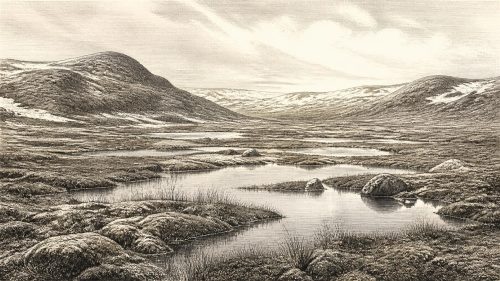
Around 30,249 BCE, Ireland lay within the fluctuating MIS 3 cold stage, although the date can only be treated as a broad chronological label. At Derryvree, County Fermanagh, freshwater silts and organic deposits between two tills record a treeless tundra wetland during an interval between glacial advances. Mosses, sedges and aquatic life indicate harsh but locally ice-free, waterlogged conditions. Ice was expanding towards the Last Glacial Maximum, repeatedly reshaping landscapes and obscuring evidence. Southern caves preserve cold-adapted mammals, including reindeer and mammoth, while a possibly butchered reindeer bone suggests, but cannot prove, early human activity. No settlement history is recoverable.

Moss Sedges
Archived: 5 October 2026
Around 30,250 BCE, Ireland lay within the climatically unstable Late Pleistocene, not a datable historical year. Expanding ice, lower sea levels and regional contrasts shaped an intermittently ice-free landscape. At Derryvree, County Fermanagh, freshwater deposits between glacial tills preserve mosses, sedges, insects and other evidence of cold, open wetland conditions before renewed glaciation. Southern cave deposits, especially Castlepook, record diverse Ice Age fauna, including reindeer, mammoth, giant deer, bear, wolf and hyaena, accumulated over extended periods. A possibly tool-marked reindeer bone suggests, but does not prove, human visitation. No secure settlement, institutions, beliefs or continuous human occupation are known today.

Putative Striations
Archived: 5 October 2026
About 30,251 BCE, Ireland lay within the climatically unstable later Marine Isotope Stage 3, rather than a precisely recoverable year. Derryvree, County Fermanagh, preserves freshwater sediments between glacial tills, indicating an ice-free interval with open, treeless, wet periglacial vegetation. Castlepook Cave, County Cork, contains a diverse fauna including mammoth, reindeer, giant deer, hyaena and Arctic fox, accumulated across complex periods. A striated reindeer femur may record stone-tool butchery around 33,000 years ago, but disturbed deposits and lack of tools prevent secure proof of human presence. No evidence supports settlement or institutions; environmental change and advancing ice define the period here.
Lemming Remains
Archived: 5 October 2026
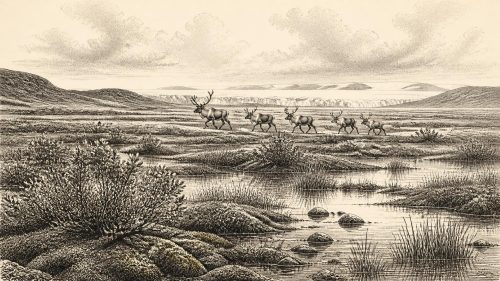
About 30,252 BCE, Ireland lay in the climatically unstable Late Pleistocene, before the Last Glacial Maximum. Ice extent, coastlines and animal routes changed repeatedly, making precise reconstruction impossible. Derryvree, County Fermanagh, preserves wetland sediments indicating treeless, cold freshwater habitats during an ice-free interval, though its radiocarbon age is uncertain. Castlepook Cave, County Cork, yielded diverse fauna, including reindeer, lemmings, mammoth and predators, accumulated over long periods rather than one community. An incised reindeer femur may indicate human butchery around 30,000 BCE, but lacks secure archaeological context. No evidence establishes permanent settlement, society or political life; faunal records remain uncertain overall.
Juniper Shrubs
Archived: 5 October 2026
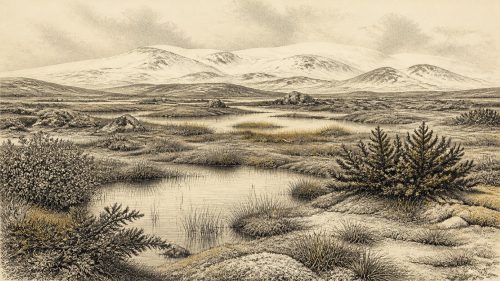
About 30,253 BCE, Ireland lay within a fluctuating Late Pleistocene landscape rather than a dateable historical year. At Derryvree, County Fermanagh, freshwater silts between glacial tills record a locally ice-free cold wetland, dated broadly to 36,900–31,700 cal BP. Plant, pollen and insect remains indicate open tundra-like ground with mosses, sedges, juniper, pools and sparse shrubs. Crag Cave demonstrates episodic groundwater infiltration, while Castlepook fauna attest to cold-adapted mammals but mixed deposits complicate chronology. No secure evidence confirms human settlement. A possibly cut-marked reindeer bone suggests tentative Upper Palaeolithic visits. These fragmentary records reveal regional climatic instability, approaching glaciation, and uncertainty.
Some records do not yet have a verified historical year and are awaiting chronological placement.