Road Contracts
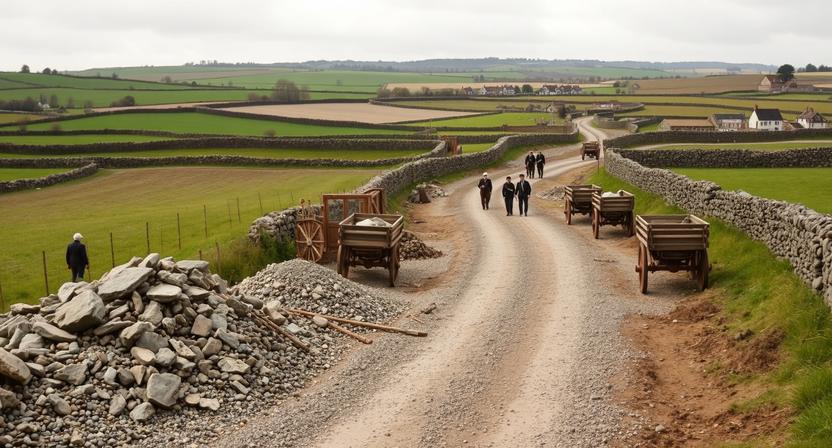
On 8 February 1900, the issue of Irish rural-road contracts and access to suitable road-building materials was questioned in Parliament, a matter with far-reaching implications for communities across Ireland. Reliable rural roads were vital for economic development, agricultural transport, and social connection, and any shortcomings in their construction or maintenance directly impacted daily life and prosperity.
Parliamentary debate focused on irregularities in the awarding of contracts, challenges in sourcing durable stone and gravel, and complaints from local authorities about delays and substandard materials. Members highlighted the difficulties faced by rural districts where poor roads hindered the movement of goods and people, particularly in areas with boggy or rocky terrain. Government officials acknowledged the concerns and committed to investigating procurement processes, ensuring fair competition, and improving oversight on material quality.
Across Ireland, local newspapers reported frustrations from farmers, merchants, and passengers forced to contend with muddy, rutted, or impassable roads. County councils and rural boards demanded more transparency in contract allocation and called for investment in better quarries, machinery, and skilled labour. The discussion also touched on the need for technical expertise and the adoption of modern road-building methods to bring Ireland’s infrastructure up to standard.
The scrutiny of road contracts and materials in February 1900 underscored the importance of infrastructure to rural life and economic progress, and reflected a growing demand for accountability and innovation in public works.
- UK Parliament, Hansard, HC Deb 8 February 1900, “Irish Road Contracts.”
- Freeman’s Journal (Dublin), 9 February 1900, coverage of rural road issues.
- Irish Times, 9 February 1900, reports on infrastructure and procurement debates.
- Local government minutes, February 1900, records of county council discussions.
