Cenn Ailbe499 CE
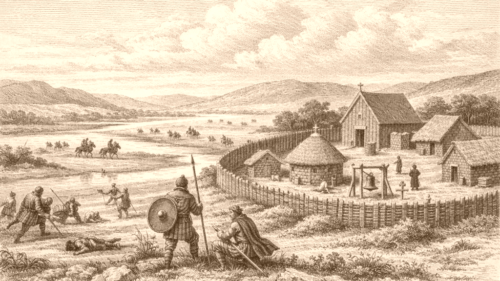
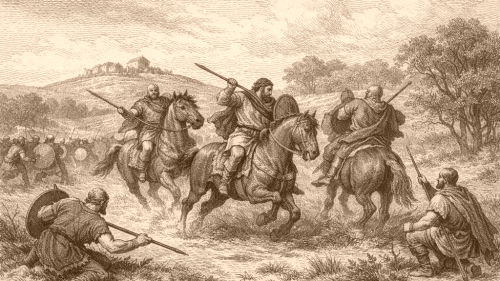
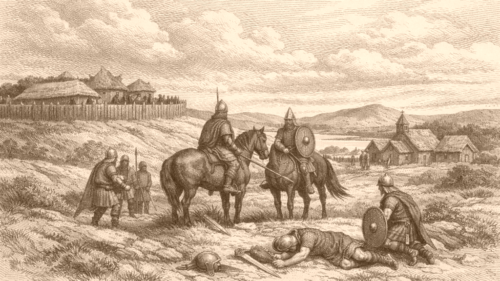
The surviving annals give a sparse and uneven picture for 499 CE. One tradition names the battle of Cenn Ailbe, another records only a battle and the death of Bishop Ibar, and related annals preserve nearby entries with different year placements. The result is a brief record marked by agreement on martial activity but not by full agreement on dating or wording.
Dateline
Year Record
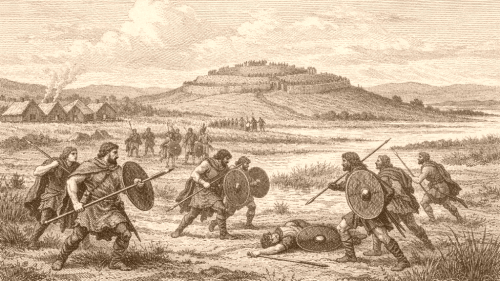
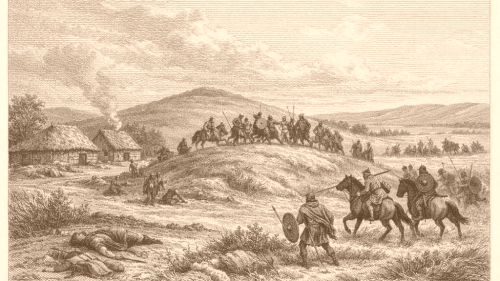
The Annals of Tigernach record the battle of Sleamain in Meath, won over Leinster by Cairbre mac Neill. The Annals of Ulster, under printed AD heading 500, record the battle of Cenn Ailbe won over the Laigin by Cairpre son of Niall. Chronicon Scotorum, under printed AD heading 499, records the battle of Druim Lochmaighe gained by the Lagenians over the Ui Neill. [2] [1] [3]
Dating Notes
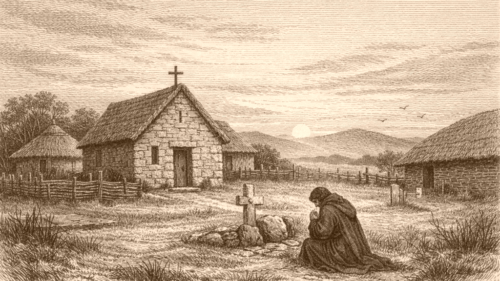
The year placement varies across the surviving annals. The Annals of Ulster have a battle entry and a separate notice of the repose of bishop Ibar under the heading AD 499. The Annals of Tigernach record the battle of Cenn Ailbe gained over Leinster by Cairbre son of Niall. The Annals of Inisfallen include the repose of Mo-Chóe of Naendruim and the repose of bishop Ibar. [1] [2] [4]
Broader Context
Beyond the named battle notices, the material for 499 is thin. The surviving entries do not provide a fuller narrative of the year, and the most secure statement is simply that several annal traditions preserve martial and obituary notices around this date, with overlapping but not identical wording and year placement. [1] [2] [3] [4]
Source References
Hover over a number to see the source. Select it to open the source.