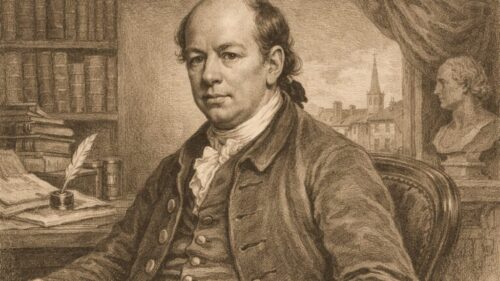
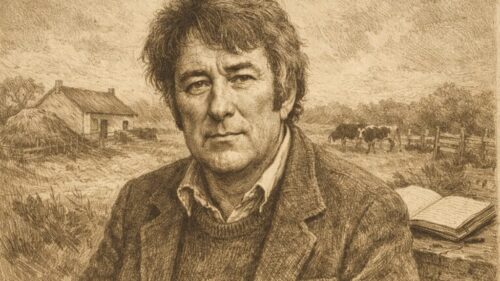
Eoghan Rua
Eoghan Rua Ó Súilleabháin is named in a University College Cork manuscript page as the author of a text beginning Conntae Chorcaídhe mar aon le mórchuaird na hEirionn go huile. The same page describes him as file fallsamhuin focalcheart and refers to him among the ceartbhreitheamhnaibh named there. The manuscript page also notes use in An Barántas, showing that his work was present in that textual tradition. The same manuscript extract lists further pieces associated with the collection: BRUÍGHEAN AN CHAORTHAINN annso, Cómharle an mhic ón athair, TUITIM MHIC RÍOGH NA HEASBÁINNE le hOsgur mac Oisín, and BRUÍGHEAN CÉISE CHORADH.
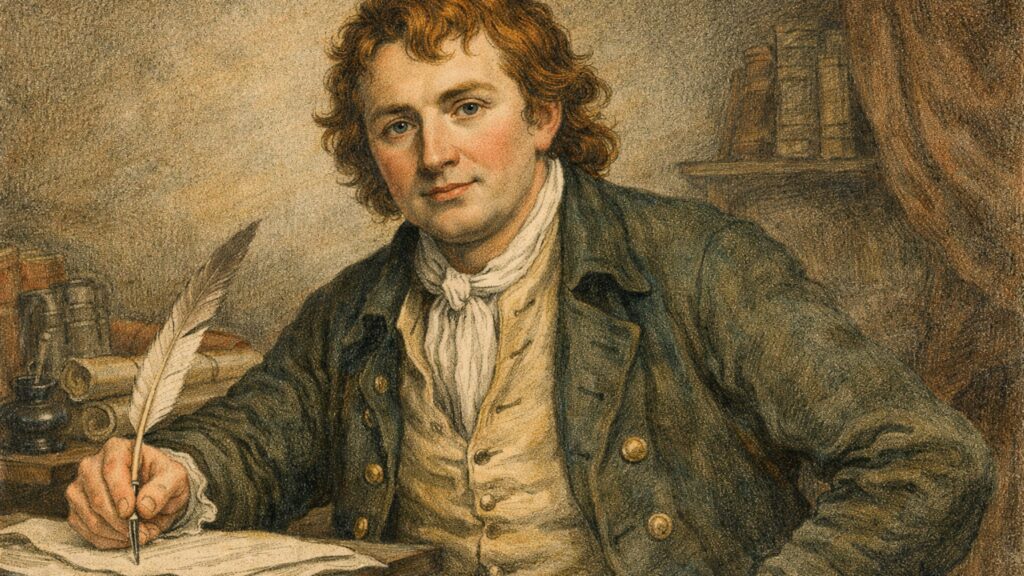
Dateline
Literary Work
Eoghan Rua Ó Súilleabháin is named in a University College Cork manuscript page as the author of a text beginning Conntae Chorcaídhe mar aon le mórchuaird na hEirionn go huile. The same page describes him as file fallsamhuin focalcheart and refers to him among the ceartbhreitheamhnaibh named there. The manuscript page also notes use in An Barántas, showing that his work was present in that textual tradition.
Manuscript Record
The same manuscript extract lists further pieces associated with the collection: BRUÍGHEAN AN CHAORTHAINN annso, Cómharle an mhic ón athair, TUITIM MHIC RÍOGH NA HEASBÁINNE le hOsgur mac Oisín, and BRUÍGHEAN CÉISE CHORADH. In the extract, a colophon states that one text was written by Eógan Ua Súilliobháin on 22 October 1773.
Modern Study
A 2024 article by Máire Ní Íceadha, ‘A Song in English composed by Eoghan Rua Ó Súilleabháin’, was published in Sliabh Luachra. The Journal of Cumann Luachra.
Source References
Hover over a number to see the source. Select it to open the source.