Private Army
At a Glance
Archive Context
The Military Archives describes itself as the official place of deposit for records of the Irish Defence Forces, the Department of Defence, and the Army Pensions Board. It also says its brief is to collect material from the foundation of the Irish State up to the present day, including records from overseas missions. In this account, the archive is presented as a continuing state repository rather than a closed historical storehouse.
The same description states that, from as early as 1924, the National Army undertook to preserve historical documents from that period, in recognition of the importance of the War of Independence. The passage does not explain every step in that process, but it does identify an early institutional effort to keep army records and names specific collections that remain accessible today through the Military Archives.
Commission Role
The Irish Manuscripts Commission presents a different kind of institution. It says that it publishes, in print and online, original source material for the study of the histories and cultures of Ireland, and that it is not a repository for manuscripts. Its own explanation therefore draws a clear line between publication and custody, with its role centered on making source material available rather than housing it.
The Commission also says that over 40 out-of-print publications are searchable free of charge on its website, and that its serial Analecta Hibernica has been digitised and is fully searchable through library access. Its wider remit is described as covering Ireland's histories from early to contemporary periods, with publications appearing in both print and digital forms. Those statements show a broad publishing programme and several routes to consultation.
Military Holdings
The Military Archives identifies several named holdings connected to the Revolutionary era, including the Collins Papers, Civil War Operations and Intelligence files, and Captured Documents from the Civil War up to 1925. It also lists the Military Service Pensions Collection, the Bureau of Military History Collection, and the Brother Allen Collection as major collections. The text groups these as significant materials spanning before, during, and after the revolutionary period.
The Bureau of Military History entry adds that the collection contains 1,773 witness statements, 334 sets of contemporary documents, 42 sets of photographs, and 13 voice recordings. It was collected by the state between 1947 and 1957 to gather primary source material for the revolutionary period in Ireland from 1913 to 1921. The entry also notes that it contains many references and some documentation relating to Cumann na mBan.
Women References
Among the references in the Bureau of Military History description is Cumann na mBan, a women's organisation repeatedly linked there to the revolutionary period. The entry does not give a fuller narrative of that organisation, but it does state that the collection includes many references and some documentation relating to it. That makes the women-related material visible as part of a larger military archive rather than as a separate catalogue.
The Irish Manuscripts Commission's Women's History Sources database is described as a searchable database of 20,000 sources for Irish women's history. The same site places this resource within a wider publishing programme that includes digital editions and other primary-source tools. In the context of army history, the evidence here is limited to the fact that this is a separate searchable database within the Commission's holdings.
Reading Access
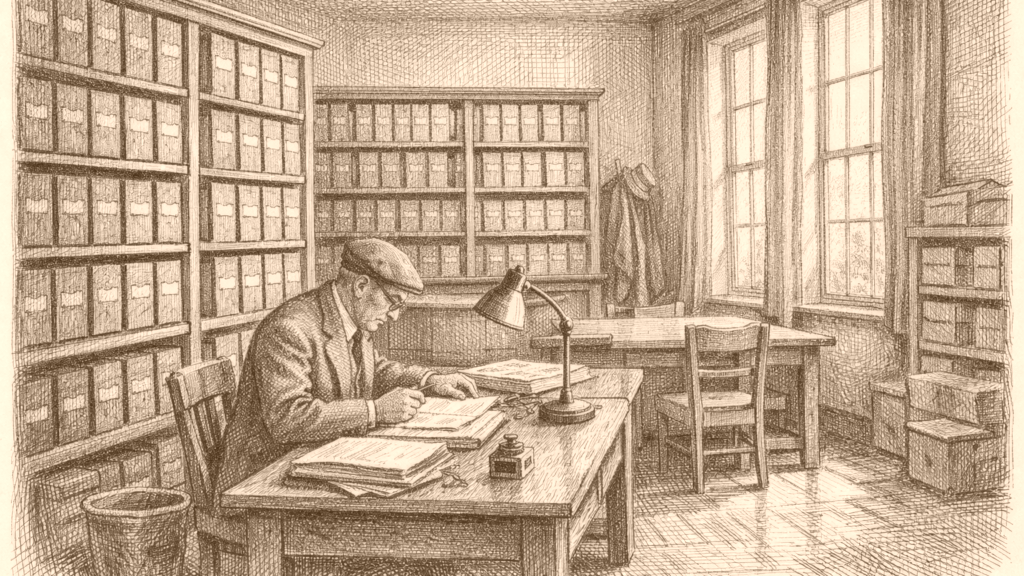
Access is described differently by the two institutions. The Military Archives says it provides public services through its website and in-person reading room, helping with family history queries, academic research, and documentary sourcing. It also says its records are protected in a climate-controlled repository with shelving over two floors. These details present a working archive designed for consultation as well as preservation.
The Irish Manuscripts Commission says its publications are available in many public libraries and in the National Library of Ireland, and that its publications are also lodged in thirteen copyright libraries in Ireland and the United Kingdom. It further notes that proposals for publications may come from scholars, institutions, and the general public. The available text shows circulation, not manuscript custody, as the Commission's principal public role.
Historical Scope
Read together, the descriptions show two complementary ways of approaching army history. One institution preserves and opens records of the Defence Forces, Defence Department, and Army Pensions Board; the other publishes and circulates original sources across Ireland's histories. The evidence does not merge these functions, but it does show that army-related primary material appears both as archival holdings and as published source editions.
The clearest shared feature is accessibility. The Military Archives emphasizes public research use, while the Irish Manuscripts Commission emphasizes searchable publications and library circulation. The excerpts do not offer a full chronology of every army-related collection, nor do they settle every relationship between custody and publication. They do, however, document a public record in which military history is made available through multiple institutions and formats.