

Visitor Inspired Articles
Inspired by your searches. Researched and illustrated by Emerald Archives.
Explore Ireland’s history through the people, places and subjects that spark your curiosity. This collection brings together detailed, illustrated articles inspired by visitor searches, with sources and links for further reading.
Archived: 26th October 2026
Spring Sovereignty
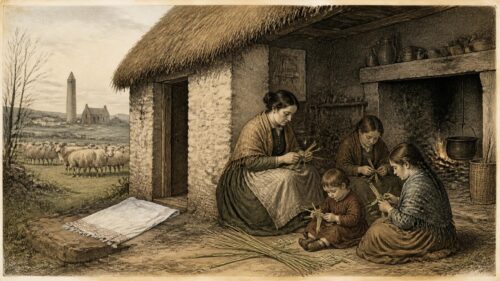
This article examines the historical relationship between St Brigid of Kildare and Imbolc, Ireland’s early February seasonal observance. It separates early medieval hagiography, medieval literary references to the goddess Brigit, later folklore, and modern public commemoration. Brigid’s earliest surviving Lives reveal the priorities of seventh century Kildare more securely than the details of a fifth century biography. Imbolc’s agricultural associations are plausible, but its prehistoric rituals cannot be reconstructed confidently. Irish household customs surrounding 1 February demonstrate vibrant religious tradition without proving unchanged pagan survival. The article argues that Brigid’s enduring power lies in layered reinterpretation, not a simplistic conversion narrative across Irish history.
Archived: 26th October 2026
Playing Ireland
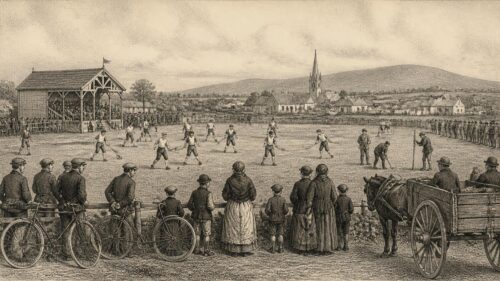
Sport has long supplied Irish communities with more than recreation: it has organised neighbourhoods, parishes, schools, workplaces, diasporas and public memories. This article traces the formation of modern sporting associations from eighteenth-century clubs through the Gaelic revival, examining Gaelic games alongside rugby, soccer, athletics and women’s sport. It argues that clubs became influential local institutions because they combined competition with voluntary labour, sociability and identity. The record also shows exclusions shaped by class, gender, religion and partition. Rather than treating sport as a timeless national essence, the article distinguishes evidence from folklore and considers how communities remade sporting traditions amid change.
Archived: 26th October 2026
Sovereign Voices
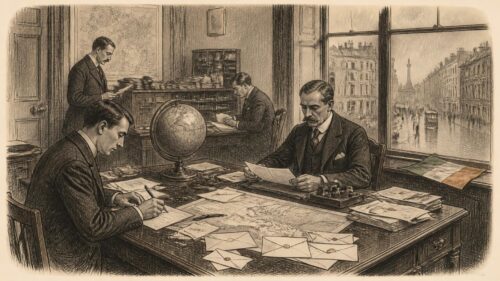
This article traces the making of Irish diplomacy from revolutionary representation in 1919 through the consolidation of an independent foreign service, League of Nations activity, wartime neutrality, United Nations work, European integration and the diplomacy surrounding Northern Ireland’s peace process. It argues that Irish governments repeatedly used international law, multilateral institutions and carefully managed bilateral relationships to enlarge room for action, even while geography, economic dependence and partition imposed hard limits. The narrative separates evidence from retrospective national myth, showing diplomacy as practical statecraft rather than a continuous heroic march towards sovereignty. It also identifies unresolved tensions between neutrality, interdependence and consent.
Archived: 26th October 2026
Public Streets
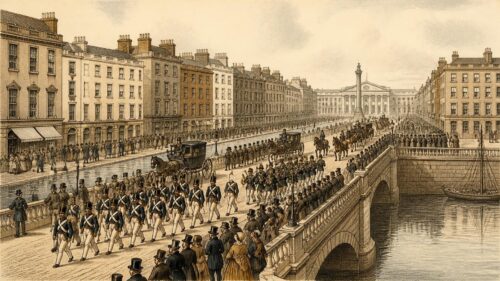
This article traces Dublin’s parade culture from late medieval religious processions to modern civic, nationalist, military, festive and LGBTQ+ marches. It argues that parades have never been mere entertainment: they have made claims upon streets, audiences, memory, faith, authority and belonging. Drawing on archival, museum, scholarly and broadcast sources, it separates firm documentation from reasonable historical interpretation and later folklore. Particular attention is given to contested political processions, the invention of national spectacle, St Patrick’s Day, An Tóstal, revolutionary commemoration and Pride. Dublin emerges as a city whose public routes have repeatedly become temporary stages on which competing versions of Ireland have been performed.
Archived: 26th October 2026
Thomond Kingdom
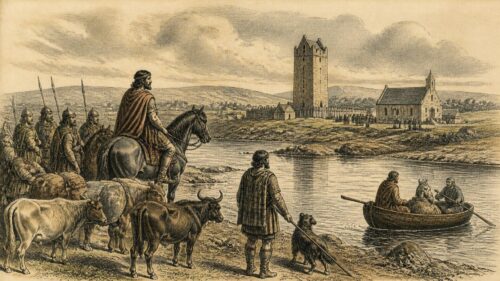
Thomond, or Tuadmumu, was the northern half of Munster and, from the twelfth to sixteenth centuries, a Gaelic lordship centred on the Shannon, Clare, north Tipperary and the Limerick hinterland. Its history cannot be reduced to an O’Brien family chronicle. It encompasses shifting borders, churches, towns, castles, learned lineages, warfare, trade and accommodation with neighbouring Gaelic and Anglo-Norman powers. This article traces Thomond from its emergence after Munster’s political division through the crisis of conquest and civil war to Tudor surrender and regrant. It also examines how Irish lordship worked, what its sources can and cannot prove, and Thomond’s enduring importance.
Archived: 26th October 2026
Niall Mór
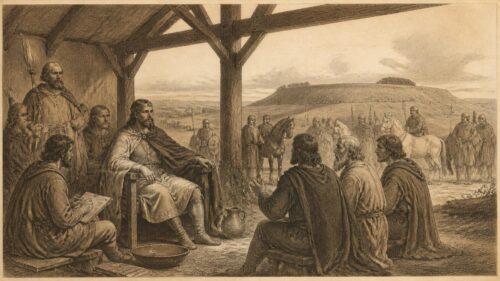
Niall Mór Ó Néill, who died in 1397, transformed the political landscape of late medieval Ulster. As king of Tír Eógain, he exploited the collapse of the de Burgh earldom, fought colonial forces and Irish rivals, and made a visible claim to provincial authority. His reign combined raids, negotiated submissions, hostage-taking, dynastic management and cultural patronage. The house erected at Eamhain Macha expressed an appeal to Ulster’s legendary past, while dealings with Richard II exposed limits on O’Neill power. This article separates annalistic record from later interpretation, assesses his contested title, and considers the inheritance passed to son, Niall Óg.