Independence Records
At a Glance
Archive Scope
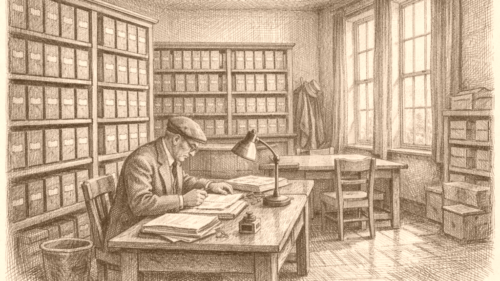
The Bureau of Military History collection is described as a body of 1,773 witness statements, 334 sets of contemporary documents, 42 sets of photographs, and 13 voice recordings gathered by the State between 1947 and 1957. Its official brief was to assemble and co-ordinate material for the history of the movement for Independence from the formation of the Irish Volunteers in November 1913 to July 1921. The description presents the collection as a structured attempt to gather primary source material for that period.
The same collection page also states that the Bureau was among the most important primary sources of information on the revolutionary period available anywhere in the world. It notes that the collection was locked away in the Department of An Taoiseach for about forty-five years after the last statement was collected, then transferred to Military Archives in 2001 and launched online in March 2003. These details show a later phase of public release without describing the full earlier access history.
Museum Holdings
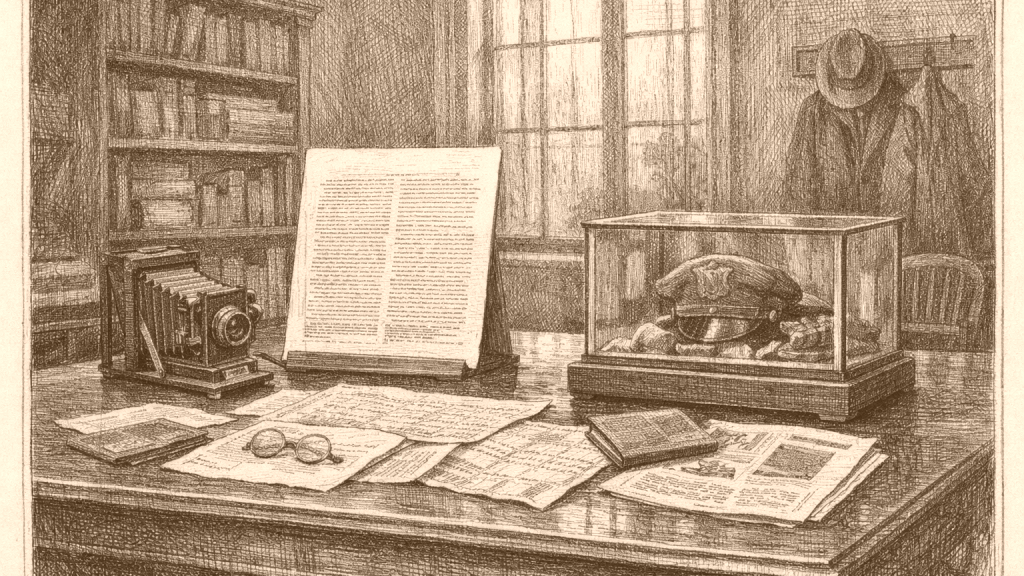
The National Museum of Ireland says its historical collections tell the military and political history of the Irish both at home and abroad, from the sixteenth to the twentieth centuries. It gives a sample of 10,000 records from a wider total of 36,000 objects. The sample includes uniforms, flags, letters, photographs, firearms, and personal relics of Irish men and women who fought for an independent Ireland, showing a mixed body of material rather than a single type of evidence.
The museum page also says that most of these objects have never been on public display and that many cannot be displayed in a gallery because of preservation concerns. It adds that they were presented online for the first time to coincide with the centenary of the 1916 Rising and the Decade of Commemorations. The wording describes presentation and display status, but it does not detail any particular object beyond the general categories listed in the collection.
Printed Evidence
The National Print Museum identifies the Proclamation of the Irish Republic as a printed document dated 23 April 1916. Its description says the proclamation was printed on Easter Sunday 1916 for use in the planned Easter Rising, and that the Rising was a rebellion by a group of revolutionaries attempting to gain Ireland's independence from Britain. The record also states that it was typeset by Liam O'Briain and Michael Molloy and printed by Christopher Brady on a Wharfedale press.
The same record gives a production range of between 1,000 and 2,500 copies, with around 30 known to have survived. It further states that one copy was read aloud from the steps of Dublin's General Post Office by Pádraig Pearse on the morning of the Rising, 24 April 1916. These details concern the document's production, survival, and one documented act of public reading, all within the single museum record.
Hyde Writings
A Maynooth repository record for an article on Douglas Hyde describes a set of overlooked primary sources related to the 1916 Easter Rising. The abstract says these sources include a journal kept at the time of the Rising with eyewitness details, a written reflection on Easter Week, and a personal statement gathered from Charles MacNeill about the turmoil experienced by his brother Eoin MacNeill. The repository entry identifies these as ego-documents used to expand understanding of Hyde's political ideology.
The same abstract says the documents help reveal Hyde as patriot, future president of Ireland, and pacifist, and that they explain the manner in which he approached rebellion and nationalism. This is a description of the article's own argument, not a direct statement about the events themselves. The repository record therefore shows how one set of writings has been framed for historical analysis, while remaining limited to the abstract's wording.
Witness Statements
The Bureau page notes that the staff included army officers, civil servants, and interviewing officers who travelled throughout Ireland during the lifetime of the Bureau to interview survivors of the period. It also states that an advisory committee assisted the work. These details describe the collection's personnel and method of gathering testimony, but only at the level explicitly given in the collection guide.
The same guide says interviewers filled out opinion sheets on each subject and that a very small number of abstractions were made in 2003 to prevent undue distress to persons who might have been living then. It also notes that the Bureau's internal working files are available for research in Military Archives. Those statements mark both the presence of editorial handling and the existence of additional internal files without describing their contents in detail.
Collection Limits
The Bureau guide says that, although the collection is extremely diverse and of international importance, it failed to secure the cooperation of many survivors who later rejected the Anglo-Irish Treaty. It adds that the collection does not include detailed statements from prominent Anti-Treaty survivors such as Tom Barry, and that there was also reluctance to seek witness statements and original records concerning the Irish Civil War. These are explicit statements about absence within the collection guide itself.
The same passage also says that much of the Bureau material does cover aspects of the Civil War, because many contributors submitted information extending beyond 1921. In contrast, the collection's official brief is set firmly between 1913 and 1921. The juxtaposition of those two statements shows a defined chronological focus alongside some material that reaches beyond the stated end point, without requiring any broader inference.