
Pier Remembering
At a Glance
Pier Setting
Buncrana Pier is described as a slipway on the shorefront beside Lough Swilly, with ferry activity and a scenic westward view across the water. One report notes that the pier looks ordinary apart from occasional floral tributes, while another describes the sunset over the Fanad Peninsula as a feature that draws visitors. The setting is therefore both practical and commemorative, because people come for travel, scenery, and remembrance together.
The harbour context reaches back beyond the memorial events. A 1929 statutory order created Buncrana Harbour Commissioners and vested the pier and harbour in them, showing formal management of the harbour area. The same order defines the existing harbour as the pier and harbour of Buncrana, and it names the local council and commissioners as the bodies involved in harbour administration. That documentation places the pier within a regulated civic landscape rather than an isolated shoreline.
Tragedy Remembered
The remembrance associated with Buncrana Pier centers on the deaths in March 2016. One report states that five members of one family died when their car slipped into Lough Swilly off the pier, and that one infant survived. Another account gives the names and relationships of the dead and says the vehicle sank after sliding off a slipway. These descriptions establish the event that made the pier a site of grief and later commemoration.
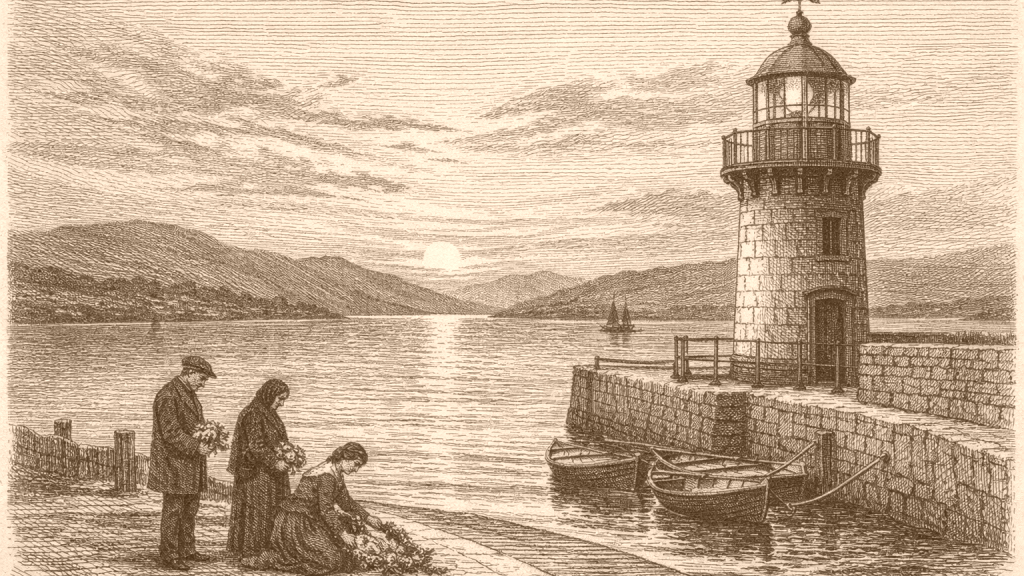
Later coverage notes that people still visited the pier to remember the victims. One article says some visitors were tourists drawn by the beauty of Lough Swilly, while others came specifically to remember those who died. It also records floral tributes left at the pier and describes the anniversary weekend as one in which the town was again gathering around loss. The evidence shows remembrance becoming part of the site’s everyday appearance.
Anniversary Walks
Anniversary remembrance took the form of public walking events. In 2017, a report described Buncrana as again in mourning on the first anniversary of the pier deaths. In 2026, hundreds attended a memorial walk wearing red and white, and a minute’s silence was held before people set off. The walk is described as a collective act of memory rather than a private family gathering, with the crowd marking the passage of ten years.
The later account gives more detail about the walk’s tone and purpose. Louise James said the support was overwhelming and wanted laughter, fun, and smiling as part of remembrance. She also said the day unfolded as she wanted it to, and that the event was a celebration of lives that would not be forgotten. Those statements show remembrance here being expressed through public participation, music, and shared presence at the pier.
Family Presence
The commemorations are closely tied to the surviving child and the wider family. One event listing says the tenth anniversary walk was to celebrate the lives of the McGrotty and Daniels family, and that Rioghnach, who was five months old at the time of the tragedy, had recently turned ten. Another report says Louise James said her daughter frequently comes down to the pier to remember the family. The site is therefore described as a place of repeated return.
The remembrance walk was also linked to gratitude toward rescuers and the RNLI. The event description says Louise wished to thank the emergency services, particularly Lough Swilly RNLI, for bringing her loved ones home so they could be laid to rest with dignity. The later report says donations were collected for the RNLI and the walk ended at the lifeboat station. These details connect remembrance with practical acts of thanks at the shoreline.
Lighthouse Return
The pier’s lighthouse forms part of the same remembered landscape. One building record says the lighthouse was erected in 1876, originally as a cast-iron structure with a circular platform, and that it stood at the west end of the main pier before being removed. Another record says it was established in January 1876 and later converted from oil to acetylene and then to electricity. The lighthouse is thus documented as an older feature that predated the memorial events by generations.
The lighthouse was later restored and returned to the seafront. One account says the Commissioners of Irish Lights decided in 2009 to replace the original cast-iron structure, that the old lighthouse was salvaged by local historical interest, and that the restored piece was erected in 2010. Another says the Buncrana Historical Society had it restored by Crana Engineering and resited in August 2010 overlooking Lough Swilly. In this setting, maritime heritage and remembrance share the same shoreline.
Public Memory
The evidence shows a place where remembrance is expressed through repeated public presence rather than through a single monument alone. Floral tributes, anniversary walks, pauses of silence, and the continued return of family members all appear in the reports. The shoreline path, the RNLI station, and the restored lighthouse each belong to the same visible environment, but the records do not describe a formal memorial structure dedicated solely to the tragedy in these excerpts.
Buncrana Pier remembrance is therefore best read as layered site memory. The harbour was formally organized in the twentieth century, the lighthouse belongs to a longer maritime history, and the tragedy of 2016 reshaped how people describe and use the place in the present. The sources do not explain every reason people attend, but they do show a shoreline where tourism, rescue, family grief, and communal walking now overlap.
