Druim Dergaide515 CE
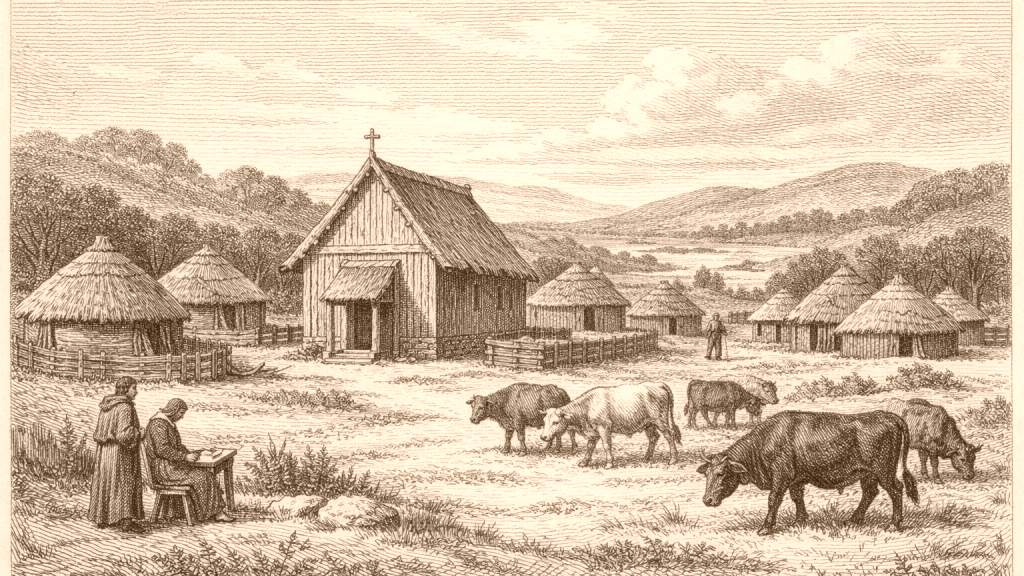
The surviving annals give a sparse picture of Ireland in 515 CE. They record an Irish death notice, a birth notice for Comgall of Bennchor, and, in another annal tradition, an unrelated Roman church notice placed in the same year. The texts also show some dating variation, so the year is best treated as a small cluster of annal entries rather than a single major event.
Dateline
Irish Notices
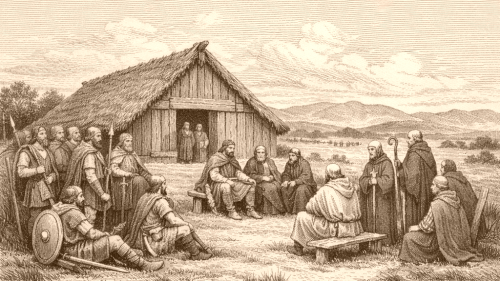
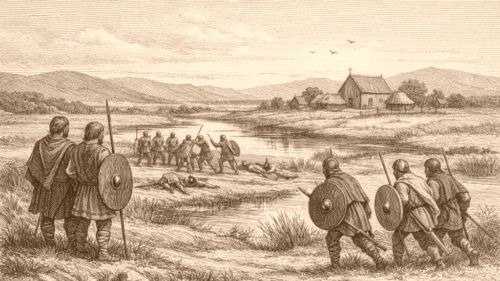
For 515 CE, the Annals of Tigernach record the death of Dubthach of Armagh, the Annals of Inisfallen note the birth of Comgall of Bennchor, and Chronicon Scotorum records Comgall’s birth under A.D. 515. In the Annals of Ulster, Hormistas was ordained under the printed AD heading 514, and under the printed AD heading 515 the record includes the battle of Druim Derg against Failge and the birth of Comgall of Bennchor. [2] [3] [4] [1]
Dating Forms
The year is not handled identically in every annal tradition. In the Annals of Ulster, Hormista’s ordination appears under the heading with printed AD heading 514. Tigernach and Inisfallen also record Comgall of Bennchor’s birth, but their surviving year labels do not match Ulster’s dating, and they do not supply explicit AD headings. [1] [2] [4]
Sparse Record
Across these annals, the notices for this period include the death of Dubthach of Armagh, the birth of Comgall of Bennchor, Hormistas’s ordination under the Annals of Ulster’s printed AD heading 514, and the battle of Druim Derg against Failge under printed AD heading 515 in the Annals of Ulster and the parallel battle notice in the Annals of Inisfallen. [2] [3] [4] [1]
Source References
Hover over a number to see the source. Select it to open the source.