
Articles
Archiving 154 Articles
Explore carefully researched articles documenting the people, places, events and everyday experiences that shaped Limerick city and county. This collection brings together local history, biography, politics, business, industry, education, religion, sport, transport, family life, social change and historic news. Each article is intended to preserve accessible historical information for families, students, researchers and communities. Created and curated by Gerard J. Hannan, the archive is independently funded and freely available. The collection continues to grow as additional stories are researched, written and permanently preserved for present and future generations of Limerick people throughout Ireland and across the world.
24 June 2026
Scholar Remembered
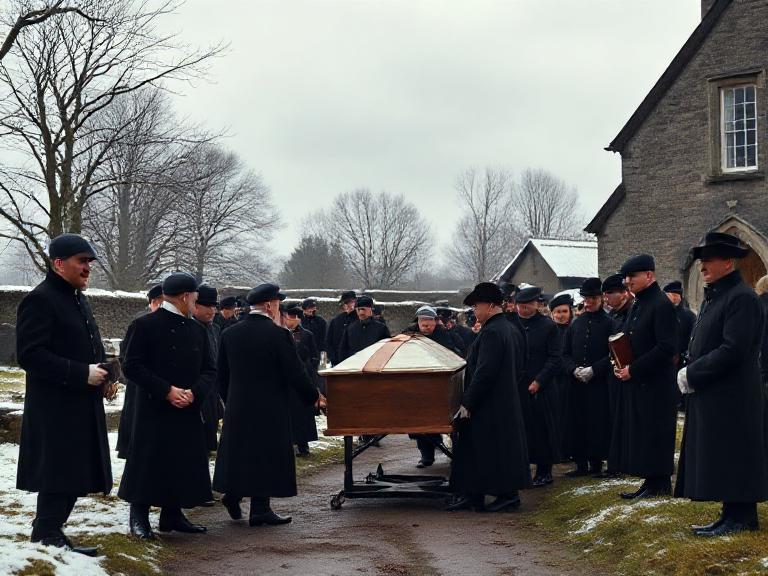
The Reverend Robert King, clergyman, teacher and respected historian of the Irish church, died on 4 January after several years of declining health. Born in Cork in 1815, he had spent more than four decades in County Antrim, where he served as headmaster of the diocesan school at Ballymena. His death ended a long career combining parish work, education, historical research and Irish-language scholarship. King was buried at Broughshane, a village closely associated with the final period of his life, while former pupils, clergy and readers were left to assess the unusual range of his intellectual labour.
Read Article
19 June 2026
National Network
Parliamentary nationalism has acquired a powerful new local organisation following the acceptance of the United Irish League as the principal popular body supporting the reunited Irish Parliamentary Party. For nationalists throughout Limerick city and county, the arrangement promises to connect political representation at Westminster with campaigns concerning tenant rights, land purchase and the division of grazing estates. League branches may now provide farmers, labourers, shopkeepers and local political organisers with a direct influence upon nationalist policy and parliamentary candidate selection. The development places organised public opinion behind John Redmond’s leadership while preserving the land question as a central concern of…
Read Article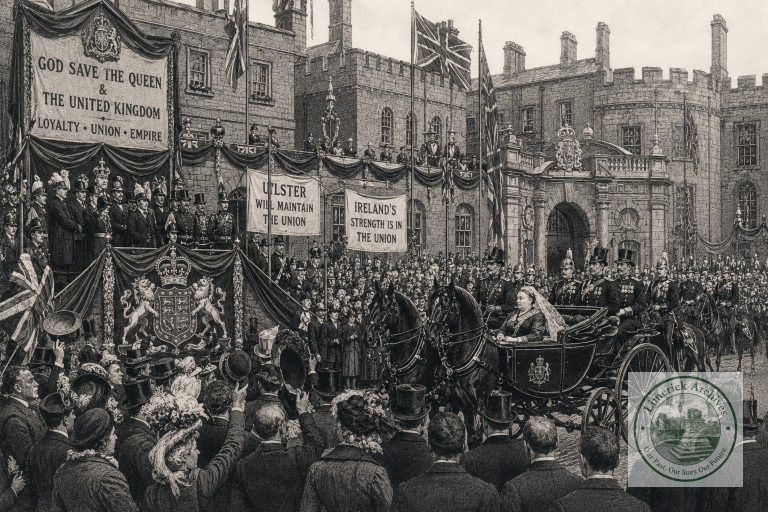
19 June 2026
Unionist Display
Dublin Castle and unionist organisations have used Queen Victoria’s arrival to affirm Ireland’s constitutional place within the United Kingdom. The administration directed an elaborate programme of ceremonial receptions, military escorts, civic addresses and public decoration intended to display loyalty to the Crown. Reports reaching Limerick describe streets filled with spectators and buildings dressed for the royal occasion. Unionist newspapers and public figures have welcomed the visit as proof that attachment to the monarchy remains substantial despite nationalist demands for Home Rule. The ceremonies present Ireland not as a nation awaiting separation, but as an established and valued part of the…
Read Article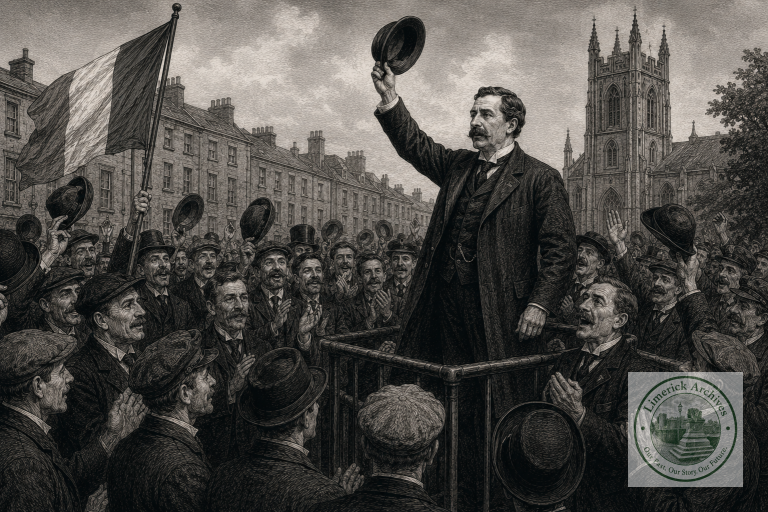
19 June 2026
Nationalist Victory
The reunited Irish Parliamentary Party has emerged from the general election holding seventy-seven of Ireland’s 103 seats at Westminster, confirming constitutional nationalism as the country’s dominant electoral force. The result will be welcomed in Limerick, where Michael Joyce has captured the city constituency by a decisive majority and joined John Redmond’s restored parliamentary organisation. Although the Conservative and Liberal Unionist alliance retains power throughout the United Kingdom, Irish voters have again returned an overwhelming majority of representatives committed to Home Rule. The figures demonstrate that nearly a decade of nationalist division has not destroyed support for parliamentary self-government. The election…
Read Article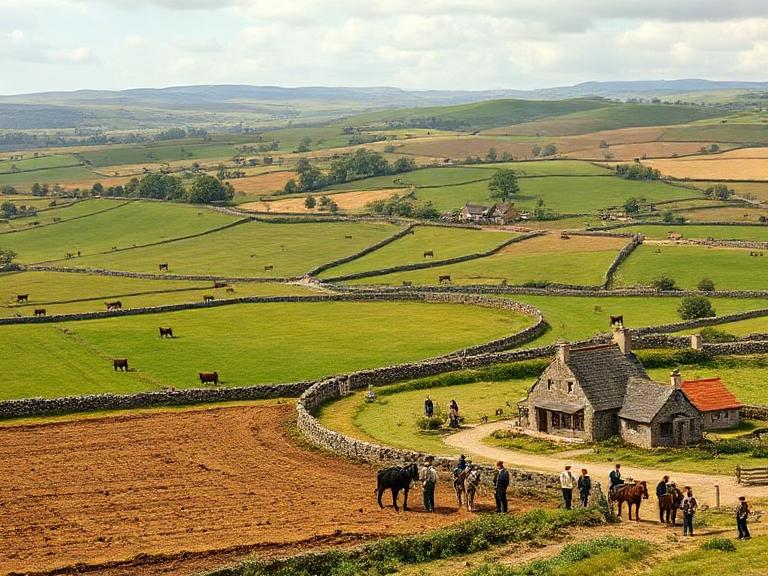
22 June 2026
Grazing Dominance
Cattle grazing remains more profitable than tillage in many Irish districts, encouraging landowners and substantial occupiers to devote extensive farms to livestock rather than labour-intensive cultivation. The difference is keenly felt in County Limerick, where broad grasslands can support valuable cattle while requiring comparatively few permanent workers. Families dependent upon agricultural wages find fewer opportunities wherever ploughing, sowing, weeding and harvesting give way to grazing. Supporters of the existing system point to dependable livestock markets and lower operating costs, but critics argue that profitable land is failing to sustain the number of people it once employed. Tillage requires labour throughout…
Read Article