On 8 February 1900, the conditions faced by tenants on.
Tenant Conditions
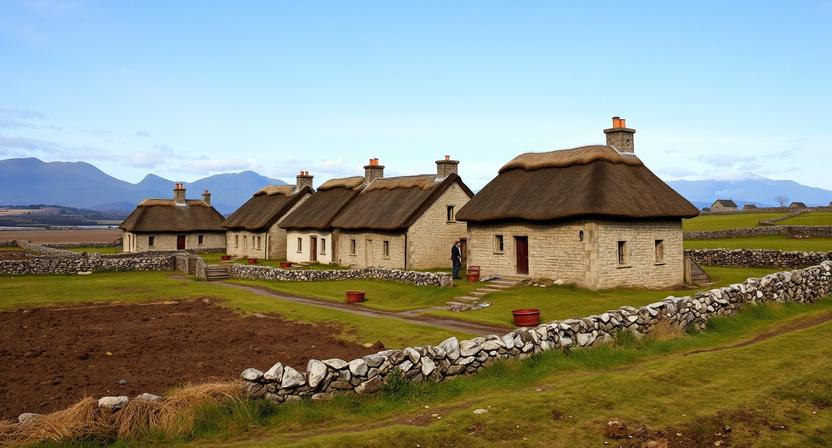
On 8 February 1900, the conditions faced by tenants on the Warden estate near Kenmare, County Kerry, were brought to the attention of Parliament. The debate centered on complaints about high rents, insecure tenure, and the state of housing and farmland. Local representatives argued that tenants on the Warden estate struggled with poverty, poor-quality dwellings, and inadequate support from the landlord, issues that had long fueled agrarian unrest in rural Ireland.
View Record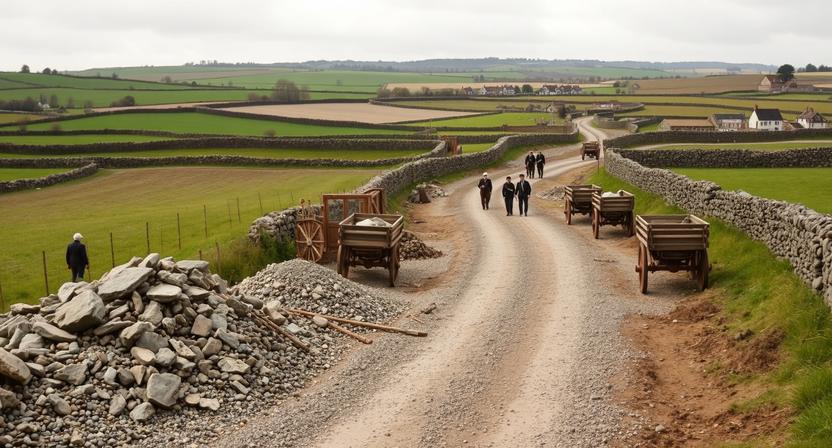
On 8 February 1900, the issue of Irish rural-road contracts.
Road Contracts
On 8 February 1900, the issue of Irish rural-road contracts and access to suitable road-building materials was questioned in Parliament, a matter with far-reaching implications for communities across Ireland. Reliable rural roads were vital for economic development, agricultural transport, and social connection, and any shortcomings in their construction or maintenance directly impacted daily life and prosperity.
View Record
On 8 February 1900, the rising cost of maintaining Ireland’s.
Poor Expenditure
On 8 February 1900, the rising cost of maintaining Ireland’s Poor Law system was formally examined in Parliament, a subject that resonated deeply in Limerick, where the workhouse and outdoor relief funds were constant topics of local concern. Limerick’s ratepayers, guardians, and charitable groups had long struggled with the demands of supporting the city’s vulnerable population, and the prospect of further increases in Poor Law expenditure prompted widespread debate.
View Record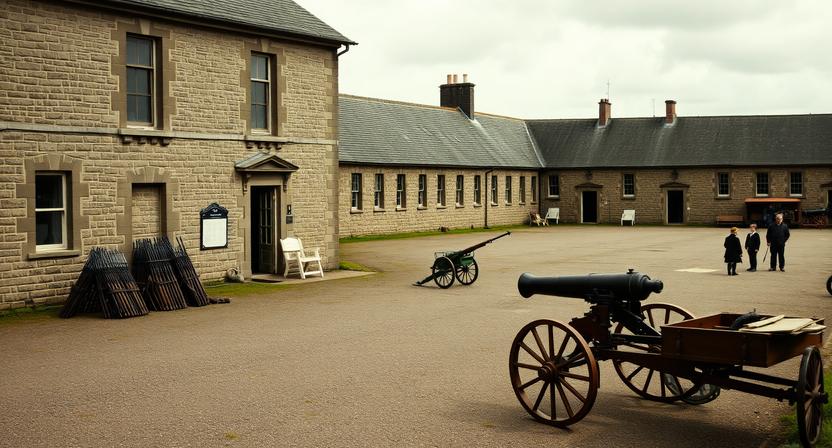
On 8 February 1900, the possible deployment of Irish militia.
Militia Deployment
On 8 February 1900, the possible deployment of Irish militia regiments on foreign service was debated in Parliament, a matter watched with particular interest in Limerick, which had long-standing ties to several militia units. For many Limerick families, the prospect that local men might be sent overseas—potentially to the South African front—sparked both anxiety and spirited debate about duty, loyalty, and the place of Irish soldiers within the British Empire.
View Record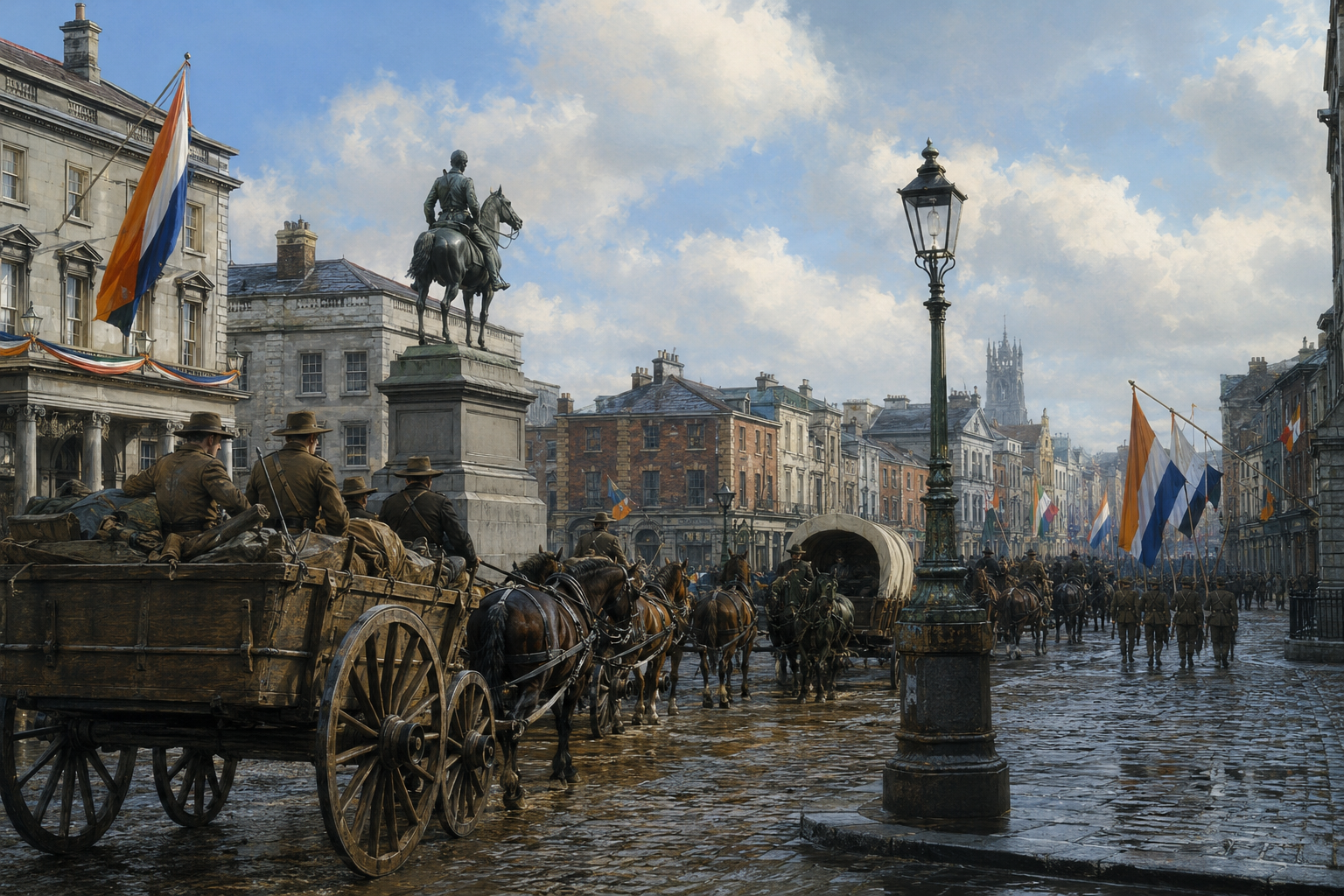
On 7 February 1900, John Redmond publicly declared that the.
Boer Opposition
On 7 February 1900, John Redmond publicly declared that the united Irish Parliamentary Party stood firmly against the Boer War and in favour of the independence of the Boer republics, a statement that resonated powerfully in Limerick. The city’s nationalist community, having recently celebrated the party’s reunification, saw Redmond’s stance as a bold assertion of Irish solidarity with small nations fighting imperial domination—a cause that struck a deep chord among Limerick’s working class and political activists.
View Record
On 6 February 1900, the issuing of licences permitting people.
Arms Licences
On 6 February 1900, the issuing of licences permitting people to carry firearms in Ireland was questioned in Parliament, a topic watched closely in Limerick where concerns about both public order and rural security were prominent. For Limerick’s farmers, merchants, and civic authorities, the regulation of firearm licences held implications for personal safety, local policing, and the prevention of crime in the city and its surrounding countryside.
View Record
On 6 February 1900, the regulation and sale of explosives.
Explosives Regulation
On 6 February 1900, the regulation and sale of explosives in Ireland came under parliamentary scrutiny, a matter of close interest to Limerick where such materials were essential for industries ranging from quarrying to construction. Limerick’s merchants and contractors watched developments carefully, knowing that any changes could affect both business operations and public safety in the city and surrounding countryside.
View Record
On 6 February 1900, the removal of impoverished people from.
Pauper Removals
On 6 February 1900, the removal of impoverished people from Britain to Ireland under poor-relief regulations was challenged in Parliament, an issue that drew immediate attention in Limerick, where the arrival of such individuals often placed strain on local resources. Limerick’s workhouses and charitable institutions were already struggling to care for the city’s vulnerable population, and any increase in arrivals from Britain raised concerns among civic leaders, ratepayers, and relief administrators.
View Record
On 6 February 1900, postal arrangements affecting communities in County.
Postal Arrangements
On 6 February 1900, postal arrangements affecting communities in County Kildare were formally examined in Parliament, drawing attention in Limerick where efficient mail routes to and from the east were essential for commerce and communication. Limerick’s business and civic circles closely followed any developments in Kildare, recognizing that disruptions or improvements in postal logistics there could have ripple effects for the city’s own mail delivery and commercial correspondence.
View Record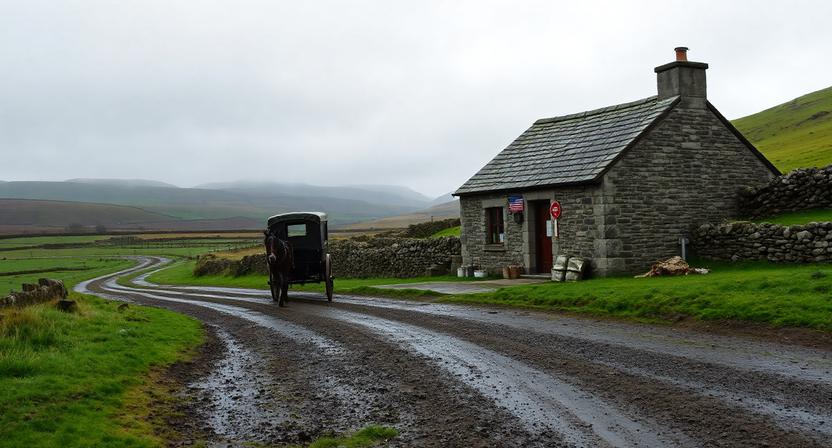
On 6 February 1900, concerns about deficiencies in the postal.
Postal Deficiencies
On 6 February 1900, concerns about deficiencies in the postal service operating in Galway resonated strongly in Limerick, where efficient communication with the west was vital for business, family connections, and civic affairs. Limerick merchants, professionals, and residents often relied on timely postal links to Galway for correspondence, trade, and news, so reports of delays and service lapses quickly became a matter of local interest and frustration.
View Record