Archived: 1 November 2026
Abstract
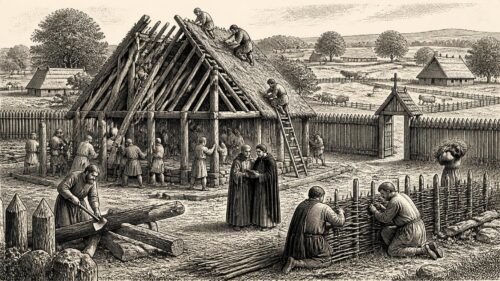
In 708, Cill Dara, modern Kildare, suffered a destructive fire, although annals provide no cause, casualties or details of damage. The disaster followed the death of its bishop, Mael Dóbarchon, and required resources and patronage for recovery. Congal Cennmagair of Cenél Conaill, a leading Uí Néill overking, also died suddenly, prompting Fergal of Cenél nEógain’s accession around 708–709. Obituaries for the abbots of Iona and Lorrha demonstrate ecclesiastical networks extending across Ireland and the Irish Sea. These events reveal a rural, politically fragmented society dependent on churches, agriculture, kinship, tribute and personal leadership, vulnerable to fire, death and shifting alliances.
Read Article
Archived: 1 November 2026
Abstract
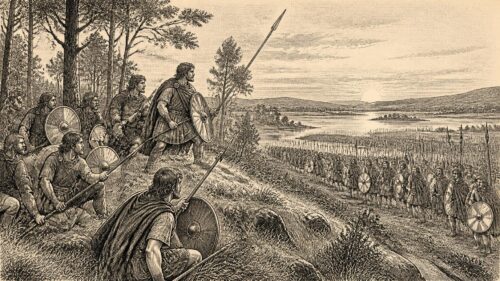
In 703, Connacht defeated an invading northern Uí Néill coalition at Corann or Claenfhinn, killing Loingsech son of Óengus, styled king of Ireland, his three sons and numerous allied rulers. The battle, probably in south-central Sligo, checked Loingsech’s claim to wider supremacy and preserved Connacht’s autonomy under Cellach son of Rogallach. Annals also record the Ulaid’s victory over Britons at Mag Cuilinn, though details remain uncertain. Colmán, abbot of Lismore, died, while notices mention Ailén Daingen’s construction and Rithe’s siege. These events reveal a rural, contested Ireland where kings, churches and fortified communities managed warfare, resources, mobility and insecure authority.
Read Article
Archived: 1 November 2026
Abstract
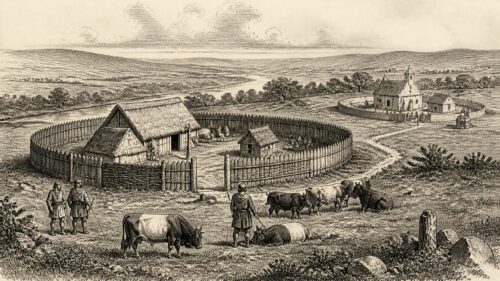
In 701, Niall son of Cernach was killed at the uncertain site of Drumain Ua Casáin by Írgalach, intensifying rivalry between branches of the southern Uí Néill in Brega. Later Columban tradition portrayed the killing as a violation of sanctuary linked to Kells and Írgalach’s death as retribution, though contemporary annals give no details. The year also recorded cattle mortality, threatening wealth, food production, tribute and rural livelihoods. In Munster, Ailill, king of Mumu, and Conall of Uí Fidgente died, prompting uncertain political transitions. Colmán ua hOrc, abbot of Clonard, also died, highlighting ecclesiastical institutions’ religious, economic and political influence.
Read Article
