


Related Archive: Christopher Wandesford

Parliamentary Remonstrance

Parliamentary Remonstrance

Archived: 15 October 2026

Abstract

In 1640, Ireland remained formally peaceful, but Charles I’s war against Scotland exposed mounting political divisions. Parliament granted four subsidies and discussed an enlarged army, then challenged the government’s methods of taxation and collection. Christopher Wandesford, succeeding Strafford as lord deputy, lacked his authority and repeatedly prorogued parliament. The Commons’ November remonstrance denounced Strafford’s arbitrary administration, monopolies, financial exactions and land policies, linking Irish grievances to his Westminster impeachment. Wandesford’s removal of parliamentary journal entries worsened distrust. His death in December, followed by Bishop John Atherton’s execution, weakened government further. Theatre and Gaelic scholarship continued amid crisis, foreshadowing 1641’s upheaval.

Read Article

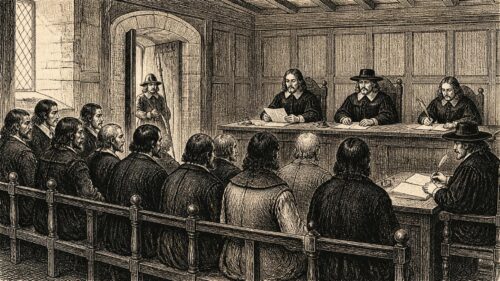
Galway Jury

Galway Jury

Archived: 16 October 2026

Abstract

In 1636, Thomas Wentworth’s administration intensified royal control in Ireland through land, religion, economic regulation and culture. Galway jurors who rejected the Crown’s Connacht title were fined and imprisoned, demonstrating the coercive defence of plantation policy. Although Wentworth departed for England in July, trusted officials maintained his programme with royal support. Linen regulations sought to standardise rural spinning and promote exports. In Ulster, Bishop Henry Leslie silenced five ministers refusing Anglican canons, narrowing religious latitude. Meanwhile, the Four Masters completed their Irish annals, and Dublin’s Werburgh Street theatre flourished. These developments revealed an apparently peaceful kingdom under mounting centralised pressure.

Read Article

