


Related Archive: Derryvree Drumlin Archive

Fermanagh Palaeoenvironment

Fermanagh Palaeoenvironment

Archived: 18 September 2026

Abstract

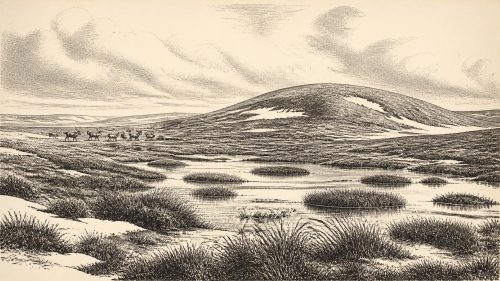
Around 31,310 BCE, Ireland’s history is reconstructed from environmental evidence rather than written records. Derryvree in County Fermanagh preserves freshwater sediments between glacial tills, indicating a cold, treeless tundra wetland during part of MIS 3, when local ice retreated before returning. Its radiocarbon date spans a broad calibrated interval encompassing the notional year, not a precise event. Castlepook Cave in Cork records diverse cold-stage fauna, including reindeer, mammoth and hyaena, accumulated over time. A possibly butchered reindeer bone suggests human activity, but not settlement. Uneven ice-sheet growth, changing sea levels and limited evidence preclude island-wide conclusions about conditions or occupation.


Read Article

Glacial Drainage

Glacial Drainage

Archived: 9 September 2026

Abstract

Around 31,891 BCE, Ireland experienced fluctuating Late Pleistocene cold during Marine Isotope Stage 3, not the later glacial maximum. Derryvree, County Fermanagh, preserves freshwater silts dated broadly to this period, revealing treeless, wet, tundra-like ground between glacial advances. Expanding upland ice, permafrost, seasonal thaw and altered drainage shaped a changing landscape, while lower sea levels modified coasts and possible migration routes. Cave remains show mammoths, reindeer, hyaenas and other mammals occupied Ireland during the wider period. Possible cut marks on a Castlepook reindeer bone may indicate early human visits, but no secure evidence demonstrates settlement, communities, institutions or sustained occupation.

Read Article

