Archived: 10 October 2026
Abstract
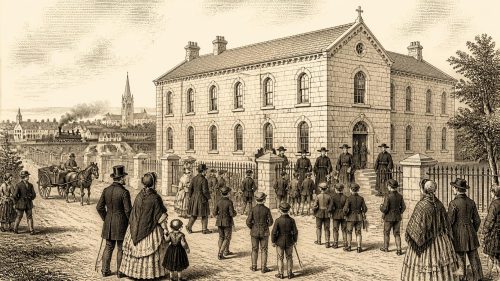
In 1856, post-Famine Ireland remained marked by depopulation, emigration, poverty and institutional reform. Poor Law debates addressed electoral fraud and the removal of destitute migrants from Britain, while estate sales and legislation on public works, drainage and valuation reshaped land, waterways and local taxation. St Mel’s Cathedral opened for worship in Longford, symbolising renewed Catholic confidence after construction halted during the Famine. Mullingar’s Hevey Institute combined charitable elementary schooling with classical education. In Dublin, Michael Henry Gill acquired McGlashan’s publishing business, while the murder of a railway cashier at Broadstone highlighted railway commerce. Reconstruction proceeded alongside continuing displacement and insecurity.
Read Article
Archived: 10 October 2026
Abstract
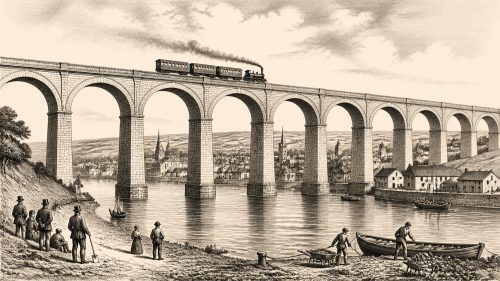
In 1855, post-Famine Ireland combined reconstruction with enduring demographic loss, poverty and emigration. The Boyne Viaduct opened on 5 April, completing rail travel between Dublin and Belfast and strengthening commerce, while offering no cure for insecure livelihoods. Agriculture increasingly favoured livestock, larger holdings and grazing; Encumbered Estates Court sales, workhouses and migration continued to reshape communities. Charles Gavan Duffy’s August farewell and departure for Australia, followed by Frederick Lucas’s death, symbolised the Tenant League’s collapse. Irish people served in the Crimean War. St Mary’s Cathedral, Killarney, was consecrated; George Petrie published traditional melodies; library legislation and Dublin Zoo reflected institutions.
Read Article
Archived: 10 October 2026
Abstract
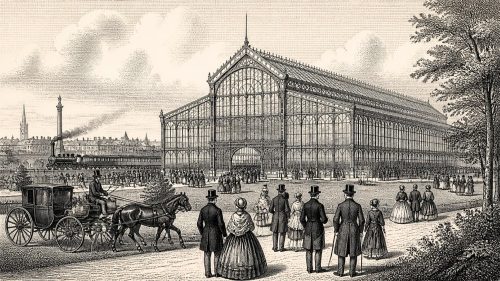
Dublin’s Great Industrial Exhibition opened on Leinster Lawn in May 1853, funded largely by railway contractor William Dargan and organised with the Royal Dublin Society. Its glass-and-iron halls displayed art, manufacture, machinery and Irish antiquities, projecting modernity after the Famine, though access remained socially limited. Queen Victoria’s August visit amplified its civic and imperial significance. Meanwhile, population decline, emigration, workhouses and estate sales showed continuing hardship. Tenant Right politics fractured as leading advocates accepted office. Gladstone extended income tax to Ireland despite objections. Plans for a gallery and Catholic university developed, while John Mitchel escaped transportation, symbolising enduring nationalist exile.
Read Article
Archived: 10 October 2026
Abstract
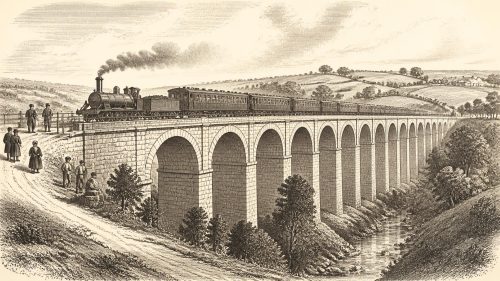
In 1852, post-Famine Ireland remained shaped by depopulation, emigration, poor-law hardship, estate sales and rural insecurity. William Sharman Crawford’s Tenant Right Bill sought recognition of Ulster custom, compensation for improvements and limits on eviction, but failed despite sustained Commons debate. The Tenant Right League united Catholic, Presbyterian and nationalist reformers, securing forty-eight pledged MPs in the July election, though its unity remained fragile. Derby’s government introduced further land bills in November, but fell before settlement. Meanwhile, Craigmore Viaduct opened the Belfast–Dublin route, symbolising industrial investment. Belfast’s British Association meeting also highlighted worsening urban sanitary conditions amid Ireland’s uneven post-Famine transformation.
Read Article

Archived: 10 October 2026
Abstract
In 1851, Ireland’s census recorded 6,552,385 inhabitants, a decline of 1,659,330 since 1841, exposing famine mortality, disease, eviction and emigration while imperfectly distinguishing deaths from departures. Losses were greatest in western and southern potato-dependent districts, accelerating the disappearance of poor cabins and weakening Irish-speaking communities. Emigration remained immense, reshaping families and local economies. Estate sales under the Encumbered Estates Act, limited tenant-improvement legislation and Tenant Right agitation intensified land questions. The Medical Charities Act expanded dispensary provision. John Henry Newman’s appointment advanced plans for a Catholic university. Meanwhile, Ulster linen exhibitors at the Great Exhibition displayed industrial strength amid devastation.
Read Article

Archived: 10 October 2026
Abstract
In 1850, Ireland remained scarred by famine despite a less destructive, uneven potato blight. Workhouses, poor-law debt, eviction, emigration and a shrinking rural labour market continued to shape survival. Land insecurity intensified as the Encumbered Estates Court facilitated sales of indebted properties. The Dublin Tenant-Right Conference formed the Irish Tenant League, uniting diverse reformers behind fair rents, secure tenure and free sale of tenants’ interests. The Synod of Thurles, led by Paul Cullen, strengthened Catholic discipline, episcopal authority and Roman alignment, while opposing the Queen’s Colleges. These initiatives made 1850 a hinge between catastrophe and political, social and religious change.
Read Article




