

Related Archive: Eurovision Song Contest

Ceasefires, Riverdance and Coalition

Ceasefires, Riverdance and Coalition

Archived: 26 September 2026

Abstract

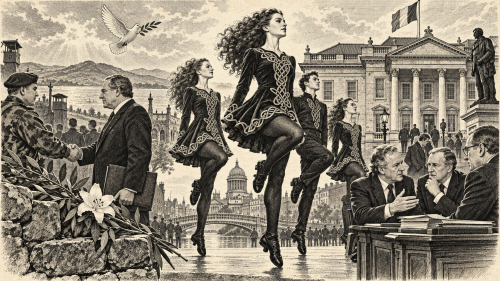
In 1994 Ireland underwent major political, cultural and economic change. Riverdance, premiered during Dublin’s Eurovision interval, transformed Irish dance into a globally successful expression of modern cultural confidence. The IRA’s August cessation of military operations, followed by an October loyalist ceasefire, reduced organised violence and created opportunities for negotiations, though disarmament, constitutional issues and political participation remained unresolved. Taoiseach Albert Reynolds, influential in advancing the peace process, resigned after the Fianna Fáil–Labour coalition collapsed amid controversy over Brendan Smyth and Harry Whelehan. John Bruton then led a Fine Gael–Labour–Democratic Left coalition. Meanwhile, falling unemployment, investment and exports signalled national recovery.


Read Article

H-Block Ballots

H-Block Ballots

Archived: 8 October 2026

Abstract

In 1981, Ireland faced economic hardship, political change and the Northern conflict. Fianna Fáil lost its Dáil majority in June, enabling Garret FitzGerald’s Fine Gael-Labour minority coalition to replace Charles Haughey. The Maze hunger strike dominated events: Bobby Sands won a Westminster by-election before dying, while ten republican prisoners died; Kieran Doherty and Patrick Agnew were elected to the Dáil. Violence and Dublin protests accompanied the crisis, although Anglo-Irish talks resumed. A census recorded 3,443,405 residents. February’s Stardust fire killed 48 people, devastating north Dublin. Dublin also hosted Eurovision, illustrating an outward-looking cultural life amid grief, insecurity and political division.

Read Article

