Archived: 26 September 2026
Abstract
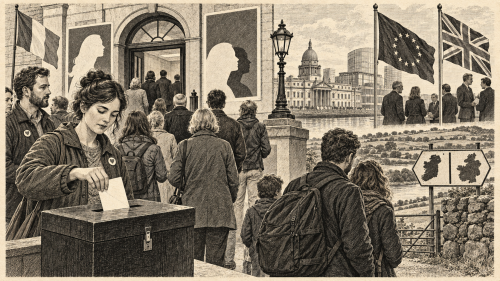
In 2018, Ireland experienced major constitutional, social and political change amid economic growth and persistent inequality. In May, voters repealed the Eighth Amendment by 66.4 per cent, enabling legislation for abortion services from 2019; October also removed blasphemy from the Constitution and returned Michael D. Higgins as President. Brexit negotiations centred on an Irish border backstop, while Northern Ireland remained without devolved government. Housing shortages and homelessness intensified despite Project Ireland 2040 and new development initiatives. Pope Francis’s visit highlighted abuse-related criticism of the Church. Alcohol legislation, broadband planning and severe autumn storms further shaped a consequential, unresolved national year.
Read Article
Archived: 26 September 2026
Abstract
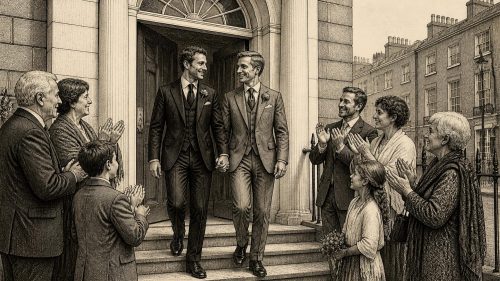
In 2015, Ireland experienced uneven recovery from the financial crash amid water-charge protests, emigration and approaching elections. Voters overwhelmingly approved marriage equality in May, followed by legislation enabling same-sex marriage, while family-law and gender-recognition reforms broadened legal recognition. The State established an inquiry into mother-and-baby homes, confronting institutional abuses. Economic growth and falling unemployment coexisted with insecurity, outward migration and misleading GDP expansion driven by multinational restructuring. Ireland expanded Mediterranean rescue and refugee commitments, supported Northern Ireland's Fresh Start Agreement, and enacted climate-governance legislation. The year combined change with disputes over austerity, historical accountability, public services, peace and international responsibility.
Read Article
Archived: 26 September 2026
Abstract
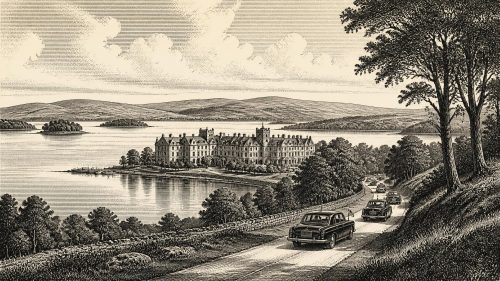
In 2013, Ireland combined cautious economic recovery with public reckoning. The Fine Gael–Labour government restructured IBRC debt, chaired the EU Council, introduced Local Property Tax, promoted tourism through the Gathering, and exited the EU–IMF bailout. Yet unemployment, emigration and household strain persisted. Following the McAleese Report, Enda Kenny apologised to Magdalen laundry survivors and backed redress. The Protection of Life During Pregnancy Act legislated limited abortion provision. Constitutional debates included marriage equality and referendums retaining the Seanad while creating a Court of Appeal. Lough Erne hosted the G8, while Northern Ireland faced flag and parade tensions. Seamus Heaney was mourned.
Read Article
Archived: 26 September 2026
Abstract
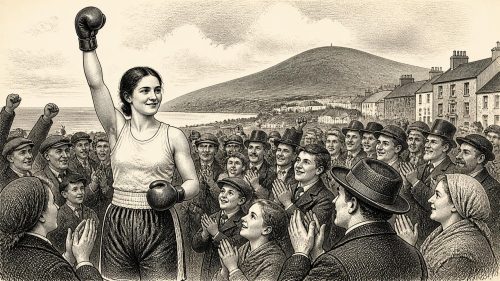
In 2012, Ireland pursued recovery under EU–IMF bailout conditions while households faced austerity, unemployment and renewed emigration. Voters approved the Fiscal Compact, reinforcing permanent budgetary discipline, and endorsed the Children’s Referendum, though it had not commenced by year’s end. The Government introduced the household charge, employment activation measures, constitutional convention and Gaeltacht legislation. Savita Halappanavar’s death during miscarriage complications intensified demands for abortion-law clarity and healthcare accountability. Dublin hosted the Eucharistic Congress amid diminished Church authority, while Katie Taylor’s Olympic gold lifted morale. In Northern Ireland, Titanic Belfast opened, McGuinness met the Queen, and flag protests exposed enduring identity tensions.
Read Article

Archived: 26 September 2026
Abstract
In 1999, Northern Ireland’s devolved Executive began work at Stormont, led by David Trimble and Seamus Mallon, while new North/South and British-Irish bodies implemented the Good Friday Agreement. The Republic amended its Constitution, replacing territorial claims with consent-based unity, though decommissioning and policing reform remained disputed. Ireland joined the euro’s non-cash phase amid rapid economic growth, but nurses’ industrial action revealed pressure on public services. Kosovar refugees arrived and immigration law changed. States of Fear prompted official acknowledgement of institutional abuse. Gay Byrne left The Late Late Show, Heaney published Beowulf, and Cork won the All-Ireland hurling final in September.
Read Article

Archived: 26 September 2026
Abstract
In 1990, Ireland combined growing international confidence with economic insecurity and continuing Northern conflict. Dublin’s European Community presidency hosted discussions on German reunification and future union, while Italia ’90 inspired nationwide celebration after Ireland reached the World Cup quarter-finals. Nelson Mandela’s visit highlighted Irish anti-apartheid solidarity, and abolition of the death penalty marked legal reform. Economic recovery remained uneven, with unemployment at 12.9 per cent. Northern Ireland saw violence alongside tentative political developments. Mary Robinson’s presidential victory over Brian Lenihan, following damaging controversy, made her Ireland’s first woman president and challenged established assumptions about political authority, gender and public life.
Read Article
Archived: 26 September 2026
Abstract
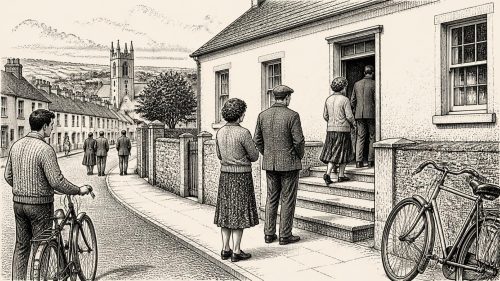
In 1986, Ireland faced economic hardship, social change and intensified Northern conflict. Garret FitzGerald’s coalition confronted debt, unemployment and emigration, while legislation addressed poverty, welfare and public archives. Voters decisively rejected a constitutional amendment permitting limited divorce, though separation and marital breakdown remained prominent realities. The census recorded 3,540,643 people; Self-Aid highlighted mass unemployment, and Knock airport symbolised regional aspiration. Chernobyl contamination fears and the Russborough art theft caused concern. The Anglo-Irish Agreement provoked unionist resistance, culminating in Peter Robinson’s loyalist incursion into Clontibret. Sinn Féin ended Dáil abstention, prompting a republican split, revealing deep enduring strains across Irish society.
Read Article
Archived: 26 September 2026
Abstract
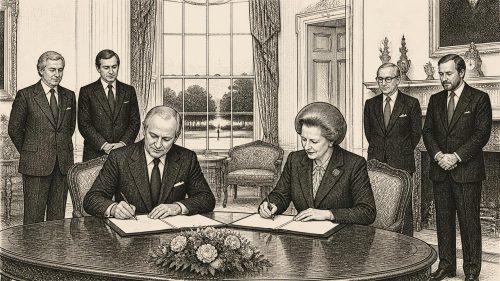
In 1985, the Anglo-Irish Agreement, signed by Garret FitzGerald and Margaret Thatcher at Hillsborough, created a permanent consultative role for Dublin in Northern Ireland affairs while confirming majority consent for constitutional change. It offered constitutional nationalists progress but provoked unionist protest and Fianna Fáil opposition. Violence continued, including major IRA attacks and the killing of a Garda officer. Sinn Féin advanced electorally and revised its Dáil abstention policy. The Republic faced severe unemployment and emigration, alongside the Progressive Democrats’ foundation and liberalised contraception law. Religious controversy, theatre, U2’s Croke Park concert and Cork 800 reflected changing national identities amid hardship.
Read Article

Archived: 8 October 2026
Abstract
In 1981, Ireland faced economic hardship, political change and the Northern conflict. Fianna Fáil lost its Dáil majority in June, enabling Garret FitzGerald’s Fine Gael-Labour minority coalition to replace Charles Haughey. The Maze hunger strike dominated events: Bobby Sands won a Westminster by-election before dying, while ten republican prisoners died; Kieran Doherty and Patrick Agnew were elected to the Dáil. Violence and Dublin protests accompanied the crisis, although Anglo-Irish talks resumed. A census recorded 3,443,405 residents. February’s Stardust fire killed 48 people, devastating north Dublin. Dublin also hosted Eurovision, illustrating an outward-looking cultural life amid grief, insecurity and political division.
Read Article
Archived: 8 October 2026
Abstract
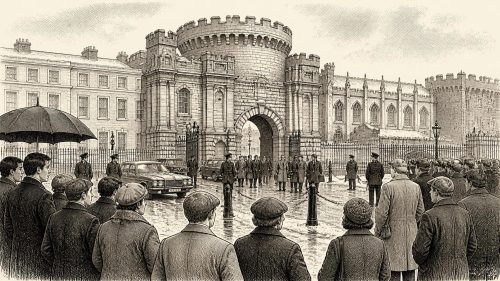
Ireland in 1980 faced inflation, unemployment, heavy borrowing and industrial closures, while Haughey’s government pursued fiscal restraint and national wage agreements. Northern Ireland remained politically deadlocked and violent, as constitutional proposals failed to reconcile unionist and nationalist demands. The central event was the fifty-three-day Maze hunger strike, begun by republican prisoners seeking recognition through five prison demands. It ended without deaths or settlement, leaving conflict unresolved. Dublin and London maintained dialogue through Haughey-Thatcher meetings and the Dublin Castle summit. Restrictive family-planning provisions commenced, and NIHE Dublin opened. Strumpet City, Johnny Logan’s Eurovision victory, and Gaelic games successes provided cultural landmarks.
Read Article
Archived: 8 October 2026
Abstract
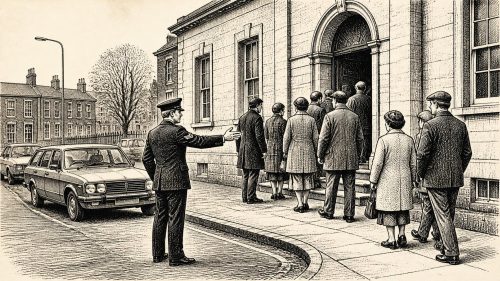
In 1977, Fianna Fáil won a record general-election landslide, giving Jack Lynch a nine-seat Dáil majority after campaigning on tax relief, rates abolition and jobs amid inflation and unemployment. Employment equality and youth-work laws strengthened workplace protections. Northern Ireland, under direct rule, remained marked by violence, prison protest and communal division. Ian Paisley’s loyalist-backed May strike, seeking tougher security and majority-rule devolution, failed despite recalling 1974. British authorities maintained services and opposed intimidation. International attention included Jimmy Carter’s policy statement, Lynch’s talks with James Callaghan, and the Nobel Peace Prize for Betty Williams and Mairead Corrigan. Sport remained culturally significant.
Read Article
Archived: 8 October 2026
Abstract
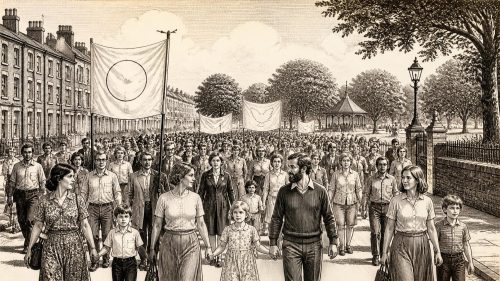
In 1976, Ireland endured intensified Troubles violence, including the Kingsmill massacre, the assassination of British Ambassador Christopher Ewart-Biggs, and continued direct rule in Northern Ireland. The Republic strengthened cross-border criminal co-operation and declared a constitutional emergency, prompting President Cearbhall Ó Dálaigh’s referral of emergency legislation, ministerial insult and resignation; Patrick Hillery succeeded him. Deaths of the Maguire children inspired the Peace People’s mass cross-community marches. Economic recession brought inflation and unemployment, alongside inheritance-tax and family-home reforms. An exceptional drought preceded wildlife legislation. Cultural life included U2’s formation and Maeve Binchy’s play, illustrating resilience amid political, social and environmental nationwide strain.
Read Article

Archived: 8 October 2026
Abstract
In 1975, Ireland hosted the first formal European Council meeting at Dublin Castle during its EEC presidency, signalling an expanded international role. Northern Ireland remained unstable despite IRA ceasefires: the Constitutional Convention favoured majority rule, while violence claimed 260 lives, including three Miami Showband members. Security policy proposed ending special-category prisoner status and building Maze H-Blocks. In the Republic, recession raised insured unemployment to 12 per cent, exposing dependence on British and European markets. Lasting changes included establishment of the Law Reform Commission, commencement of equal-pay legislation, and Oliver Plunkett’s canonisation. The year combined engagement, hardship, reform and national conflict.
Read Article

Archived: 8 October 2026
Abstract
In 1973, Ireland joined the European Economic Community, opening markets, agricultural supports and a less Britain-dependent future, while Irish gained limited Community status. A Fine Gael–Labour coalition replaced Fianna Fáil, and constitutional reforms lowering the voting age and removing denominational preference took effect. Troubles violence affected both jurisdictions and extended to London. Northern Ireland’s border poll, Assembly, constitutional legislation and power-sharing plans sought to replace unionist majority rule, but remained contested. December’s Sunningdale Agreement linked consent, an Executive and a Council of Ireland. Oil-driven inflation complicated European optimism. The year established principles of power-sharing and north-south co-operation amid continuing conflict.
Read Article

Archived: 8 October 2026
Abstract
In 1972, violence and constitutional change reshaped Ireland. Bloody Sunday in Derry, when British soldiers killed fourteen civilians, intensified nationalist anger and accelerated Northern Ireland’s political crisis. Westminster suspended Stormont in March, imposing direct rule, while paramilitary violence, Bloody Friday and Operation Motorman deepened insecurity. The Republic strengthened emergency powers after violence spread south, including Dublin bombings. Simultaneously, Jack Lynch’s government pursued European integration. Voters overwhelmingly approved the constitutional amendment enabling EEC accession, due in 1973. December referendums also lowered the voting age to eighteen and removed constitutional recognition of the Catholic Church’s special position, signalling a more pluralist State.
Read Article

Archived: 8 October 2026
Abstract
In 1971, Ireland underwent modernisation while Northern Ireland descended into deeper conflict. Decimalisation transformed transactions across the island, while censuses recorded populations north and south. Northern reforms included local-government boundaries and a province-wide Housing Executive; southern welfare and health changes also reshaped public services. Brian Faulkner succeeded James Chichester-Clark amid worsening unrest. Internment without trial, introduced in August, alienated nationalists, prompted killings, displacement and the SDLP’s withdrawal from Stormont, and led Ireland to challenge Britain in Europe. Republican and loyalist violence persisted, including the McGurk’s Bar bombing. Meanwhile, European Community negotiations, colour television, broadcasting restrictions and literary publication reflected society.
Read Article

Archived: 8 October 2026
Abstract
1970 marked a decisive hardening of the Northern Ireland conflict and its impact on the Republic. Security reforms replaced the B Specials with the Ulster Defence Regiment, while Ian Paisley’s election and the Alliance Party’s foundation reflected polarised and alternative politics. The British Army’s thirty-four-hour Lower Falls curfew, searches, gun battles and civilian deaths alienated Catholic communities. In Dublin, the Arms Crisis split Fianna Fáil after allegations of illegal arms imports, despite subsequent acquittals. A prolonged bank strike and cement dispute disrupted economic life. Ireland also opened European Community negotiations, while Dana’s Eurovision victory provided a notable all-island cultural moment.
Read Article
Archived: 8 October 2026
Abstract
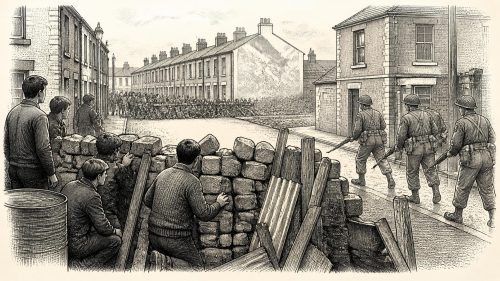
In 1969 civil-rights protests against discrimination in Northern Ireland escalated from the Burntollet attack into communal violence. Reform measures, including universal local-government suffrage, failed to restore confidence, while O’Neill resigned and Chichester-Clark succeeded him. August riots produced the Battle of the Bogside, killings, arson and displacement in Derry and Belfast. British troops deployed, initially welcomed by some Catholics, and Belfast’s peace line embodied deepening segregation. Inquiries urged policing reform and abolition of B-Specials, but loyalist resistance continued. Dublin, strengthened by Fianna Fáil’s election victory, addressed the crisis while pursuing development and EEC membership. The IRA split, confirming a political landscape.
Read Article

Archived: 8 October 2026
Abstract
In 1968, Northern Ireland’s civil-rights movement mobilised grievances over housing, employment, gerrymandering, policing and restricted local voting. Austin Currie’s Caledon protest, marches at Dungannon and Derry, and police violence against the banned 5 October Duke Street demonstration brought televised images to audiences across Ireland and Britain. Student activism produced People’s Democracy, while Terence O’Neill’s government offered reforms, though divisions within unionism and campaigners’ dissatisfaction persisted. In the Republic, voters rejected constitutional changes to electoral arrangements. Educational grants and student protests reflected wider social change, while Humanae Vitae intensified debate over contraception, conscience and Church authority in Irish society and politics.
Read Article
Archived: 8 October 2026
Abstract
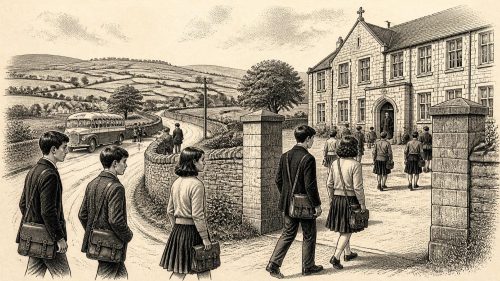
In 1967, Jack Lynch’s government renewed Ireland’s application to join the European Economic Community, regarding integration as economically necessary despite dependence on Britain; Charles de Gaulle’s November veto of British entry again stalled progress. Free post-primary education began in September, widening access, particularly for rural pupils, while censorship law limited bans’ duration. Northern Ireland’s Civil Rights Association and Derry Housing Action Committee organised demands over discrimination and housing; Lynch nevertheless met Terence O’Neill in Belfast. Dublin hosted Rosc ’67, pairing international modern art with Irish treasures amid controversy over excluding Irish artists. Patrick Kavanagh died, marking transition in Irish culture.
Read Article
Archived: 8 October 2026
Abstract
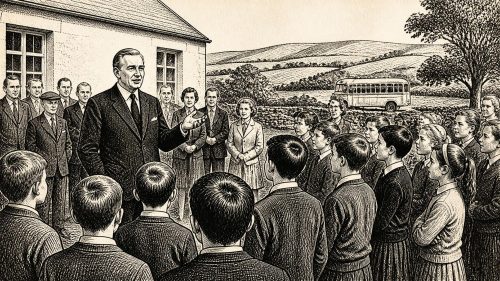
During 1966, Ireland marked the Easter Rising’s fiftieth anniversary with major ceremonies, the Garden of Remembrance’s opening, and the destruction of Nelson’s Pillar. A census recorded population growth and continuing urbanisation, while the Anglo-Irish Free Trade Area signalled export-oriented economic policy despite farmers’ protests over low incomes. Education Minister Donogh O’Malley promised free post-primary schooling and transport from 1967. Seán Lemass resigned as Taoiseach and Jack Lynch succeeded him. De Valera began another presidential term. In Northern Ireland, competing commemorations, UVF violence, sectarian murders and political tensions foreshadowed the coming conflict, underscoring Ireland’s unresolved division amid social and economic change.
Read Article
Archived: 8 October 2026
Abstract
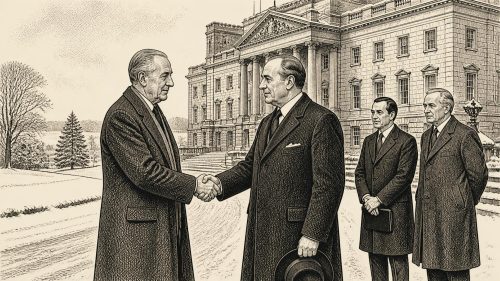
In 1965, Ireland cautiously embraced modernisation while enduring emigration, rural decline and cultural conservatism. Taoiseach Seán Lemass’s unprecedented Stormont meeting with Terence O’Neill opened limited North–South co-operation, followed by O’Neill’s Dublin visit. Casement’s repatriation symbolised improving Anglo-Irish relations. Fianna Fáil retained power in a television-covered election, while the Anglo-Irish Free Trade Area Agreement signalled departure from protectionism despite fears over employment. Legal reforms addressed land and inheritance; vernacular Mass and Galway Cathedral reflected changing Catholic life. Eurovision, the Young Scientist Exhibition and literary events demonstrated wider connections, although a newspaper strike and GAA restrictions exposed persistent constraints within Irish society.
Read Article

Archived: 8 October 2026
Abstract
In 1964, Lemass’s government pursued industrial growth, exports and European integration, while emigration, rural change and dependence on British markets persisted. Ireland committed a voluntary battalion to the United Nations peacekeeping force in Cyprus, extending its international role after the Congo without abandoning neutrality. Domestic legislation addressed adoption, welfare, financial institutions, industry and regional development. Britain’s import charge exposed economic vulnerability, prompting talks between Lemass and Harold Wilson. Belfast’s Divis Street disturbances over an Irish tricolour revealed sectarian inequalities and policing grievances in Northern Ireland. Cultural life marked Seán O’Casey’s death and notable work by Brian Friel and Flann O’Brien.
Read Article
Archived: 8 October 2026
Abstract
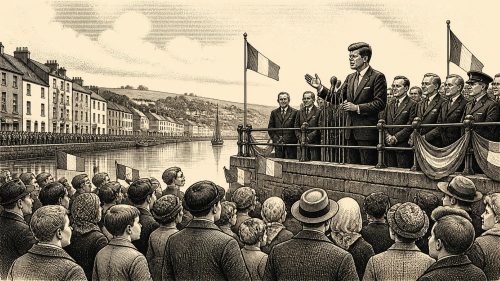
1963 marked Ireland’s uneven transition towards economic modernisation, planning and international engagement. France’s rejection of Britain’s EEC bid stalled Dublin’s linked application, while growth, industrial change and reduced yet persistent emigration exposed continuing dependence on Britain. A controversial turnover tax highlighted social costs. In Northern Ireland, Terence O’Neill became prime minister amid unemployment and unresolved nationalist grievances. President Kennedy’s celebrated June visit connected statehood, diaspora and American links, before his assassination prompted national mourning. The Planning Act created development controls; cultural and religious life remained influential. Ireland also pursued disarmament at the United Nations, while constitutional division and inequality endured.
Read Article

Archived: 8 October 2026
Abstract
1960 marked Ireland’s transition towards modernisation amid emigration, low incomes and rural decline. Seán Lemass’s government advanced the Programme for Economic Expansion, promoting investment, exports, infrastructure and overseas industry, while extending state institutions through legislation. The Broadcasting Authority Act established the basis for national television, conceived as both modern medium and cultural instrument. Ireland’s international role expanded when troops joined the UN Congo mission and Frederick Boland became General Assembly president; nine soldiers’ deaths at Niemba exposed peacekeeping’s dangers. Partition remained unresolved, while disasters at Shannon and the Plassy rescue highlighted transport risks and resilience. The year set uncertain directions.
Read Article

Archived: 8 October 2026
Abstract
In 1959 Éamon de Valera left the Taoiseachship to become Ireland’s third president after defeating Seán Mac Eoin, while Seán Lemass succeeded him without an election. A simultaneous referendum to replace proportional representation was rejected. Lemass inherited emigration, unemployment and rural decline, but advanced economic expansion, industrial exports, infrastructure and skills training, including the Apprenticeship Act. Trade unions reunited as the all-island Irish Congress of Trade Unions. The IRA Border Campaign continued amid weak republican electoral support. Cultural life featured John B. Keane’s Sive and George Morrison’s Mise Éire. The year combined revolutionary memory and partition with tentative social modernisation.
Read Article

Archived: 8 October 2026
Abstract
In 1958, Ireland faced unemployment, low output and severe emigration, prompting T. K. Whitaker’s Economic Development, or Grey Book, and the Government’s November Programme for Economic Expansion. These rejected reliance on protectionism alone, advocating productivity, exports, investment and planning, though recovery remained uncertain. Lemass promoted outward-facing industry, symbolised by Ardmore Studios. Political debate included a proposed replacement of proportional representation and partial relaxation of the marriage bar for national teachers. Transport reorganisation divided the Great Northern Railway and closed Dublin’s Harcourt Street line. Amid the IRA Border Campaign, Ireland began United Nations service in Lebanon. Sporting events provided international connections.
Read Article

Archived: 8 October 2026
Abstract
In 1956, Ireland confronted population decline, unemployment and record emigration despite democratic stability and international involvement. The April census confirmed losses, while rural electrification expanded unevenly. Government created the Department of the Gaeltacht, defining language areas and linking Irish preservation with economic and social development. New citizenship legislation reflected continuing constitutional claims regarding Northern Ireland. The IRA’s Border Campaign began in December; Costello’s administration opposed violence while disputing British sovereignty claims. Ireland engaged with UN responses to Suez and Hungary, accepting Hungarian refugee families. T. K. Whitaker became Finance Secretary, and Olympic medals, led by Ronnie Delany, provided national celebration.
Read Article

Archived: 8 October 2026
Abstract
In 1953, the Republic introduced adoption through An Bord Uchtála, formalising arrangements previously governed by families, churches and voluntary agencies. The Health Act extended a means-tested, graded system of medical provision rather than universal care. Fianna Fáil pursued restraint amid unemployment, rural insecurity and emigration. Dublin and Belfast jointly assumed control of the Great Northern Railway, demonstrating practical cross-border co-operation despite partition. An Tóstal promoted tourism and cultural confidence, while Samuel Beckett’s Paris première of En attendant Godot marked a literary milestone. In Northern Ireland, coronation television broadcasts reinforced British connections. Institutional change unfolded amid economic, religious and political divisions.
Read Article

Archived: 8 October 2026
Abstract
Ireland in 1952 combined political continuity with economic and social change. De Valera’s government, facing balance-of-payments difficulties, unemployment and emigration, imposed austerity while pursuing regional development, consolidated social welfare, protected agricultural workers and reorganised tourism. The Foyle Fisheries Act created cross-border machinery for managing shared waters, while Northern Ireland expanded Belfast’s water supply despite joblessness. The Adoption Act established the Republic’s first legal adoption framework, though its eligibility and religious rules reflected contemporary values. Public life included an Aer Lingus disaster, sporting and cultural achievements, and O’Kelly’s uncontested re-election. The year produced institutions without resolving partition, poverty or population loss.
Read Article




