Archived: 10 October 2026
Abstract
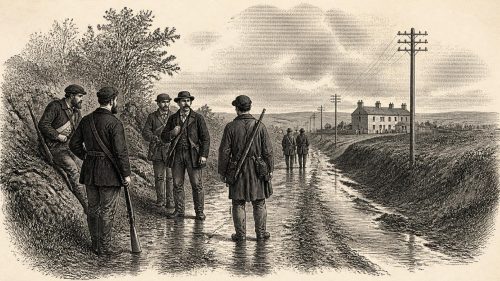
In 1867 the Irish Republican Brotherhood launched a poorly coordinated Fenian rising seeking an independent republic and social reform. After alarms including the failed Chester Castle raid, authorities extended habeas corpus suspension, arrested suspects, and strengthened policing. On 5 March, insurgents attacked police and coastguard stations, disrupted telegraphs and railways, and assembled near Dublin and in Munster. Better-armed government forces, intelligence, poor communications, inadequate weapons, and absent mass support quickly defeated them. Peter O'Neill Crowley's later death fostered martyrdom. The year brought Fenian rescues and executions in Manchester, transportation to Western Australia, the Clerkenwell bombing, hardship, reform, and Orange mobilisation.
Read Article

Archived: 10 October 2026
Abstract
In 1863, post-Famine Ireland remained marked by poverty, precarious employment, local distress and continued emigration, linking communities with Britain and North America. Parliamentary debates addressed relief, destitution and insecure tenant tenure, while drainage legislation promoted estate improvement without resolving tenant rights. The Poor Removal Act addressed welfare disputes arising from migration. Against this background, James Stephens and Irish Republican Brotherhood associates established The Irish People in Dublin on 28 November, funded partly by American Fenians. Edited and managed by organisers, the newspaper provided public republican platform, encouraging recruitment and fundraising. Belleek Pottery’s Parian production also indicated uneven national industrial development.
Read Article




