


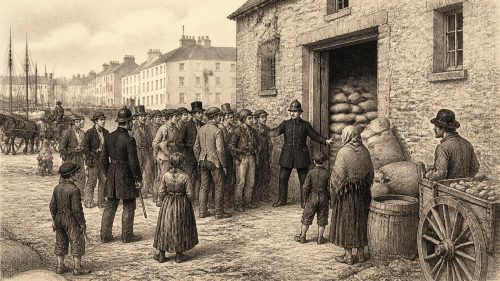
Galway Riots
Archived: 11 October 2026
In 1842, before potato blight, Ireland experienced acute distress from scarcity, high prices, seasonal unemployment and entrenched poverty. Galway symbolised the crisis when hungry people attacked a potato store in June, reflecting fears of hoarding and food beyond local reach. The expanding Poor Law rapidly opened workhouses, offering deterrent, stigmatising relief while leaving many needy people outside. Temporary government aid acknowledged emergency conditions. Daniel O’Connell’s Repeal Association strengthened its organisation, linking constitutional demands with economic grievances and opposing slavery. Peel’s tariff reforms fuelled criticism of Westminster. In October, The Nation began promoting nationalism, connecting material hardship, identity and political self-government.


