

Related Archive: Four Courts

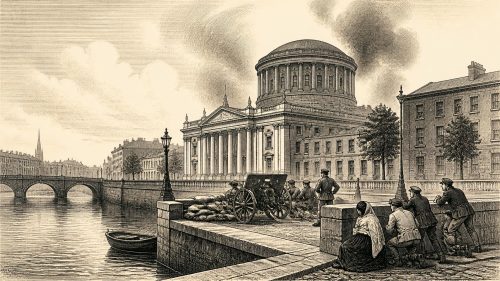
Four Courts and Saorstát

Four Courts and Saorstát

Archived: 9 October 2026

Abstract

In 1922, Dáil Éireann ratified the Anglo-Irish Treaty, splitting Sinn Féin and the IRA between supporters of dominion status and republican opponents. Michael Collins led the Provisional Government as Northern Ireland remained separate amid continuing sectarian violence. Failed mediation and the anti-Treaty occupation of the Four Courts led to National Army bombardment on 28 June, initiating Civil War. Fighting devastated Dublin, destroyed the Public Record Office’s Record Treasury, and spread nationwide. Arthur Griffith and Collins died in August. Under W. T. Cosgrave, the Free State Constitution established democratic institutions. On 6 December the Free State began; Northern Ireland opted out.

Read Article

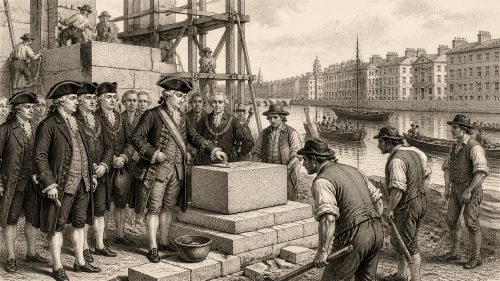
Liffey Works and Rightboys

Liffey Works and Rightboys

Archived: 12 October 2026

Abstract

In 1786, Ireland combined constitutional autonomy with entrenched exclusion. The Dublin parliament, dominated by Protestant elites under Lord Lieutenant Rutland, operated after Pitt’s failed commercial proposals. In Dublin, Rutland laid the Four Courts foundation stone, while the Dublin Port Act created the Ballast Board to improve harbour administration and trade. These projects symbolised state infrastructure and employment. Meanwhile, Munster Rightboys protested tithes, rents and religious charges through intimidation and violence, exposing rural insecurity despite Catholic relief. The execution of George Robert FitzGerald demonstrated limits upon landed privilege. Declining Volunteers and restricted political participation underscored Ireland’s deep confessional and economic tensions.

Read Article

