

Related Archive: George IV

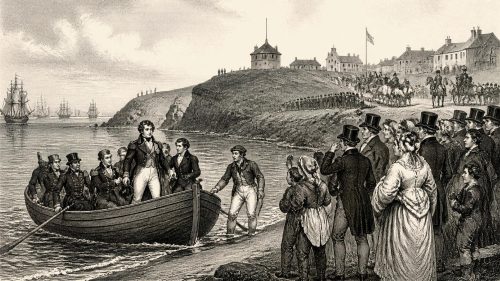
Howth’s Royal Landing

Howth’s Royal Landing

Archived: 11 October 2026

Abstract

In 1821, Ireland experienced population growth, economic hardship, political exclusion and royal pageantry. The first comprehensive census recorded about 6.8 million people, exposing dependence on insecure rural livelihoods; most detailed returns were later destroyed in 1922. Post-war depression, rents, tithes and scarce employment contributed to Munster’s emerging Rockite disturbances. Westminster’s Catholic Disability Removal Bill passed the Commons but failed in the Lords, preserving Catholic exclusion from Parliament. George IV’s August landing at Howth inspired displays of loyalty, including Daniel O’Connell’s conciliatory participation, but brought no reform. Administrative changes and cultural activity highlighted tensions between Union, equality, rural insecurity and identity.


Read Article

Kilmainham’s Queen Caroline Revolt

Kilmainham’s Queen Caroline Revolt

Archived: 11 October 2026

Abstract

George IV’s accession in 1820 left Ireland under the Union, with limited property-based representation and Catholic exclusion from Parliament. Henry Grattan’s death removed a leading advocate of Catholic relief. Post-war depression and private-bank failures disrupted credit, trade and livelihoods, while Cork’s North Cathedral burned. The Dublin Gas Act, completion of the Lough Allen Canal, local schooling and the Royal Dublin Society reflected gradual improvement. Irish people also participated in Antarctic exploration and Cape Colony migration. In December, County Dublin freeholders at Kilmainham challenged an official loyal address, condemning the king’s treatment of Queen Caroline and Ireland’s distress, foreshadowing O’Connell’s mobilisation.

Read Article

