Archived: 11 October 2026
Abstract
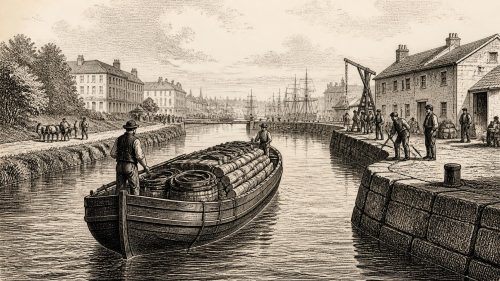
In 1804, Ireland remained shaped by the legacy of 1798, the Union and war with France. James Corcoran’s guerrilla band was destroyed near Enniscorthy, while transported Irish prisoners invoked Vinegar Hill during the failed Castle Hill rebellion in New South Wales. Invasion fears prompted a gun tower at Sutton and Edgeworth’s short-lived Dublin–Galway semaphore. Economic integration advanced when The Ranger completed the commercial Grand Canal passage from the Shannon to Dublin. Cork Street Fever Hospital admitted its first patients, providing isolation and care in the Liberties. These developments reveal governance, defence, infrastructure and philanthropy amid unresolved political and social grievances.
Read Article
Archived: 12 October 2026
Abstract
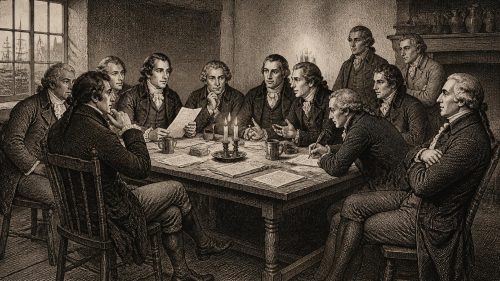
In 1791, Irish politics became organised without delivering constitutional change or Catholic emancipation. Belfast’s Bastille commemoration and the founding of the Society of United Irishmen linked parliamentary reform, Catholic inclusion and civic unity across religious divisions, influenced by Theobald Wolfe Tone. Dublin radicals, including John Keogh, Edward Byrne, James Napper Tandy and William Drennan, strengthened Catholic and reform movements, provoking divisions with conservative Catholic elites. The Dublin Custom House symbolised both commercial ambition and state authority, while the Grand Canal’s Barrow link improved transport to Waterford. Amid rural inequality, print, association and infrastructure widened horizons, marking transition towards popular politics.
Read Article





