

Related Archive: Cork Street Fever Hospital

Garvagh and the Adare Fireball

Garvagh and the Adare Fireball

Archived: 11 October 2026

Abstract

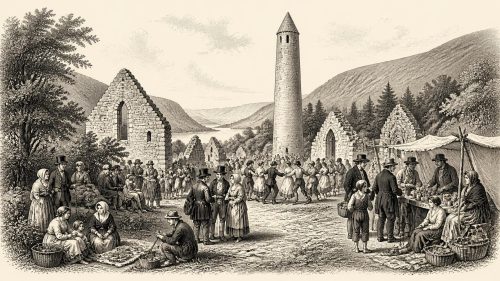
In 1813, Catholic emancipation dominated Irish politics as Henry Grattan’s relief bill advanced at Westminster before collapsing over parliamentary admission and proposed state influence on episcopal appointments, opposed by bishops and Daniel O’Connell. Sectarian tension erupted at Garvagh, County Londonderry, where armed Protestants and Orangemen repelled Ribbonmen during a fair. An unsuccessful census initiative reflected administrative uncertainty, while observations of poverty, fever and education highlighted social pressures. Cultural life included Hugh Porter’s poetry and Glendalough’s patron festival. In September, the Limerick meteorite fell near Adare, becoming Ireland’s largest recorded meteorite fall and was preserved for scientific study as material evidence.

Read Article

The Ranger’s Inland Passage

The Ranger’s Inland Passage

Archived: 11 October 2026

Abstract

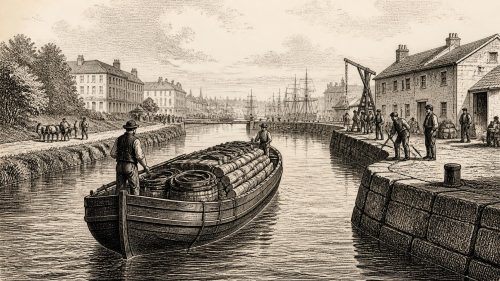
In 1804, Ireland remained shaped by the legacy of 1798, the Union and war with France. James Corcoran’s guerrilla band was destroyed near Enniscorthy, while transported Irish prisoners invoked Vinegar Hill during the failed Castle Hill rebellion in New South Wales. Invasion fears prompted a gun tower at Sutton and Edgeworth’s short-lived Dublin–Galway semaphore. Economic integration advanced when The Ranger completed the commercial Grand Canal passage from the Shannon to Dublin. Cork Street Fever Hospital admitted its first patients, providing isolation and care in the Liberties. These developments reveal governance, defence, infrastructure and philanthropy amid unresolved political and social grievances.

Read Article

