Archived: 10 October 2026
Abstract
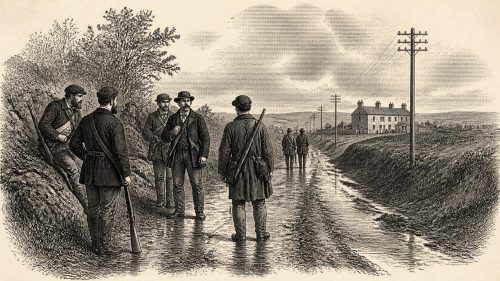
In 1867 the Irish Republican Brotherhood launched a poorly coordinated Fenian rising seeking an independent republic and social reform. After alarms including the failed Chester Castle raid, authorities extended habeas corpus suspension, arrested suspects, and strengthened policing. On 5 March, insurgents attacked police and coastguard stations, disrupted telegraphs and railways, and assembled near Dublin and in Munster. Better-armed government forces, intelligence, poor communications, inadequate weapons, and absent mass support quickly defeated them. Peter O'Neill Crowley's later death fostered martyrdom. The year brought Fenian rescues and executions in Manchester, transportation to Western Australia, the Clerkenwell bombing, hardship, reform, and Orange mobilisation.
Read Article

Archived: 10 October 2026
Abstract
In 1866, Ireland experienced political repression alongside religious, educational and technological change. Parliament suspended habeas corpus amid fears of Fenian conspiracy, enabling 752 arrests and weakening republican organisation before the failed 1867 rising. Fenian raids into Canada highlighted nationalism’s Atlantic dimension, while Paul Cullen’s elevation as Ireland’s first cardinal symbolised Catholic institutional confidence, also visible in Belfast’s St Peter’s Church. Anne Jellicoe founded Alexandra College, extending advanced educational opportunities for women. Railway expansion to Westport and changing livestock agriculture altered rural life. Most dramatically, the successful Valentia–Newfoundland telegraph cable connected Ireland to North America, making Kerry a global communications hub.
Read Article

Archived: 10 October 2026
Abstract
In 1865, Dublin’s International Exhibition at Earlsfort Terrace showcased Irish art, industry and agriculture, affirming civic ambition, imperial connections and establishment loyalty, while masking persistent rural poverty and inequality. July’s restricted-franchise general election returned Palmerston’s Liberals, but offered no agreed Irish political programme. More consequentially, police suppressed the Fenian Irish People in September, arresting leading Irish Republican Brotherhood activists. James Stephens was captured in November but escaped Richmond Bridewell. Green Street trials sentenced O’Leary, Luby and O’Donovan Rossa to penal servitude, creating nationalist symbols. Catholic Archbishop Paul Cullen opposed revolutionary secrecy. Livestock remained vital, and W. B. Yeats was born.
Read Article
Archived: 10 October 2026
Abstract
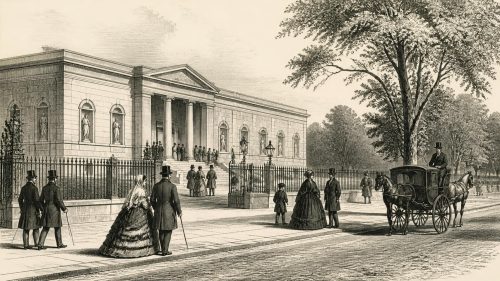
In 1864, Ireland saw expanding state and cultural institutions alongside social and political division. Civil registration of births, deaths and marriages began, while Dublin’s National Gallery opened and scientific collecting continued. A memorial tower to Daniel O’Connell was begun at Glasnevin, affirming Catholic nationalist memory. Post-famine agricultural consolidation, livestock growth, emigration and the foundation of Cork’s Munster Bank indicated uneven economic change. Belfast’s August sectarian riots caused deaths, injuries and controversy over policing, prompting a royal commission. Meanwhile, the Irish Republican Brotherhood organised clandestinely through The Irish People, and Archbishop Cullen founded the Irish Ecclesiastical Record, strengthening Catholic institutional authority.
Read Article

Archived: 10 October 2026
Abstract
In 1863, post-Famine Ireland remained marked by poverty, precarious employment, local distress and continued emigration, linking communities with Britain and North America. Parliamentary debates addressed relief, destitution and insecure tenant tenure, while drainage legislation promoted estate improvement without resolving tenant rights. The Poor Removal Act addressed welfare disputes arising from migration. Against this background, James Stephens and Irish Republican Brotherhood associates established The Irish People in Dublin on 28 November, funded partly by American Fenians. Edited and managed by organisers, the newspaper provided public republican platform, encouraging recruitment and fundraising. Belleek Pottery’s Parian production also indicated uneven national industrial development.
Read Article

Archived: 10 October 2026
Abstract
In 1862, Ireland saw significant infrastructural, civic and institutional development alongside enduring poverty and political frustration. Edward Harland and Gustav Wolff formed their Belfast shipbuilding partnership, while Ulster Hall opened, symbolising the city’s industrial and cultural confidence. The railway reached Sligo, and a Stranraer–Larne steam service improved connections with Scotland. Dublin gained statutory authority for a municipal fire brigade. Meanwhile, parliamentary debates highlighted severe rural distress and workhouse dependence; Poor Law changes expanded infirmary care and child boarding-out. Churches marked Archbishop Beresford’s death, republican organisation persisted covertly, and Irish communities remained connected to America, literature, and expanding national education systems.
Read Article

Archived: 10 October 2026
Abstract
In 1860, Ireland remained shaped by post-Famine population loss, insecure rural tenancies and religious division. Deasy’s Act recast landlord–tenant relations as contractual, consolidating rules while failing to secure customary tenant-right or resolve ownership of improvements. Census legislation prepared a detailed 1861 enumeration, though household returns were later destroyed. Education expanded but attendance and progression remained limited, amid denominational conflict. Sectarian disturbances in Ulster prompted restrictions on party emblems and renewal of coercive policing. Railways, coaches, ports and emigration strengthened internal and Atlantic links, while the Irish Republican Brotherhood stayed clandestine. Boucicault’s The Colleen Bawn popularised a commercial theatrical Ireland abroad.
Read Article
Archived: 10 October 2026
Abstract
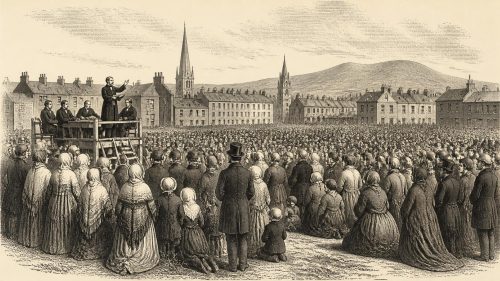
In 1859, post-Famine Ireland displayed religious revival, political restriction, migration and uneven modernisation. The Ulster Evangelical revival, rooted in earlier prayer meetings, reached peak visibility through mass gatherings, conversions and controversy, strengthening Protestant culture while provoking clerical criticism. Westminster elections operated under a narrow property franchise, leaving most people excluded. Dublin saw the launch of The Irish Times and the National Gallery’s foundation stone. The Pomona’s wreck off Wexford killed 424, highlighting emigrants’ perils. Railways reached Enniskillen and linked Tralee with Killarney, yet rural hardship deepened. Meanwhile, Fenian reorganisation abroad connected secret republicanism with Ireland’s diaspora and future political conflict.
Read Article
Archived: 10 October 2026
Abstract
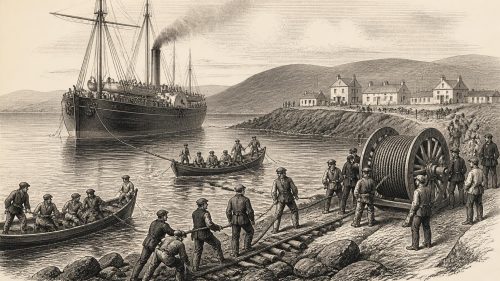
In 1858, Ireland experienced political, technological and social change. James Stephens founded the secret Irish Republican Brotherhood in Dublin, supported by Irish-American networks and committed to republican revolution. Valentia Island became the Irish terminus of the first transatlantic telegraph cable, briefly linking Britain and North America before failure. Post-Famine society continued to be reshaped by emigration, altered farming, poverty administration and Griffith’s Valuation. Infrastructure included Ballinacourty lighthouse, while Edward James Harland acquired Belfast’s Queen’s Island shipyard. Dundalk opened a free public library. These developments revealed uneven modernisation, connecting Ireland more closely with Atlantic migration, imperial commerce, industry and revolutionary politics.
Read Article




