
Archived: 8 October 2026
Abstract
In 1978, Jack Lynch’s Fianna Fáil government pursued expansionary policies, abolishing domestic rates while increasing borrowing amid unemployment and inflation. Its dismissal of Garda Commissioner Edmund Garvey was ruled invalid, raising concerns about policing and due process. Ireland chose to join the European Monetary System, loosening its automatic link with sterling. Northern Ireland endured violence, including the La Mon bombing, while the Maze dirty protest intensified and Ireland won a human-rights case against Britain. RTÉ 2 began broadcasting, John Treacy won the World Cross Country Championship, and Munster’s 12–0 victory over the All Blacks provided a lasting symbol of confidence.
Read Article
Archived: 10 October 2026
Abstract
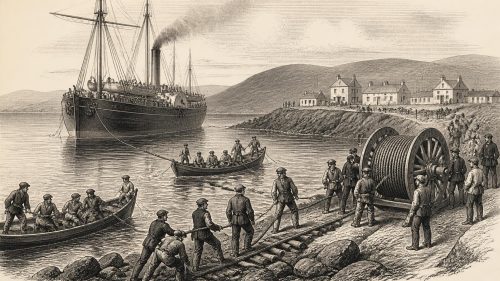
In 1858, Ireland experienced political, technological and social change. James Stephens founded the secret Irish Republican Brotherhood in Dublin, supported by Irish-American networks and committed to republican revolution. Valentia Island became the Irish terminus of the first transatlantic telegraph cable, briefly linking Britain and North America before failure. Post-Famine society continued to be reshaped by emigration, altered farming, poverty administration and Griffith’s Valuation. Infrastructure included Ballinacourty lighthouse, while Edward James Harland acquired Belfast’s Queen’s Island shipyard. Dundalk opened a free public library. These developments revealed uneven modernisation, connecting Ireland more closely with Atlantic migration, imperial commerce, industry and revolutionary politics.
Read Article

Archived: 10 October 2026
Abstract
In 1849, the Great Famine continued as blight, hunger, eviction, overcrowded workhouses and disease devastated Ireland. Cholera killed 772 of 1,077 recorded cases at Ballinasloe Union Workhouse, illustrating inmates’ vulnerability. Relief depended heavily on inadequate local rates; the May rate-in-aid redistributed Irish, rather than British, resources. The Incumbered Estates Act signalled restructuring of landownership, while emigration, consolidation and evictions altered rural life. Young Ireland leaders were transported, and unrest persisted; Dolly’s Brae exposed sectarian tensions. Victoria’s tour, new Queen’s Colleges and the Dublin–Cork railway projected progress, yet famine, political conflict and social upheaval still continued across the island’s fractured communities.
Read Article
Archived: 11 October 2026
Abstract
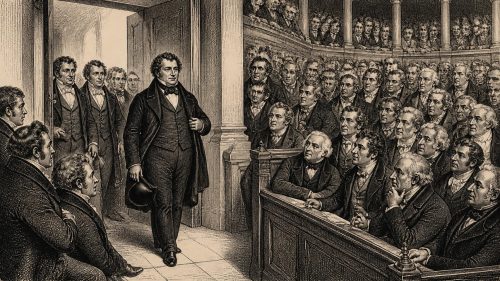
In 1830 Daniel O’Connell took his Westminster seat, embodying Catholic Emancipation after the 1829 Relief Act, while its limitations remained stark. The raised £10 franchise disfranchised many former forty-shilling freeholders, and Ireland remained governed under the Union. O’Connell’s Waterford election followed William IV’s accession and a general election, amid emerging British reform debates. Resistance to tithes supporting the Church of Ireland intensified, particularly late in the year, reflecting religious inequality and rural hardship. Distress, insecure agricultural work and market grievances sharpened tensions. Belfast’s July Orange riots exposed northern sectarian divisions. Contemporary diaries and records reveal political life extending beyond Parliament.
Read Article
Archived: 11 October 2026
Abstract
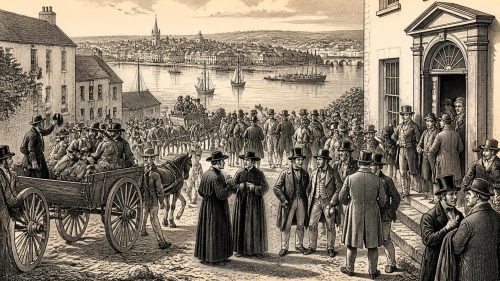
In 1826, Ireland saw organised Catholic politics challenge landlord authority without achieving emancipation. Daniel O’Connell’s reconstituted Catholic Association mobilised parish networks, subscriptions and forty-shilling freeholders around religious rights, education and electoral action. County Waterford’s election symbolised this change: Henry Villiers Stuart, a Protestant emancipation supporter, defeated Lord George Beresford, demonstrating tenants’ capacity to resist estate influence. Pro-emancipation gains elsewhere reinforced warning to government. Sterling replaced Irish currency, integrating financial administration with Britain. An education inquiry exposed fragmented, denominational schooling, while land legislation addressed complex tenancies amid rural hardship. Arklow received Ireland’s lifeboat station, and Tyrone Power advanced his London career.
Read Article
Archived: 11 October 2026
Abstract
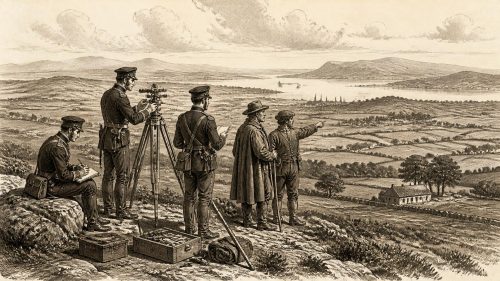
In 1825, government suppressed the Catholic Association through the Unlawful Societies Act, but Daniel O’Connell quickly reorganised constitutional agitation for emancipation, while a relief bill failed in the Lords. Thomas Colby’s Ordnance Survey began mapping Ireland for taxation and administration, incorporating local knowledge into state records. Government-assisted migration sent 2,024 people from Cork to Upper Canada. The Provincial Bank, Portlaw’s cotton venture, revised excise licences and packet steamers reflected economic change. Educational inquiry documented extensive yet fragmented schooling, while Croker’s Fairy Legends promoted Irish oral traditions. These developments linked politics, administration, migration, commerce and culture in an unequal, changing Ireland.
Read Article
Archived: 11 October 2026
Abstract
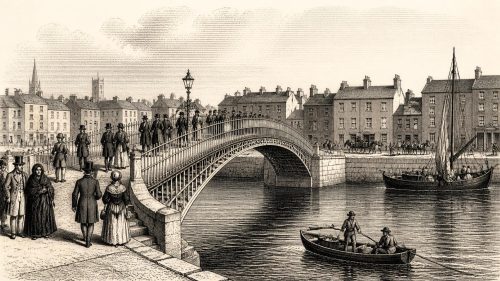
In 1816, postwar recession and exceptionally cold, wet weather brought Ireland a serious subsistence crisis, with deficient potatoes and grain, costly food, wet fuel and conditions favouring fever. Westminster acknowledged distress and disorder but rejected major inquiry or reform. Maritime wrecks killed hundreds near Waterford and Kinsale. Dublin opened Richmond and Wellington, later Ha'penny, bridges, began Dunleary harbour, and founded an institution for deaf children. Belfast gained Ireland's first successful savings bank and St George's Church. Yet progress coexisted with exclusion, poverty and violence: Catholic disabilities persisted, while the burning of Wildgoose Lodge killed eight, exposing agrarian conflict and insecurity.
Read Article
Archived: 11 October 2026
Abstract
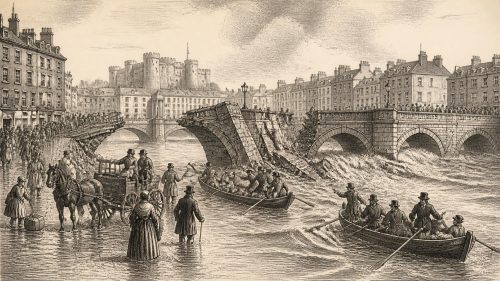
In 1802, Ireland adjusted to Union government as its first Westminster election exposed restricted representation and Catholic exclusion. The Treaty of Amiens briefly eased fears of French intervention, yet official vigilance persisted and Robert Emmet’s return signalled surviving revolutionary ambition. Social initiatives addressed poverty and disease: Edmund Rice began educating poor Catholic boys in Waterford, Cork opened a fever hospital, Dublin’s dispensary aided the poor, and Belfast’s library gained Linen Hall premises. In December, torrential rain flooded Dublin, bursting rivers and destroying Ormond Bridge. These events revealed a society experiencing constitutional change, unresolved grievances, voluntary reform, urban hardship and vulnerability.
Read Article
Archived: 11 October 2026
Abstract
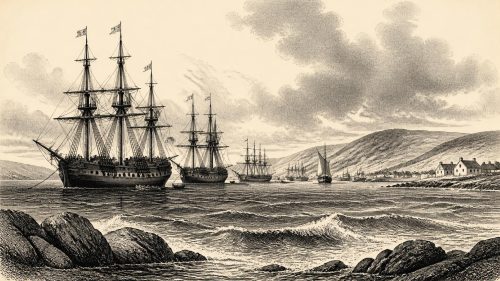
In 1796, Ireland faced an attempted French invasion that exposed the convergence of revolutionary politics, sectarian tension and wartime insecurity. Theobald Wolfe Tone helped secure French support for an expedition under General Hoche, but storms, dispersal and confused command prevented its 14,000 troops from landing at Bantry Bay. Dublin Castle answered unrest with the Insurrection Act and newly established yeomanry, while Orange organisation strengthened Protestant loyalism. Catholic responses varied, exemplified by Bishop Francis Moylan’s anti-revolutionary pastoral. Meanwhile, the Royal Canal reached Kilcock and Edward Bunting published Irish harp music. The failed invasion intensified repression, mobilisation and republican hopes before 1798.
Read Article
Archived: 12 October 2026
Abstract
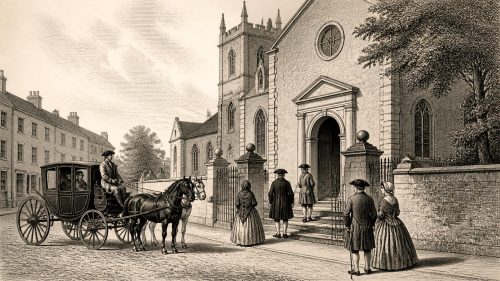
In 1787, Ireland’s Dublin parliament responded to agrarian unrest by passing the general Riot Act, amid Rightboy disturbances and attacks on property, tolls and officials. It also promoted manufactures, linen, trade and maritime regulation, while fiscal measures extended state oversight. Thomas Orde’s proposed nationwide school system, including free parish education, failed amid confessional distrust. John Butler, Catholic bishop of Cork and heir to Dunboyne, conformed to the Church of Ireland, an exceptional conversion reflecting Protestant privilege. Lord Lieutenant Rutland died in October, disrupting Castle politics. Cultural life saw Dublin theatre reorganisation and Prince William Henry’s visit to Curraghmore in December.
Read Article
Archived: 14 October 2026
Abstract
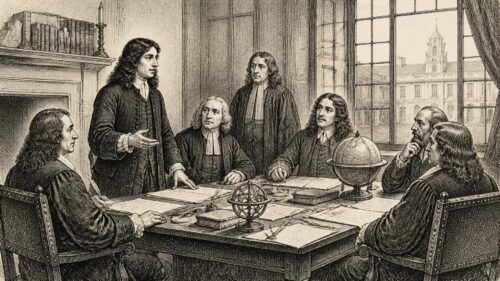
In 1683, Restoration Ireland reflected vigilant government, Protestant consolidation, Catholic resilience and emerging scientific enquiry. Following England’s Rye House Plot, Lord Deputy Arran and Ormond monitored suspected dissenters, linking officeholding to Church of Ireland conformity; Richard Talbot’s return also signalled Catholic court influence. Randal MacDonnell’s death ended the Antrim marquessate amid indebted estate arrangements. William Molyneux convened Dublin’s first philosophical society, promoting observation and practical knowledge. Archbishop Boyle’s new Blessington church embodied Anglican landlord power, while Dominic Maguire’s selection as Catholic primate demonstrated ecclesiastical continuity. Trade remained pastoral, Greatrakes died, and the severe winter threatened livelihoods across the island’s communities.
Read Article
Archived: 14 October 2026
Abstract
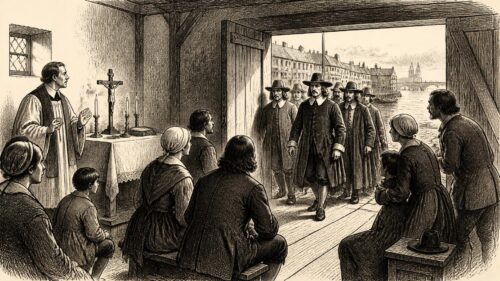
In 1679, amid the Popish Plot scare, Ormond's Irish administration intensified measures against Catholic worship, clergy and suspected disorder. Proclamations targeted bishops, Jesuits, masshouses and tories, linking religious nonconformity with threats to royal authority. Officers entering the Merchants' Quay masshouse met resistance, demonstrating both continuing Catholic worship and contested enforcement. A public Protestant fast nationalised fears of conspiracy. Catholic leaders, including Peter Talbot and Oliver Plunkett, faced confinement; Plunkett's December arrest made him the scare's principal Irish target. Authorities also guarded against Scottish unrest, pursued outlaws, regulated revenue and tobacco, and sponsored rebuilding projects, combining coercion, administration and Restoration display.
Read Article
Archived: 14 October 2026
Abstract
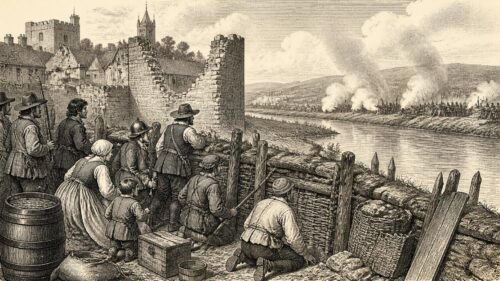
In 1650, the Cromwellian conquest advanced despite continuing resistance in Connacht, Limerick and Ulster. Cromwell’s agreement with Protestant royalists weakened Ormond’s Catholic–royalist coalition. At Clonmel, Hugh Dubh O’Neill’s improvised inner defence repelled a costly assault, although shortages enabled the garrison’s escape and the town’s surrender. Broghill defeated a relief force at Macroom, while Scarrifholis destroyed the Ulster Catholic army and led to Heber MacMahon’s execution. After Cromwell departed, Henry Ireton captured plague-stricken Waterford and Duncannon, pressured Athlone and failed before Limerick. Clergy repudiated Ormond; garrisons, blockade, disease and resource seizures established groundwork for further conquest and settlement in Ireland thereafter.
Read Article

Archived: 15 October 2026
Abstract
In 1648, the Catholic Confederation of Ireland fractured over the Dungarvan truce with Murrough O’Brien, Lord Inchiquin, newly aligned with Charles I. Exhaustion after 1647 defeats led moderates to seek a royalist coalition and negotiations with Ormond, despite Inchiquin’s destructive record. Papal nuncio Rinuccini condemned the truce, censuring supporters and joining Owen Roe O’Neill’s resistance. Rival Confederate armies campaigned without decisive battle, burdening civilians suffering requisition and scarcity. The Kilkenny assembly marginalised O’Neill, while Ormond’s return and Rome’s limited aid strengthened accommodation. O’Neill’s ceasefire with parliamentarian Michael Jones revealed division. Winter brought coalition, not peace, before the 1649 Ormond settlement.
Read Article
Archived: 16 October 2026
Abstract
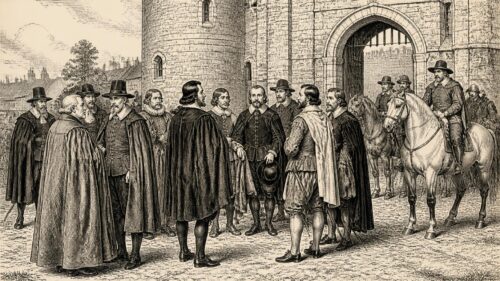
In 1627, Irish politics centred on negotiations over Crown funding, land security and Catholic disabilities. After failed discussions with Lord Deputy Falkland, a convention appointed eleven agents, mainly Old English Catholics but including Protestants, to negotiate in England. Their mission anticipated, but did not yet constitute, the Graces agreed in 1628. Spanish invasion rumours heightened security concerns without producing an expedition. Government business included Adam Loftus’s recall, creation of a Second Serjeant-at-Law, and William Brabazon’s elevation as earl of Meath. William Bedell became Trinity’s provost, encouraging Irish-language ministry. Robert Boyle was born at Lismore, within the prominent Protestant plantation elite.
Read Article
Archived: 16 October 2026
Abstract
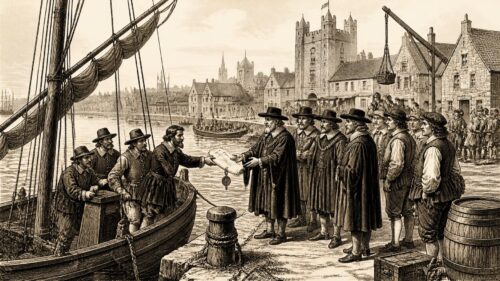
In 1626, Lord Deputy Falkland governed Ireland amid fiscal, religious and landholding tensions. Charles I restored Waterford’s charter, withdrawn after civic officers refused the oath of supremacy, enabling Catholic municipal leadership within Protestant legal constraints for an alleged £3,000. The Crown advanced plantation in Upper Ossory, reshaping contested Fitzpatrick lands. To fund 5,500 troops during war with Spain, Falkland offered proposed Graces, including land-title security, reduced recusancy penalties and officeholding opportunities for Catholics. Protestant bishops, led intellectually by James Ussher, opposed toleration. Aodh Mac Cathmhaoil became Catholic archbishop of Armagh, dying in Rome; Niall Garvach O’Donnell died imprisoned in Tower.
Read Article
Archived: 16 October 2026
Abstract
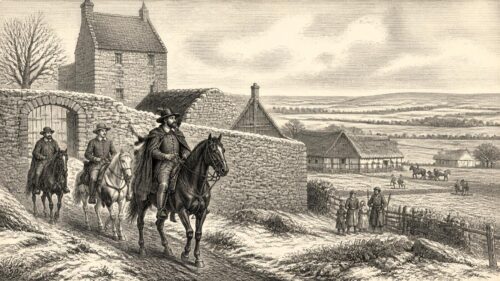
In 1618, Stuart government in Ireland used municipal law, land policy and inspection to reinforce royal authority, Protestant conformity and plantation. Waterford lost its charter after electing recusant civic officers, demonstrating that corporate liberties depended upon religious obedience. Commissioners examined plantation schemes in Longford and O’Carroll country, while an October order required native Irish occupiers to leave assigned Ulster plantation lands by May 1619. In November Captain Nicholas Pynnar was commissioned to inspect settlement, fortifications, tenants and arms in Ulster’s escheated counties. Aodh Mac Cathmhaoil’s Irish-language Catholic book, published at Louvain, and Richard Stanihurst’s death in Brussels highlighted Catholic connections.
Read Article
Archived: 16 October 2026
Abstract
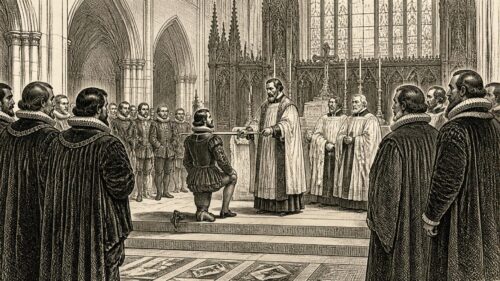
In 1616, Ireland remained shaped by the settlement following the Nine Years’ War despite the absence of nationwide warfare. Hugh O’Neill’s death in Rome on 20 July marked the passing of a figure in resistance and exile. A new royal governor and confrontation in Waterford illuminated continuing disputes over government, religion and civic authority. Ireland’s political life connected Dublin with Rome, London, Spain and Scotland, rather than operating within isolated borders. Conquest had altered the institutions through which allegiance and land were contested without settling those questions. The year demonstrates the persistence of uncertainty within an increasingly organised royal kingdom.
Read Article
Archived: 17 October 2026
Abstract
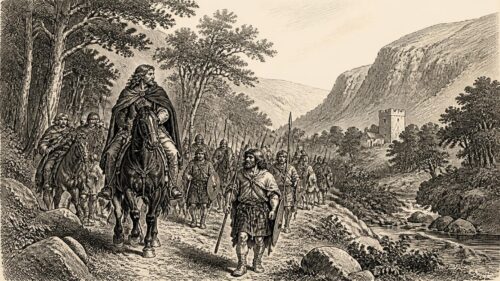
In 1565, Ireland remained divided among powerful Gaelic and Old English lordships despite Tudor claims. At Affane, Ormond defeated and captured Desmond during a dispute over Déise, prompting concern at magnates waging private war. In Ulster, Shane O’Neill crushed the MacDonnells at Glentaisie, extending influence through garrisons and settlement, and alarming Dublin and London. The Crown advanced surrender and regrant by creating Donal MacCarthy Mór earl of Clancare, while Henry Sidney’s confirmation signalled intervention. Catholic organisation persisted through Jesuit schooling and Miler Magrath’s appointment. The death of scholar Tadhg Cam Ó Cléirigh also demonstrated continuing learned patronage amid political conflict.
Read Article
Archived: 18 October 2026
Abstract
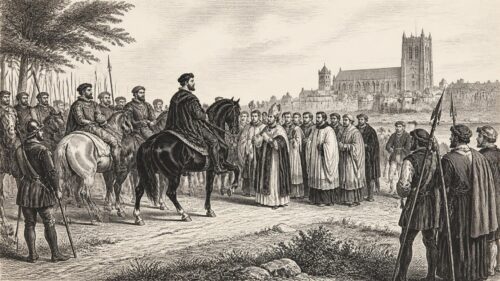
In 1558, Ireland’s politics were shaped by dynastic struggles, crown intervention and Mary I’s death. Thomas Radcliffe, earl of Sussex, installed Conor O’Brien as earl of Thomond, using military force against his uncle Sir Donal, while leaving local Gaelic authority intact. Gerald FitzGerald inherited Desmond after his father’s death, amid unresolved tensions with Ormond and the government. In Ulster, Shane O’Neill had his crown-backed half-brother Matthew killed, intensifying the Tyrone succession dispute. Sussex’s unsuccessful Kintyre expedition exposed Scottish-Irish connections. Elizabeth I’s accession opened a new era, but Ireland retained Mary’s religious settlement largely unchanged in practice until legislation in 1559.
Read Article
Archived: 18 October 2026
Abstract
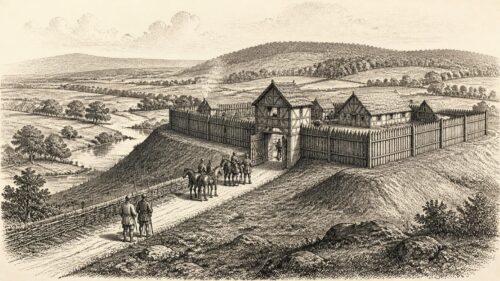
In 1548 Sir Edward Bellingham replaced Anthony St Leger as lord deputy, shifting Tudor policy from accommodation towards military occupation. Fort Protector, established in Leix on the future site of Portlaoise, provided a permanent garrison base against the O’Mores and O’Connors. Cahir Roe O’Connor was executed, while Brian O’Connor Faly and Giolla Pádraig O’More submitted, were taken to England, and the latter died there. Cess and the reopened Dublin mint supported government. Bellingham intervened in Wicklow, detained Desmond, while Ulster remained divided by conflict. Edwardian religious reforms advanced unevenly. Tudor power remained limited but relied on garrisons, coercion and confiscation.
Read Article
Archived: 18 October 2026
Abstract
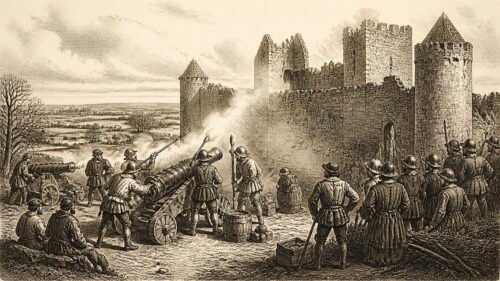
In 1535, the Kildare rebellion collapsed through military defeat, fractured alliances and Thomas FitzGerald’s surrender. Crown artillery captured Maynooth Castle in March, after which surrendered defenders were executed, creating the notorious memory of Maynooth’s pardon. Gaelic allies submitted or negotiated as royal pressure intensified. Leonard Grey received Thomas’s surrender in August and escorted him to England, where imprisonment preceded execution in 1537. Government forces also captured Dungarvan, while northern agreements revealed dependence on powerful local lords. Skeffington’s death closed a campaign. Victory dismantled Geraldine power without establishing secure government across Ireland, leaving authority contested through rivalries, coercion and fragile bargains.
Read Article

Archived: 19 October 2026
Abstract
In 1495, Sir Edward Poynings sought to strengthen Henry VII’s authority in Ireland through the Drogheda parliament, whose measures restricted Irish legislative initiative, while arresting the eighth earl of Kildare; his attainder was reversed later that year. Perkin Warbeck, backed by Desmond and Cork interests, failed after Waterford’s eleven-day land-and-sea defence, preserving a loyal harbour. Elsewhere, Aodh Ruadh Ó Domhnaill’s Scottish alliance and warfare around Sligo, conflicts in Breifne, and lordly rivalries demonstrated fragmented power. Church councils, monasteries, guesthouses, learned families and physicians reveal institutions supporting society. The year exposed Tudor ambitions but confirmed fragmented Irish power across the island.
Read Article
Archived: 21 October 2026
Abstract
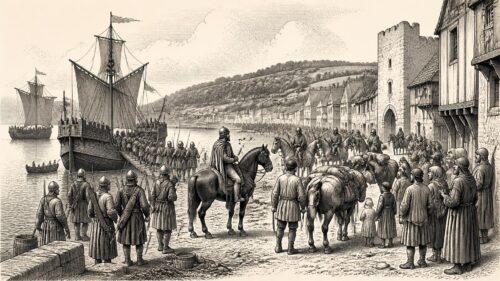
In 1399 Richard II landed at Waterford to subdue Art Mac Murchadha Caomhánach, whose Leinster forces avoided pitched battle, strained royal supplies and prevented a settlement. The expedition exposed the limited reach of English lordship beyond defended centres. While Richard campaigned, conflicts continued in Connacht and Ulster, and John fitz Gerald, earl of Desmond, drowned amid a Munster feud, leaving a minor heir. Annals note deaths of churchmen, rulers and Mac Egan legal scholars. Henry Bolingbroke's English invasion forced Richard’s July departure. Art remained unconquered, and Henry IV’s accession by September ended Richard’s reign, leaving Irish divisions and weakness unresolved.
Read Article

Archived: 21 October 2026
Abstract
In 1394 Richard II landed at Waterford with an expedition, the first reigning English king to visit Ireland since 1210. Seeking to strengthen the weakened lordship, he targeted Leinster, where Art MacMurrough challenged crown authority. MacMurrough burned New Ross, seizing wealth and hostages, while Ormond retaliated by ravaging Leinster. Richard travelled through Kilkenny to Dublin, obtaining meetings, pledges and uncertain submissions rather than decisive control. Parliament and counsel in Dublin underscored reliance on magnates, clergy and towns. Elsewhere, inter-lordship violence, clerical deaths, church destruction and rebuilding, and learned men’s killings revealed a fragmented society. Royal prestige rose, but conflict endured.
Read Article
Archived: 21 October 2026
Abstract
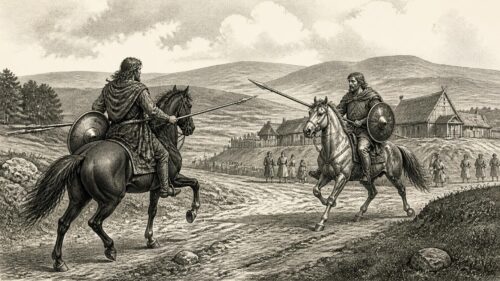
In 1383, fragmented Ireland experienced renewed royal administration, northern warfare and serious disease. Richard II appointed Sir Philip Courtenay lieutenant, who arrived at Waterford in September, while Ralph Cheyne served as chancellor. In Ulster, Niall Mór Ó Néill’s coalition burned and plundered territories associated with English lordship. During the campaign, his son Aodh Óg and Raibilin Savage fatally wounded one another, provoking further killing among the Bissets. Annalists reported widespread plague throughout Ireland, including the death in captivity of Art Magennis. Deaths, killings and successions among secular and religious leaders reveal local instability, while hospitality remained an important lordly ideal.
Read Article
Archived: 26 September 2026
Abstract
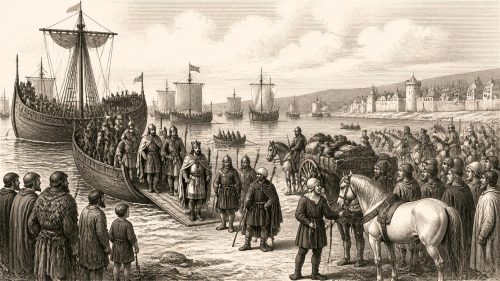
In 1210 King John launched a 63-day expedition to Ireland, asserting authority over Anglo-Norman magnates and seeking alliances with Gaelic rulers. Landing at Waterford, he received Donnchadh Ua Briain and Cathal Crobhdearg Ua Conchobair, then advanced through Dublin, Meath and Ulster. Walter and Hugh de Lacy were dispossessed; Carrickfergus fell to royal forces, while Man suffered punitive attack. John expanded administration, installed John de Grey, promoted castles and a bridge at Athlone, and supported royal coinage. Yet hostage-taking damaged relations with Connacht, Gaelic submissions remained conditional, and regional conflicts continued. The campaign strengthened royal control but left divided politics unresolved.
Read Article

Archived: 26 September 2026
Abstract
In 1185, eighteen-year-old John, Lord of Ireland, landed with an Anglo-Norman expedition intended to strengthen royal authority and curb magnates such as Hugh de Lacy. His poor diplomacy, disputed by Gerald of Wales in detail but evident in outcome, alienated Gaelic rulers and settlers alike. Castles in Munster provoked resistance and military losses, while dynastic wars continued across Connacht and Ulster independently of John’s aims. Town charters, notably Cork’s, and grants to newcomers including Theobald Walter encouraged lasting colonial institutions. Churches, learning, trade and cattle-based livelihoods persisted amid warfare. John’s December departure secured no general obedience, but strengthened royal footholds.
Read Article
Archived: 26 September 2026
Abstract
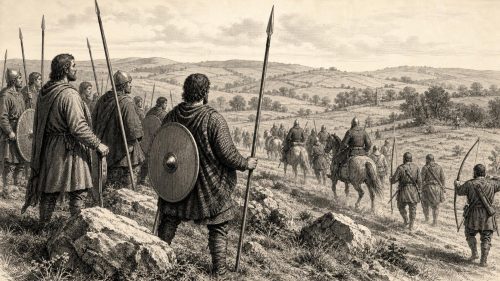
In 1174, Strongbow’s Anglo-Norman army suffered a decisive defeat near Thurles when Domnall Mór Ua Briain and Conchobar Máenmaige led Munster and Connacht forces against an expedition ravaging Munster. The reverse exposed the fragility of Henry II’s new lordship, already weakened by overseas commitments and uneven control beyond coastal towns. Heavy losses forced Strongbow to Waterford, where Hiberno-Norse inhabitants killed garrison members before Raymond le Gros brought reinforcements from Wales. Alliances remained temporary, while dynastic violence continued elsewhere. Church life endured: Gelasius, archbishop of Armagh, died, was succeeded by Cornelius, and a synod met at Birr. Warfare burdened rural communities
Read Article

Archived: 26 September 2026
Abstract
In 1173, Ireland remained a fragile, contested conquest after Henry II’s intervention. Strongbow governed Leinster under royal authority, while de Lacy held Meath and Ruaidrí Ua Conchobair retained Gaelic overlordship. The Angevin revolt drew leading Anglo-Norman commanders overseas, weakening garrisons, though Strongbow returned as Henry’s representative and supplied troops for the royal war. Domnall Mór Ua Briain, aided by Connacht forces, captured Kilkenny, exposing colonial vulnerability. Leinster dynasts also resisted Strongbow’s inheritance claim. Conflict persisted in Meath and Ulster, alongside church deaths, pestilence, plunder, trade and scholarship. By year’s end, conquest endured but remained insecure across a deeply divided island.
Read Article




