Archived: 3 October 2026
Abstract
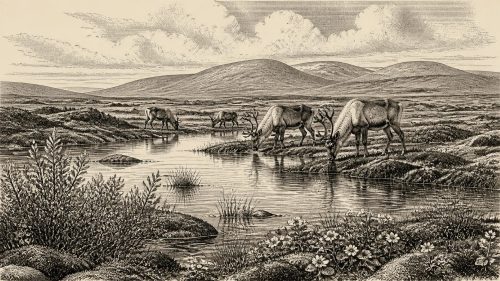
The label 30,326 BCE is approximate, as Ireland’s evidence consists of dated deposits rather than year-specific events. At Derryvree, Fermanagh, organic silts and sands between glacial tills record an ice-free interval, broadly 36,900–31,700 years before present, with treeless tundra wetlands, freshwater, sedges, mosses and periglacial ground. Castlepook Cave, County Cork, preserves remains of mammoth, reindeer, giant deer, predators and other cold-adapted fauna, demonstrating intermittent animal occupation. A possibly butchered reindeer bone suggests a brief early human visit, but remains contested. No settlements, institutions, language or sustained human community are evidenced; climate, ice and shifting habitats fundamentally shaped Ireland’s prehistoric environment.
Read Article

Archived: 1 October 2026
Abstract
Around 30,399 BCE, Ireland’s evidence records a broad Late Pleistocene interval, not a precisely dated event. At Derryvree near Maguiresbridge, freshwater sediments between glacial tills indicate locally ice-free, harsh wetlands during the Derryvree Cold Phase. Fossils reveal sedges, grasses, mosses, aquatic plants and sparse tundra shrubs in a treeless landscape. Cave finds elsewhere show cold-adapted fauna, including mammoth, reindeer, giant deer, predators and smaller animals. A cut-marked reindeer bone from Castlepook may suggest human activity, but lacks secure contextual proof. No evidence establishes settlements, farming, polities or culture. Later ice advances buried this environmental archive, preceding the Last Glacial Maximum.
Read Article

Archived: 29 September 2026
Abstract
30,491 BCE is a modern chronological marker, not a datable Irish event. At Derryvree near Maguiresbridge, freshwater silts and organic muds between glacial tills record a Middle Midlandian interval when tundra wetlands developed between ice advances. Radiocarbon evidence provides only a broad calibrated age range. Plant remains indicate treeless, periglacial conditions, while changing ice and low sea levels shaped an uncertain island geography. Castlepook Cave preserves cold-stage fauna, including mammoth, reindeer and predators. A cut-marked reindeer bone may suggest human activity, but cannot demonstrate settlement. Ireland’s evidence instead reveals fluctuating ice, open ground, shallow water and fragmentary Pleistocene survival records.
Read Article




