


Big Wind
Archived: 11 October 2026
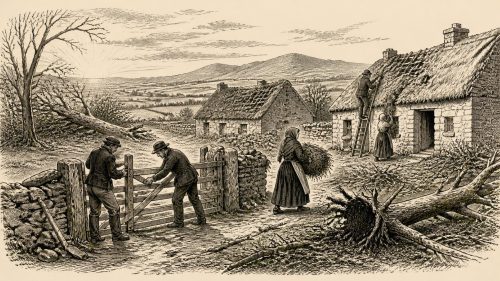
In 1839 Ireland experienced the Night of the Big Wind, a devastating storm of 6–7 January that damaged homes, farms, shipping and infrastructure, caused numerous deaths, and became a lasting marker in popular memory. Its effects intensified existing rural poverty and seasonal insecurity. Meanwhile, implementation of the 1838 Poor Law advanced through unions, guardians, rates and workhouse planning, while amendments refined administrative boundaries. Policing legislation strengthened state capacity in Dublin and nationally, amid O’Connell’s reform politics and continuing tithe disputes. National education and Griffith’s valuation expanded official knowledge. In August, the Belfast–Lisburn railway opened, signalling transport, commerce and institutional modernisation.


