

Related Archive: Philip II

Meelick Guns, New Shires

Meelick Guns, New Shires

Archived: 18 October 2026

Abstract

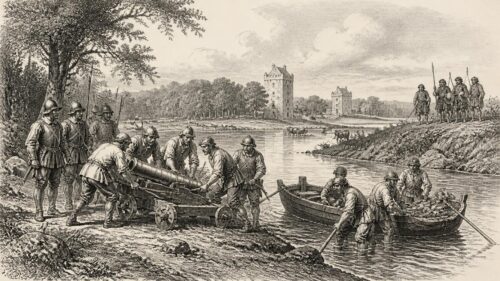
In 1557, Tudor policy combined legislation, plantation and military coercion to extend royal control across Ireland. Parliament created Queen's County and King's County from Laois and Offaly, planned Maryborough and Philipstown, restored Catholic arrangements, and adjusted Poynings' Law, while protecting former church lands. Sussex's campaigns against O'Connor Faly and neighbouring lords used artillery, garrisons, hostages and executions, devastating communities. Agreements such as William O'Carroll's bound Gaelic leaders to service and payments. In Ulster, Shane O'Neill's rivalry with Calvagh O'Donnell ended in defeat, while Sussex's sack of Armagh failed to secure Tyrone. New shires proclaimed authority, but resistance and violence persisted.


Read Article

Druim-dá-Mhaighe Hostages

Druim-dá-Mhaighe Hostages

Archived: 18 October 2026

Abstract

In 1556, changes in government and regional conflicts revealed Tudor ambitions alongside continuing Irish political diversity. Thomas Radcliffe replaced Anthony St Leger as lord deputy, signalling a stronger emphasis on military intervention. Northern campaigning and the seizure and release of midland hostages demonstrated the importance of coercion and negotiation. A completed castle, an encounter in Thomond and a leading poet’s death illuminate developments beyond Dublin. Surviving evidence remains uneven, requiring caution about connections between events. The year nevertheless shows a government pursuing firmer control while Gaelic lords, Old English magnates, religious institutions and learned families retained authority in their communities.

Read Article

