Midlands Plantation1557 CE
In 1557, Tudor policy combined legislation, plantation and military coercion to extend royal control across Ireland. Parliament created Queen’s County and King’s County from Laois and Offaly, planned Maryborough and Philipstown, restored Catholic arrangements, and adjusted Poynings’ Law, while protecting former church lands. Sussex’s campaigns against O’Connor Faly and neighbouring lords used artillery, garrisons, hostages and executions, devastating communities. Agreements such as William O’Carroll’s bound Gaelic leaders to service and payments. In Ulster, Shane O’Neill’s rivalry with Calvagh O’Donnell ended in defeat, while Sussex’s sack of Armagh failed to secure Tyrone. New shires proclaimed authority, but resistance and violence persisted.
Dateline
A year of state-making and destruction
In 1557 the Tudor government attempted to turn military pressure into a permanent new order in the Irish midlands. Its most conspicuous achievement was legal: the Dublin parliament sat from 1 June to 2 July and authorised the shiring and settlement of territories long associated with the Ó Mórdha (O’More) of Laois and the Ó Conchobhair Fhailí (O’Connor Faly) of Offaly. Yet the year also showed the limits of paper authority. Government campaigns devastated the country they intended to secure; leading members of the displaced kindreds were executed or held as hostages; and in Ulster, two major Gaelic lordships pursued their own violent struggles for supremacy. The new counties, Maryborough and Philipstown were statements of royal purpose, but they stood amid an unsettled landscape.
Care is needed with the evidence. The parliament’s dates and its legislation are firmly recorded, while the campaigns of Thomas Radclyffe, third earl of Sussex and lord deputy, appear in administrative chronologies and later accounts. The detailed narrative supplied by the Annals of the Four Masters, compiled in the seventeenth century from earlier materials, is indispensable but should be read as a Gaelic historical account rather than as a neutral official report. It is particularly revealing about the human experience of raids, executions, hostages, cattle and plunder.
Parliament and the Midland Plantation
The Dublin parliament confirmed a drastic policy already set in motion under Mary I and her husband, Philip. The old territories of Leix, Slewmargy and neighbouring districts were to become Queen’s County, centred on Maryborough, while Offaly became King’s County, with Philipstown as its intended county town. Their modern successors are County Laois and County Offaly; Maryborough is Portlaoise, and Philipstown is Daingean. The names themselves advertised the monarchs’ claim to rule a region whose leading families had repeatedly resisted expanding government power from the Pale.
This was more than a change of map labels. Land claimed by the crown was to be redistributed under English legal tenure, while settlers from England and the Pale were expected to establish defensible holdings. Contemporary plantation plans envisaged a division in which much land near the Pale went to settlers, while selected Irish inhabitants might receive smaller freeholds farther west if they accepted crown terms. The scheme aimed to replace a borderland of Gaelic lordship, cattle-raiding and negotiated alliances with shires, rents, courts, fortified settlements and a dependable military corridor across the centre of Ireland.
The parliamentary session also restored Roman Catholic religious arrangements after Edward VI’s reign. It repealed Irish legislation directed against papal authority and the old religion, including the royal supremacy in ecclesiastical affairs. Restoration had limits, however. Former monastic and church property already granted to lay people was protected. For parish clergy and religious communities, therefore, Mary’s settlement brought an official return to Catholic worship and jurisdiction, but it did not undo the vast transfer of land and wealth begun under Henry VIII.
Another act clarified how Poynings’ Law was to operate. Since proposed Irish legislation ordinarily required prior approval in England, this mattered greatly to the practical working of parliament. The measure allowed the government to submit further proposals during a session when unforeseen necessities arose. It was a procedural change with political force: Dublin’s legislature could act, but the crown and council in England remained firmly in command of the legislative agenda.
War in Offaly
The new counties were created in the midst of war, not after a settled conquest. In early 1557 the record of a compact with William O’Carroll, captain of Ely O’Carroll, illustrates the government’s preferred mixture of accommodation and coercion. O’Carroll agreed to uphold Catholic religion, recognise Philip and Mary, attend royal hostings with horsemen and kern, provide provisions, make payments and deliver hostages. Such agreements were not empty ceremonial. They translated local lordship into obligations of service, food, cattle, rent and security, while leaving a local captain in office so long as he behaved acceptably to the deputy.
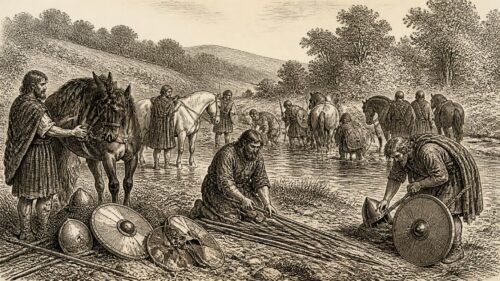
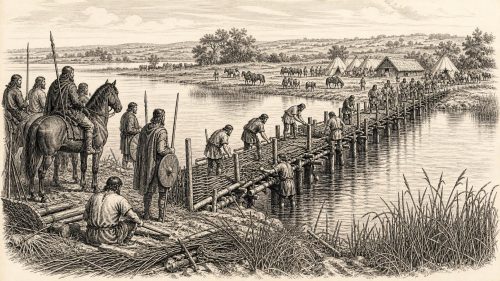
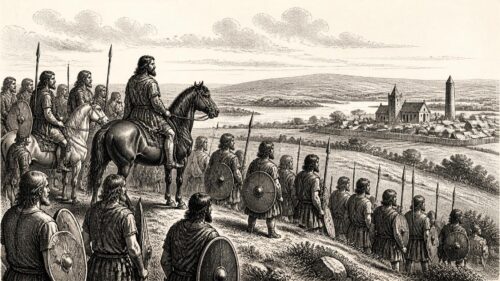
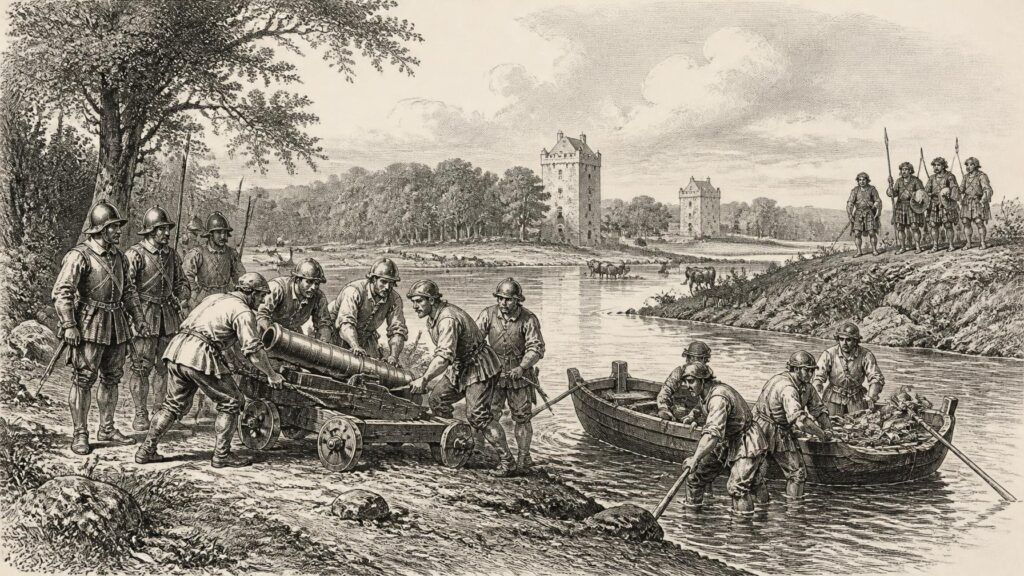
Sussex’s operations against the O’Connor Falys exposed the harsher face of the policy. The main expedition is generally dated 10–19 July; the Four Masters places it about three weeks before Lammas, 1 August. The annalists describe artillery being brought to Athlone and then sent by boat downriver towards Meelick, while the deputy marched overland. This combination of waterways, heavy guns, infantry and mounted troops shows that Tudor campaigning depended as much on transport and supplies as on battlefield encounters.
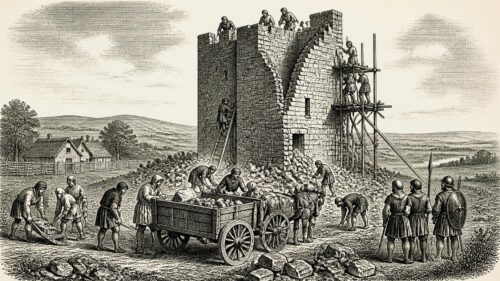
Meelick and Breac-chluain were taken, according to that account, and the surrounding territory was plundered. A government constable, named as Master Francis, was left at Meelick, while hostages were demanded from the O’Maddens of Síol Anmchadha and from Mac Coghlan. The expedition thus extended beyond a punitive attack on Offaly into the Shannon-border world of Connacht and the midlands. It sought to control river crossings, impose garrisons and detach neighbouring lords from resistance.
The price was severe. The annals state that Offaly was ravaged and that O’Connor hostages, apart from the lord himself, were put to death. They also record the execution at Leighlin of Conall Óg O’More, lord of Laois, and the hanging of Domhnall, son of Laoighseach O’More, lord of Sliabh Mairge. A separate entry says that Murrough MacMurrough Kavanagh was killed at Leighlin after being summoned to a council house, an episode the annalist portrays as treacherous. Even allowing for the partisanship of the source, the pattern is plain: executions and the taking of hostages were tools intended to break aristocratic resistance and frighten potential allies.
Everyday Consequences of Campaigning
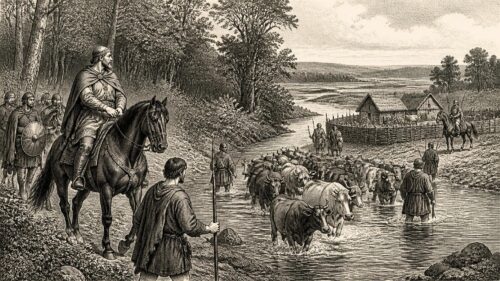
For people without a place in either government correspondence or elite genealogies, the important facts were likely more immediate: crops and stores consumed, cattle driven off, buildings damaged, roads made dangerous and labour diverted to service. The destruction of a castle at Rachra by Ó Melaghlin and the English of Athlone, followed by conflict between Ó Melaghlin and Mac Coghlan, indicates how a government intervention could sharpen rivalries rather than settle them. At Feadan in Delvin Eathra, the Four Masters reports a prisoner taking the castle and handing it to Mac Coghlan, followed by banishment and the hanging of hostages on 1 March. Authority was fragile, personal and frequently contested at the level of individual strongholds.
Yet political life was not composed only of destruction. The April agreement with O’Carroll required him to appear with twelve horsemen and twenty-four armed kern, supplied at his own cost. It also specified payments in money, cattle and the maintenance of eighty gallowglasses for a quarter-year. Such terms reveal a mixed economy of coin, livestock, food renders and military employment. They also show that Gaelic military structures—kerns and gallowglasses—remained central to government strategy, even as the crown tried to make them instruments of a new shire-based order.
Armagh and the Ulster Balance
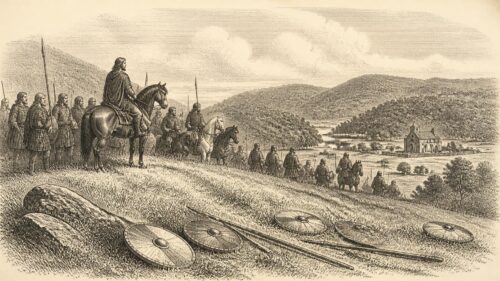
In Ulster, Sussex faced a different problem: the contest surrounding Shane O’Neill, who was already the dominant military figure within Tír Eoghain although he did not become chief of the O’Neills until 1558. His claim challenged the succession favoured by the crown under the earlier agreement with his father, Conn Bacach O’Neill. Sussex rejected Shane’s approaches and made a short, destructive expedition into Tyrone in late October. The campaign ran from 24 to 28 October in modern chronologies, and Armagh was burned or plundered on 27 October. The Four Masters adds that the place was plundered twice in one month.
Armagh was not simply a convenient target. Its great church was the foremost ecclesiastical centre of the Irish north, while the town lay close to the routes by which a Dublin army could enter O’Neill country. Attacking it could demonstrate force, but it also alienated inhabitants and potential allies. Sussex’s campaign did not subdue Shane. Later assessment has stressed that its exactions and the sack of Armagh undermined the deputy’s own position among those whose support he required.
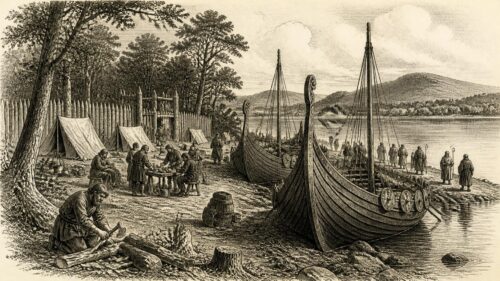
Earlier in the year, Shane had attempted to project authority westwards into Tír Chonaill. Calvagh O’Donnell had displaced and imprisoned his father, Manus O’Donnell, and faced opposition from his brother Hugh, who aligned with Shane. The Four Masters places Shane’s large camp near the Finn and Mourne rivers, supplied with mead, wine, clothing and other necessities. Its unusually vivid description reminds us that an army was also a temporary market and household, dependent on traders, servants, food distributors and pack animals.
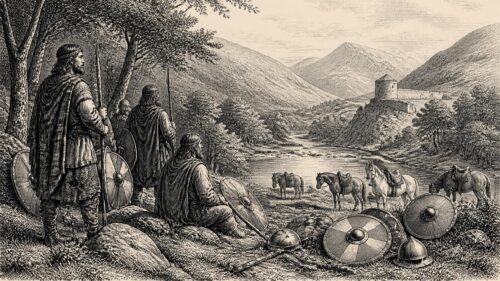
Calvagh, acting on advice attributed to the captive Manus, avoided a conventional battle and struck the camp by surprise at night near Beinnin, or Binnion Hill. The annals describe scouts mingling among the troops, receiving meal and butter, and returning with intelligence before Calvagh’s smaller force attacked. Shane escaped across flooded rivers, but his army was routed and its equipment, clothing and horses seized. The date within 1557 cannot be fixed more closely with confidence. Its importance, however, is clear: Calvagh preserved his contested hold on Tír Chonaill, while Shane’s ambition to dominate all Ulster suffered a sharp reverse.
An Unfinished Settlement
By the close of 1557, Tudor power had gained new statutory counties, planned county towns and several military footholds. It had not achieved security. In Laois and Offaly, confiscation and violence were laying foundations for a plantation that would provoke further resistance. In Ulster, the failure to bring Shane O’Neill to terms, and the damage done at Armagh, made a larger confrontation more likely. The year’s central lesson was that shires, forts and statutes could extend royal claims, but could not by themselves command allegiance in a country where lordship rested on kinship, land, armed followings and control of cattle, food and routes of movement.
Source References
Hover over a number to see the source. Select it to open the source.

- [1] Annals of the Four Masters, Volume 5 English Translation
- [2] Annals of the Four Masters: Annal M1557
- [3] Calendar of the State Papers Relating to Ireland, 1509–1573
- [4] State Papers Ireland 1509–1782: Government Papers on Irish Affairs
- [5] Radcliffe, Thomas
- [6] O’Neill, Shane (Seaán)
- [7] O’More (Ó Mórdha), Rory (Ruaidhrí Óg)
- [8] O’Donnell, Manus (Ó Domhnaill, Maghnas)
- [9] Sidney, Sir Henry
- [10] Fiant: 3 & 4 Philip and Mary (1556–1557), Item 132
- [11] Synopsis of Instructions Given to Governors of Ireland
- [12] Tudor Plantations
- [13] Plantations in Early Modern Ireland
- [14] ‘Geographical Loyalty’? Counties, Palatinates, Boroughs and Ridings
- [15] Statute Law Revision Act 2015
- [16] Edward VI, Mary and Elizabeth: Plantations
- [17] Shane O’Neill
- [18] Calendar of the State Papers Relating to Ireland
- [19] A New History of Ireland: VIII, A Chronology of Irish History to 1976
- [20] Settlers and Natives in the Leix-Offaly Plantation
Primary Sources
- Annals of the Four Masters, Volume 5 English Translation
- Annals of the Four Masters: Annal M1557
- Calendar of the State Papers Relating to Ireland, 1509–1573
- State Papers Ireland 1509–1782: Government Papers on Irish Affairs
- Radcliffe, Thomas
- O’Neill, Shane (Seaán)
- O’More (Ó Mórdha), Rory (Ruaidhrí Óg)
- O’Donnell, Manus (Ó Domhnaill, Maghnas)
- Sidney, Sir Henry
- Fiant: 3 & 4 Philip and Mary (1556–1557), Item 132
- Synopsis of Instructions Given to Governors of Ireland
- Tudor Plantations
- Plantations in Early Modern Ireland
- ‘Geographical Loyalty’? Counties, Palatinates, Boroughs and Ridings
- Statute Law Revision Act 2015
- Edward VI, Mary and Elizabeth: Plantations
- Shane O’Neill
- Calendar of the State Papers Relating to Ireland
- A New History of Ireland: VIII, A Chronology of Irish History to 1976
- Settlers and Natives in the Leix-Offaly Plantation