Archived: 7 October 2026
Abstract
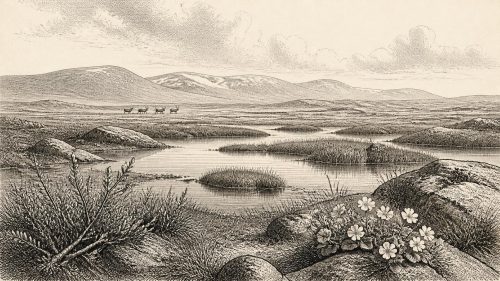
Around 30,169 BCE, Ireland’s history is reconstructed from environmental evidence rather than events. Derryvree, County Fermanagh, preserves organic sediments between glacial tills, dated approximately 30,500 radiocarbon years BP, indicating an ice-free freshwater tundra landscape with grasses, sedges, mosses, juniper and low shrubs. Climate and ice extent fluctuated during MIS 3, producing strong regional variation before the Last Glacial Maximum. Castlepook Cave, County Cork, yielded mammoth, reindeer, giant deer, hyaena and other fauna, demonstrating connections with north-west Europe. A possible tool mark suggests transient human activity, but sustained occupation remains unproven. These records reveal ecological richness, not a precise annual history.
Read Article
Archived: 25 September 2026
Abstract
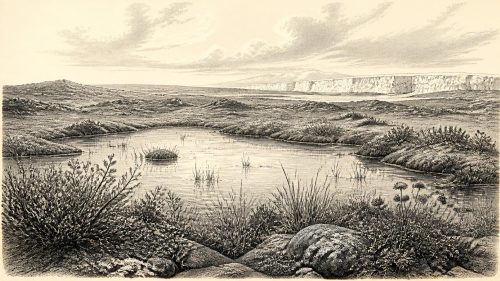
At the modern filing date 30,707 BCE, Ireland’s Late Pleistocene history is reconstructed from uncertain environmental evidence, not records of events or societies. Derryvree, County Fermanagh, preserves freshwater sediments between glacial tills, indicating a locally ice-free MIS 3 interval with tundra vegetation, wetlands and permafrost-influenced conditions. Its radiocarbon dates provide broad calibrated ranges rather than annual precision. Castlepook Cave, County Cork, contains diverse cold-stage fauna, demonstrating periodically viable open habitats and food webs, although its bones accumulated over time. A possibly cut-marked reindeer femur offers disputed evidence of human activity, not settlement. Later ice expansion destroyed or buried early evidence.
Read Article

Archived: 16 September 2026
Abstract
31,522 BCE is a modern label within the climatically unstable Late Pleistocene, not a datable Irish event. At Derryvree near Maguiresbridge, Fermanagh, organic sediments between glacial tills indicate a cold, ice-free interval, dated broadly to 34,950–29,750 BCE. Pollen and insects reveal treeless, wet tundra or muskeg. Castlepook Cave in Cork preserves MIS 3 fauna, including reindeer, mammoth, giant deer, bears and hyenas, although its mixed deposits cannot prove coexistence. A scored reindeer femur may record stone-tool butchery, suggesting fleeting Upper Palaeolithic human presence. No associated settlement evidence exists; Ireland remained a fragmented, changing landscape before the later major ice-sheet expansion.
Read Article




